Heads up: we earn a commission if you buy through the links on this page, at no extra cost to you. It never changes the order of the list. Full disclosure · how we pick.
The Bambino and the Bambino Plus are the machines this site points at most often, so it is worth writing the other page: the one that says when they are the wrong answer.
People search for an alternative for four reasons, and they need four different machines. Work out which reason is yours before you look at anything, because the right substitute for “too expensive” is nothing like the right substitute for “I want a standard basket”.
Why people look past the Bambino
Four reasons, four different answers
Your reason
What you actually need
Where that leads
“I want commercial-standard hardware”
A 58 mm portafilter and serviceable internals
A machine built to be opened and modified
“I do not want to buy a grinder separately”
A grinder in the same box
A machine with a built-in burr grinder and, ideally, a scale
“It will not fit my counter”
Width, specifically — Breville publishes 11.9 in for the Bambino Plus
The narrowest mains machine you can find
“It costs too much”
The cheapest machine with a real steam wand
Either the plain Bambino, or a budget pump machine with clear eyes
One reason is missing from that table on purpose: **“the shot is not good enough” is almost never a Bambino problem.** Breville states a 54 mm basket, an 18 g dose and 9 bar extraction after low-pressure pre-infusion — the same shot specification as machines costing far more. If your coffee is disappointing, the grinder is the first place to look, and pairing a grinder with your machine covers how much of the budget belongs there.
How we judged the alternatives
**Does it actually solve the reason you are here?** A cheaper machine that still cannot fit your counter has solved nothing.
**What does it cost you in return?** Every one of these trades something the Bambino does well — usually the automatic wand, the three-second heat-up, or both.
**Is the specification published?** We compare on what makers state, not on what reviewers estimate.
**Is it a machine you will still want in two years?** A standard basket and available parts matter more than a feature list.
Quick picks — Breville Bambino alternatives
#
Pick
Best for
Type
Price
1
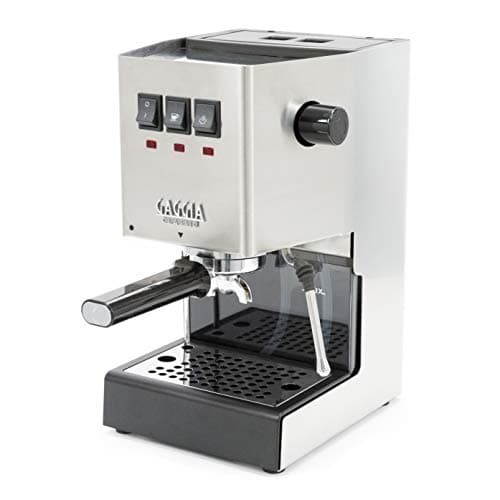
Gaggia Classic Pro E24Top pickThe current Gaggia Classic: the same commercial-size 58 mm portafilter the line is known for, now with a lead-free brass boiler and a fully published spec sheet.
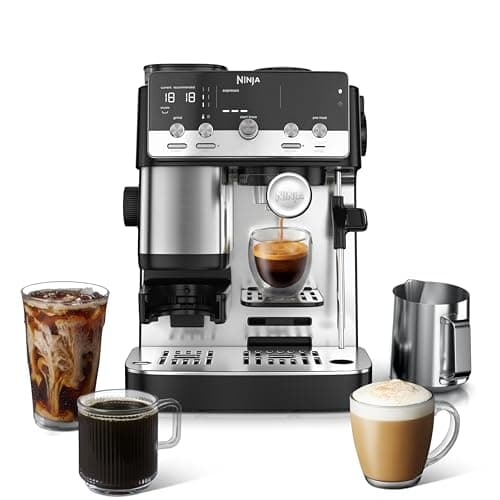
Ninja Luxe Café Mini (ES301)Ninja's compact entry: a conical burr grinder, a built-in scale and a manual steam wand in one body that also brews drip coffee.
A grinder, a scale and a steam wand in the smallest Ninja
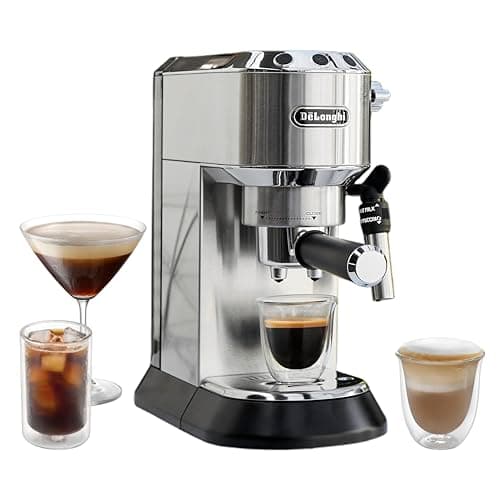
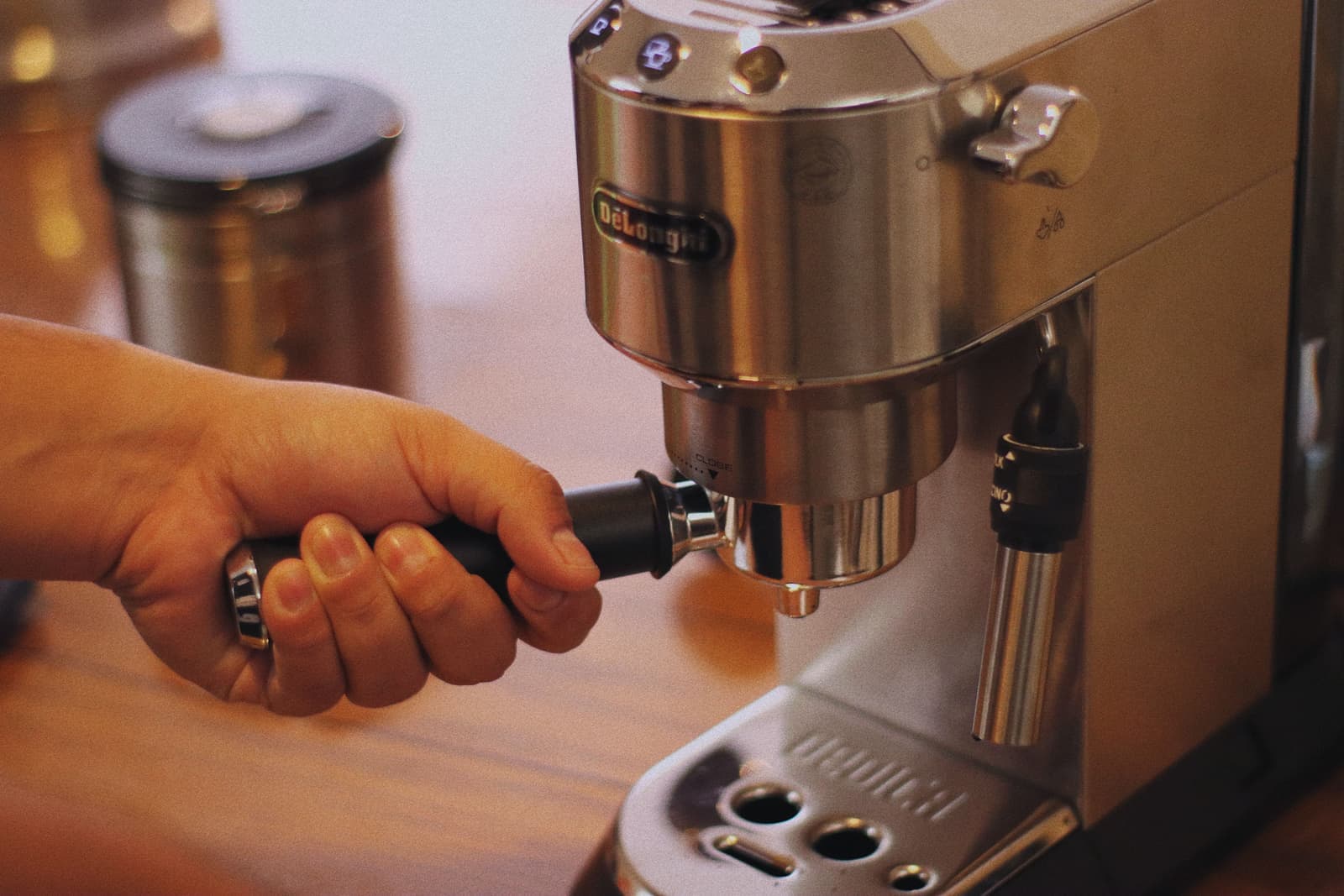
De'Longhi Dedica DeLuxe (EC685)The slim one. De'Longhi states a 15 cm width and calls it the slimmest pump coffee maker they make, which is the whole reason to choose it.
We have not handled these units. Everything above comes from published manufacturer documentation, cited inline, plus arithmetic you can redo yourself. Everyone in this category says they tested twenty machines; we have not tested any, and we say so. Here is what we do instead.
01
Gaggia Classic Pro E24
A 58 mm machine you can still buy specs for
The current Gaggia Classic: the same commercial-size 58 mm portafilter the line is known for, now with a lead-free brass boiler and a fully published spec sheet.
Published specifications for the Gaggia Classic Pro E24, with sources
The 9-bar figure is the one that matters and Gaggia states it twice — as the brew pressure and as the OPV calibration. Most machines advertise only the 15-bar pump maximum, which is not the pressure at the coffee. This is the same number a cafe machine brews at.
A 3.5 oz brass boiler is small, so it heats quickly and runs out of steam quickly. It is a single boiler, which means brewing and steaming are separate operations with a wait between them.
Everything here is serviceable. The Classic's internals have been broadly the same for years, parts are sold openly, and the modification community around it is the largest of any home machine — which is the real argument for buying one.
What it does well
58 mm commercial-standard portafilter, so every accessory fits
Gaggia publishes brew pressure, boiler material and OPV calibration
Serviceable, well-documented internals with an unusually large parts supply
What you give up
No PID from the factory — brew temperature is not held or displayed
Single small boiler: brew, then wait, then steam
Nothing is automated, including the milk
Skip it if you want the machine to help you. It does exactly what you tell it, including when what you told it was wrong.
Sixty grind sizes is the highest count Ninja publishes on any of its machines, including the ones above it, so grind resolution is not what you give up by buying the smallest one.
A built-in scale is unusual at any price. It means the machine doses by weight rather than by time, which removes the single most common source of inconsistency for a beginner.
The steam wand is manual, so milk is a skill you will be learning. That is a feature if you want to learn and a frustration if you wanted the machine to do it.
What it does well
Grinder, scale and steam wand in one compact body
Also brews drip coffee, hot or over ice
Ninja publishes a full footprint and weight
What you give up
Manual steam wand — no automatic milk
Ninja publishes no portafilter size or brew pressure
One-year warranty is shorter than the two years several rivals publish
Skip it if you want the milk handled for you. Ninja's own range has automatic froth presets further up, and this is the model that does not.
Takes ground coffee (1 or 2 cups) and E.S.E. pods [source]
Milk
Adjustable frothing wand / cappuccino system [source]
Fifteen centimeters of width is genuinely unusual and it is why this machine keeps selling. If your counter run is already full, that number decides the purchase before any other spec does.
The E.S.E. pod compatibility is a fair hedge: it means the machine still makes a coffee on the day you have not restocked beans, without committing you to a pod ecosystem.
It uses a smaller basket than the 54 mm standard, so accessories and recipes written for 54 mm machines will not transfer directly.
What it does well
Fits where nothing else fits
Takes ground coffee or E.S.E. pods
Adjustable frothing wand rather than a fixed panarello
What you give up
Non-standard basket size limits accessory choice
Narrow body means a small water tank and frequent refills
Skip it if counter width is not actually your constraint — you are paying for the one thing it is best at and giving up basket standardization to get it.
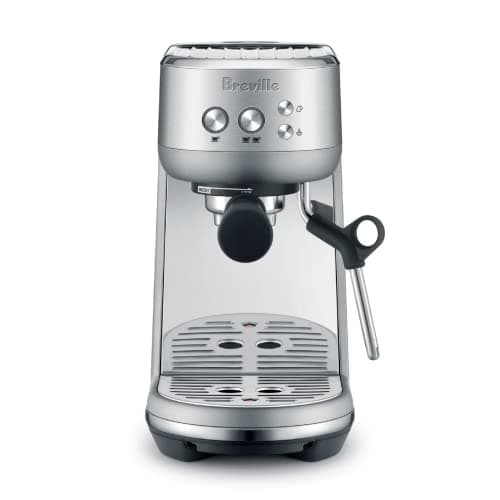
Manual. Breville positions the Plus as the model to choose for an automatic wand [source]
Breville's own page frames the difference in one line: choose the Plus if you want the automatic steam wand. Everything about the shot itself is the same.
If you drink espresso black, or mostly americanos, the automatic wand is a feature you would pay for and never use.
If you drink lattes every morning and have never steamed milk, this is the model that will frustrate you first.
What it does well
The same 54 mm, 18 g, fast-heating shot as the Plus
Cheaper, which frees money for the grinder — the better place to spend it
Manual wand teaches you the skill rather than hiding it
What you give up
Milk texturing is a real skill with a real learning period
No grinder
Skip it if milk drinks are the whole reason you are buying a machine and you would rather not practice — the Plus exists exactly for that.
Machines in this bracket advertise a high bar number. Bar is pump pressure, not shot quality — espresso is brewed at around 9 bar, and a 20 bar pump is only a bigger pump.
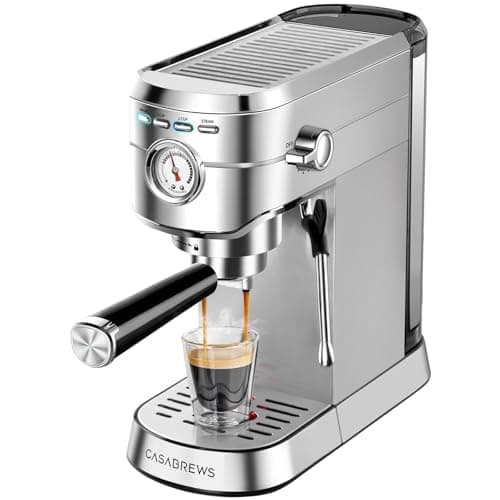
The specification that actually decides what this machine can do is the basket. CASABREWS lists pressurized dual-wall baskets only, which means the machine generates its own back-pressure and will make a crema-topped shot from almost any grind — and will not reward a better grinder if you buy one.
Treat this as the cheapest possible way to learn whether you like the ritual, with the expectation that you will replace it if you do.
What it does well
The smallest amount of money that gets you a wand and a portafilter
A pressure gauge at this price is genuinely unusual
CASABREWS publishes a real specification table, which most budget brands do not
Low regret if the hobby does not stick
What you give up
Pressurized basket masks grind problems rather than solving them
51 mm portafilter — the smallest of the three common sizes, with the thinnest accessory market
No single-wall basket is listed, so there is no upgrade path inside the machine
One-year warranty, and build and support are not comparable to an established brand
Skip it if you have already decided you want espresso. Buying twice costs more than buying once.
Breville states a 54 mm portafilter on both Bambinos. It is a real standard with a real accessory market, but 58 mm is the commercial size, and everything — baskets, tampers, distribution tools, puck screens — is made for 58 mm first.
The Gaggia Classic is the machine that answers this, and Gaggia publishes what the Bambino's spec sheet does not: a 9 bar brew pressure with the OPV calibrated to 9 bar, a solid brass boiler and a 72 oz tank. What you give up is significant and worth stating plainly — no automatic milk, no published PID, and a boiler you wait on between brewing and steaming. Our Gaggia Classic review goes through it properly, and Gaggia Classic vs Bambino Plus is the direct head-to-head.
If your reason is the grinder
This is the most common one, and the arithmetic is real: a Bambino plus a capable grinder is two purchases and roughly twice the counter.
Ninja's Luxe Café Mini is the interesting answer because of what Ninja publishes for it — 60 grind sizes, a built-in scale and a manual steam wand, in a body stated at 10.24 by 12.17 by 13.43 inches. A built-in scale at this price is genuinely unusual, and weighing the dose is the single change that makes shots repeatable.
The trade is the one every all-in-one makes: the grinder is married to the machine and cannot be upgraded on its own, and Ninja publishes no portafilter size, so assume nothing about accessories until you measure. Machines with a built-in grinder covers the category trade, and which Ninja to buy covers the range.
If your reason is width
Breville states 11.9 by 7.4 by 14.3 inches for the Bambino Plus. If your gap is narrower than that, no amount of liking the machine helps.
De'Longhi states 6 inches — 15 cm — for the Dedica DeLuxe and calls it the slimmest pump coffee maker it makes. That is roughly half the Bambino's stated width, and it is the whole reason the machine exists. The costs are a non-standard basket that limits your accessory choice and a small tank you will refill often. Note also that the Dedica name now covers four machines at different widths: which De'Longhi Dedica to buy sorts them out, and compact espresso machines covers the measurements that actually decide whether something fits.
If your reason is price
Two honest answers, and the first one is probably the right one.
**Buy the plain Bambino.** Breville states the same 54 mm basket, the same 18 g dose, the same 15 bar pump at 9 bar extraction and the same ThermoJet heating as the Plus. The entire difference is the wand: the Plus automates milk with three temperatures and three texture levels; the plain Bambino makes you do it. If you drink espresso or americanos, you are being asked to pay for a feature you will not use, and the money is better in the grinder.
**Or go properly budget, knowing what that means.** Machines well below the Bambino ship with pressurized baskets that force crema regardless of grind. That is forgiving while you learn and a ceiling once you are not, and it is the honest trade at that money rather than a defect. Espresso machines under $200 and under $300 cover the bracket.
What none of these fix
**The learning curve.** Only the automatic wand on the Bambino Plus removes a skill. Every machine here except the Ninja asks you to texture milk yourself.
**The grinder requirement.** Only the Ninja includes one. Budget for a grinder with the other four.
**Wait time.** Breville's stated three-second ThermoJet heat-up is genuinely fast, and the Gaggia's boiler is not. If a machine being ready immediately is why you liked the Bambino, most alternatives are a step back.
**Milk drinks for a crowd.** These are all single-boiler machines. Four lattes in a row is a queue on any of them.
The alternatives we left off, and why
Three machines come up constantly in this conversation and are not on this page. Saying why is more useful than a longer list.
**Enthusiast 58 mm machines above the Gaggia.** They are better machines. They are also a different purchase — more money, more bulk, and more machine than a first setup needs. If that is where you are heading, the Gaggia is the honest on-ramp and the rest of the market is waiting after it.
**Capsule machines.** A perfectly reasonable answer if what you want is coffee with no technique, and a bad answer if you are here because you want espresso you can adjust. Espresso machine vs Nespresso works the cost through properly rather than dismissing it.
**Second-hand machines.** Often genuinely good value, and we cannot verify the condition, the service history or the availability of any individual listing — so featuring one would be a claim we cannot stand behind.
If you already own a Bambino
A different question, and the answer is almost never another machine. In rough order of how much each change does for the cup:
**A better grinder.** The ceiling on any Bambino is whatever is feeding it, and this is the only change on this list that moves it.
**A scale, if you are dosing by eye.** Breville states 18 g for the basket; hitting that repeatably is what makes yesterday's shot happen again today.
**Fresher beans, bought in smaller bags.** Cheaper than everything above and more noticeable than most of it.
**A bottomless portafilter, to diagnose rather than improve.** It shows you channeling you cannot otherwise see — see bottomless portafilters.
Replacing a Bambino with another machine in the same class is the one move on that list that usually disappoints, because the shot specification you would be buying is the one you already own.
So when should you just buy the Bambino?
When none of the four reasons above is actually yours. The Bambino Plus remains the default recommendation on this site because it gets two things right that decide whether a beginner keeps going: it is ready in seconds, and the automatic wand will not let you ruin the milk. Our full review makes that case, including the two things it deliberately leaves out.
We have not used any of these machines. Every figure here is published by the manufacturer and linked below, and prices come live from the listings we link to.
Questions people actually ask
What is a good alternative to the Breville Bambino?+−
It depends on why you are looking. For a 58 mm commercial basket, the Gaggia Classic. For a built-in grinder, Ninja's Luxe Café Mini. For a narrower body, the De'Longhi Dedica at a stated 6 inches. For a lower price, the plain Bambino — Breville states the same shot specification as the Plus, without the automatic wand.
Is there a cheaper machine that makes the same shot as a Bambino?+−
The plain Bambino, which Breville specifies identically for basket size, dose, pressure and heating. Below that, machines usually ship with pressurized baskets that force crema regardless of grind — forgiving while you learn, and a ceiling afterwards.
Is the Gaggia Classic better than the Bambino Plus?+−
Different rather than better. The Gaggia has a 58 mm commercial portafilter, a published 9 bar brew pressure and serviceable internals; the Bambino Plus has an automatic milk wand and a stated three-second heat-up. Choose on whether you want to learn and modify, or want the milk handled.
Should I buy a machine with a grinder built in instead?+−
If counter space or a single purchase is the constraint, yes. You trade the ability to upgrade the grinder separately, and built-in grinders usually offer less adjustment resolution than a dedicated one.
Will a cheaper machine make worse espresso?+−
Usually because of the basket rather than the machine. Budget machines ship with pressurized baskets that create crema artificially, which hides what your grind is doing. The grinder matters more than the machine at every price.
A commercial 58 mm basket and serviceable internals against an automatic milk wand and a three-second heat-up — and how to tell which one is your machine.