Heads up: we earn a commission if you buy through the links on this page, at no extra cost to you. It never changes the order of the list. Full disclosure · how we pick.
Your first shot will probably not be good, and that is fine — the point of it is to learn the sequence and get three numbers to work from. Nobody's first shot is good, including the people who write guides implying otherwise.
Before you start
**Let the machine heat up fully.** Some are ready in seconds — Breville states three seconds for the ThermoJet system — and some take fifteen minutes. Follow the light.
**Run water through the empty group head** for a few seconds. This warms the portafilter and clears anything sitting on the shower screen.
**Use the dual-wall basket if you have one**, for the first few shots. It is more forgiving while you learn the motions.
**Have a scale ready.** This is what turns a first shot into information.
Quick picks — How to make your first espresso
#
Pick
Best for
Type
Price
1
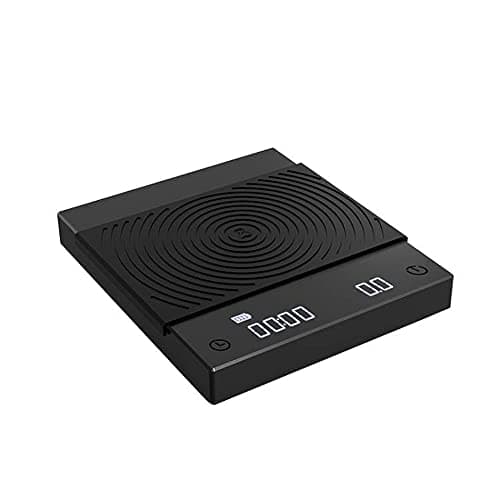
Timemore Black Mirror Basic 2Top pickA 0.1 g coffee scale with a built-in timer, small enough to sit under a cup on the drip tray.
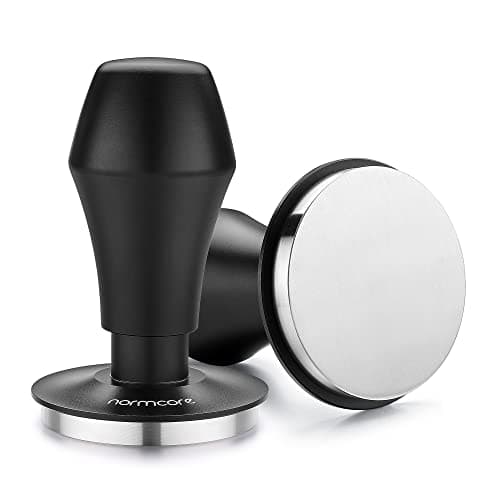
Normcore Spring-Loaded Tamper V4A calibrated tamper that clicks at a fixed pressure, so the tamp stops being a variable while you are learning everything else.
Taking tamping pressure off the list of things to worry about
We have not handled these units. Everything above comes from published manufacturer documentation, cited inline, plus arithmetic you can redo yourself. Everyone in this category says they tested twenty machines; we have not tested any, and we say so. Here is what we do instead.
01
Timemore Black Mirror Basic 2
One scale for the dose and the shot
A 0.1 g coffee scale with a built-in timer, small enough to sit under a cup on the drip tray.
We have not compiled a cited spec sheet for this pick yet, so there is no spec table here. What follows is about fit — who it is for and who it is not — not about numbers we cannot source. See how we pick.
Espresso needs 0.1 g resolution because the dose is around 18 g and a gram either way changes the shot noticeably.
The timer matters as much as the weight. The National Coffee Association puts espresso brewing at 20-30 seconds, and you cannot hit a window you are not measuring.
What it does well
0.1 g resolution, which is the actual requirement
Timer built in, so you are not juggling a phone
Small enough to fit under the portafilter on most machines
What you give up
Not waterproof — it lives on a drip tray, so wipe it
No flow-rate display
Skip it only if your machine already weighs the dose for you. Otherwise this is the cheapest thing on the whole list that changes the coffee.
Taking tamping pressure off the list of things to worry about
A calibrated tamper that clicks at a fixed pressure, so the tamp stops being a variable while you are learning everything else.
We have not compiled a cited spec sheet for this pick yet, so there is no spec table here. What follows is about fit — who it is for and who it is not — not about numbers we cannot source. See how we pick.
Tamping pressure matters less than people think and consistency matters more. A spring tamper gives you the same pressure every time without you thinking about it.
Size must match your basket: 54 mm for most Breville machines, 58 mm for Gaggia and commercial-standard machines. A tamper a millimeter too small leaves an untamped rim, which is where the water escapes.
What it does well
Removes one variable entirely while you learn the others
Available in both 54 mm and 58 mm
What you give up
Costs several times what a plain flat tamper costs
You must buy the right diameter — this is the most common accessory mistake
Skip it if the tamper that came in the box is the right diameter and you are willing to be deliberate. A calibrated tamper is a convenience, not a requirement.
**Grind 18 g of coffee into the basket.** Weigh it. If your basket states a different dose, use that number instead.
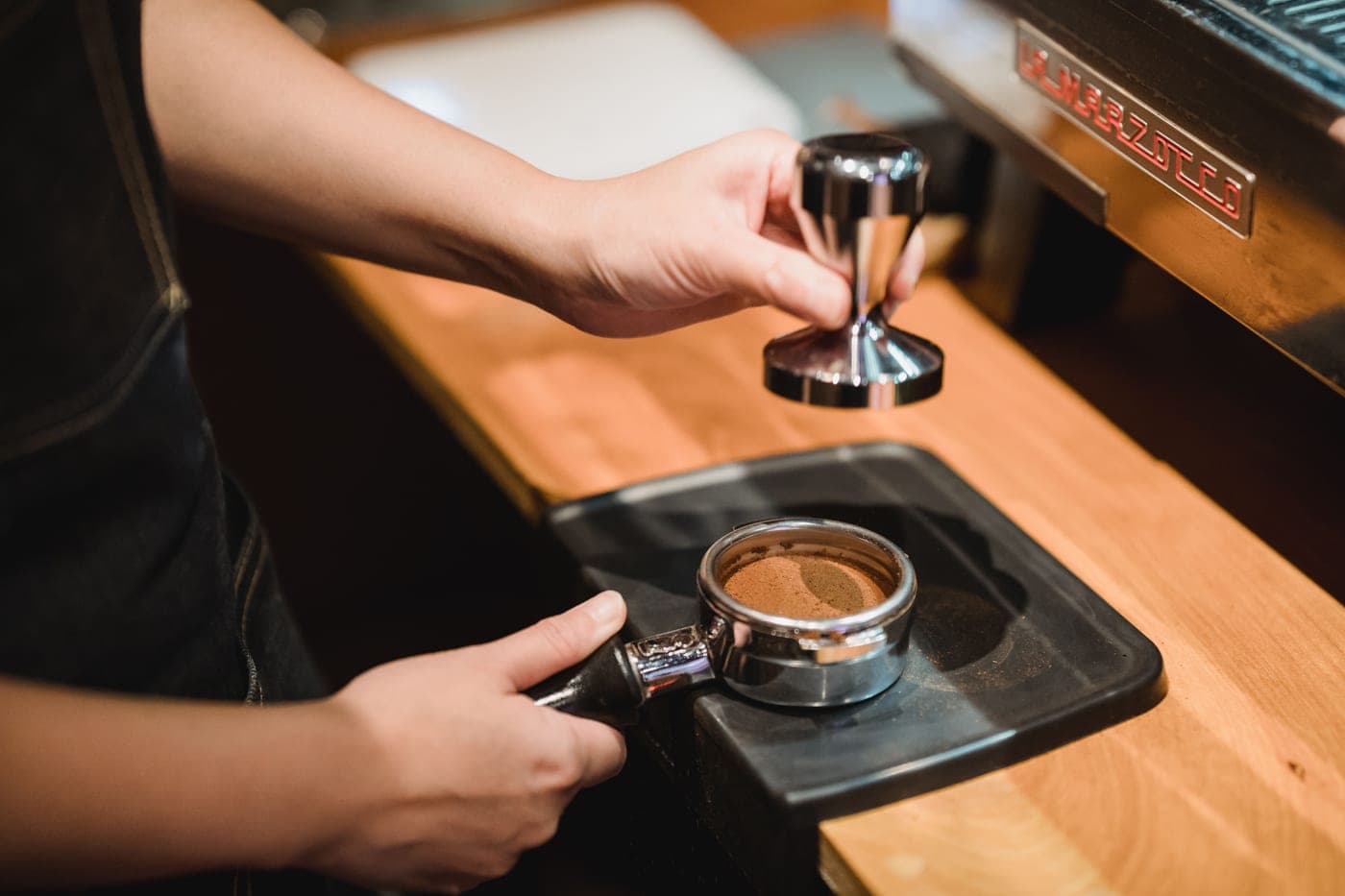
**Level the coffee.** Tap the portafilter gently on the counter and level the surface with a finger. If it looks clumpy, stir it with something fine — that is what a WDT tool does.
**Tamp.** Press straight down, firmly, and keep the tamper level. Level matters more than force — see tamping.
**Wipe the rim** of the basket so grounds do not sit in the group seal.
**Lock the portafilter in** and put your cup on the scale underneath. Zero the scale.
**Start the pump and the timer together.**
**Watch it.** For the first few seconds nothing comes out. Then a dark syrupy stream should appear, lightening to a golden brown.
**Stop at about 36 g** in the cup — twice your dose, the 1:2 ratio the National Coffee Association describes.
**Write down three numbers: in, out, seconds.** Then taste it.
Ignore flavor notes for now. There are two questions that matter: does it make your mouth pucker in a sharp, lemony way — that is sour, and means under-extracted. Or does it taste harsh and drying, like over-steeped tea — that is bitter, and means over-extracted. Sour, grind finer. Bitter, grind coarser. That single rule carries you a long way.
After the shot
Knock the puck out. It should hold together roughly as a disc; a soupy mess usually means the dose was low for the basket.
Rinse the basket under the tap.
Run a short flush through the group head.
If you steamed milk, purge and wipe the wand immediately — see steam wand care.
Questions people actually ask
How do you make espresso step by step?+−
Grind and weigh about 18 g into the basket, level it, tamp level, lock it in, put a cup on a zeroed scale, start the pump and a timer together, and stop at about 36 g. That should take 20 to 30 seconds.
How much coffee do I put in an espresso machine?+−
Around 18 g for a standard double basket — Breville states 18 g for its 54 mm baskets. Smaller baskets take less; use the dose your basket is designed for.
How long should a shot of espresso take?+−
The National Coffee Association gives 20 to 30 seconds of brewing time. Faster than that usually tastes sour; much slower usually tastes harsh.
Why did my first espresso taste bad?+−
Most likely under-extraction — the shot ran too fast because the grind was too coarse. Grind finer and try again. Sour means finer; bitter means coarser.
Should I use the pressurized basket to start?+−
Yes, for the first few days. It gives you a drinkable shot while you learn the sequence, then switch to the single-wall basket and expect to re-dial finer.