Heads up: we earn a commission if you buy through the links on this page, at no extra cost to you. It never changes the order of the list. Full disclosure · how we pick.
Almost every bad shot has one of five causes: the grind, the dose, the puck prep, the beans, or the machine. This page goes symptom by symptom. Work down the fixes in the order given — they are ordered by how likely they are, not by how interesting.
One rule before you start: **change one thing at a time**. Changing grind and dose together tells you nothing about which one worked.
Why is my espresso sour?
**A sour, sharp, thin shot is under-extracted** — water got through too quickly and did not dissolve enough. This is the most common complaint in home espresso, by a distance.
**Grind finer.** This fixes it most of the time. A shot reaching 36 g in under 20 seconds is definitely running fast.
**Check for channeling.** If the shot sprays from one spot on a bottomless portafilter, water is finding a soft path. Stir the dry grounds with a WDT tool and tamp level.
**Check your tamper diameter.** Too small and water escapes around the edge — see portafilter sizes.
**Raise the dose by a gram.** More coffee slows the shot.
**Check the grinder can go finer at all.** If turning it finer does not slow the shot, the grinder is the limit. Burr versus blade.
Why is my espresso bitter?
**A bitter, harsh, drying shot is usually over-extracted** — water spent too long and pulled out compounds you did not want. Less common than sour, and easier to fix.
**Grind coarser.** A shot taking well over 30 seconds to reach 36 g is running slow.
**Lower the dose by a gram.**
**Stop the shot earlier.** Aim for the 1:2 ratio the National Coffee Association describes — about 36 g out from 18 g in.
**Check the roast.** Dark roasts taste more bitter by nature. The NCA notes dark roasts produce a pronounced bitterness — see light versus dark.
**Clean the machine.** Rancid coffee oils in the group head taste bitter and stale no matter what you do with the grind. Cleaning.
The shot pours in under 15 seconds
Grind is far too coarse, or the basket is under-dosed, or both. Go noticeably finer — several steps, not one — and check you are actually weighing the dose. If several steps finer makes no difference to the timing, the grinder cannot reach espresso fineness. That is the single most common hardware limit in a first setup.
The machine strains and barely anything comes out
**Grind coarser**, by several steps. You have choked it.
**Check the dose.** Too much coffee in the basket presses against the shower screen and blocks flow.
**Check the basket size.** An 18 g dose in a 14 g basket does exactly this.
**If the grind is right and it is still slow**, the machine may need descaling — scale narrows the water path.
Why is my espresso puck wet or soupy?
This one worries people far more than it should. **A wet puck on its own is not a problem.** Many machines release pressure back through the puck at the end of a shot, which leaves water sitting on top. If the shot tasted good and ran to time, ignore it entirely.
It is worth investigating only if it comes with a bad shot. Then it usually means the dose is too low for the basket, leaving headroom that fills with water — add a gram or use a smaller basket.
There is no crema, or it disappears immediately
**Check the roast date.** This is the most likely cause by far. Crema comes from dissolved carbon dioxide, and coffee loses it with age. The National Coffee Association gives whole beans one to three weeks at room temperature.
**Check the grind.** Too coarse, and there is not enough resistance to emulsify anything.
**Check whether you are using pre-ground coffee.** It has almost always outgassed before you bought it.
**Note that a pressurized basket manufactures crema mechanically.** If you switched to a single-wall basket and the crema vanished, that is not a fault — you are seeing your actual extraction for the first time.
The shot tastes fine, then goes stale in days
The beans. The NCA's storage guidance is an opaque, airtight container away from air, moisture, heat and light, with whole beans good for one to three weeks at room temperature and ground coffee for one to two. A clear jar on a sunny counter is a display, not storage. See storage and freshness.
Quick picks — Why your espresso tastes wrong
#
Pick
Best for
Type
Price
1
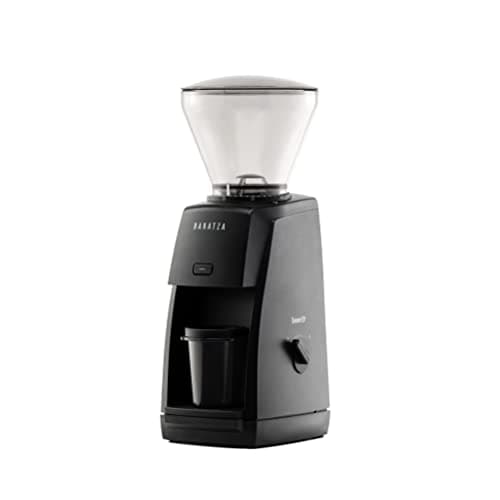
Baratza Encore ESPTop pickAn Encore reworked for espresso: the first 20 clicks are a fine, high-resolution espresso range, and the remaining 20 cover filter.
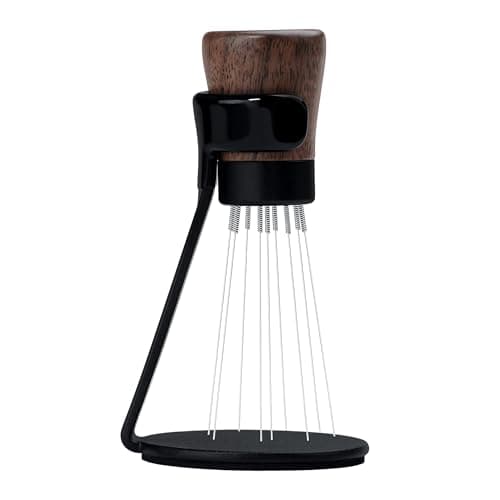
Normcore WDT Distribution ToolA handful of fine needles you stir through the dry grounds to break up clumps. It looks silly and it is the highest-value accessory on this page.
We have not handled these units. Everything above comes from published manufacturer documentation, cited inline, plus arithmetic you can redo yourself. Everyone in this category says they tested twenty machines; we have not tested any, and we say so. Here is what we do instead.
01
Baratza Encore ESP
The default first electric grinder
An Encore reworked for espresso: the first 20 clicks are a fine, high-resolution espresso range, and the remaining 20 cover filter.
Published specifications for the Baratza Encore ESP, with sources
Burr
40 mm M2 conical, quick-release for cleaning [source]
Grind range
#1-20 optimized for espresso in fine steps; #21-40 for filter [source]
Burr speed
550 RPM, reduced to limit heat, noise and static [source]
Twenty fine clicks inside the espresso range is the specification that matters. Grinders that give you five usable espresso settings cannot be dialed in; this one can.
550 RPM is deliberately slow. Slower burrs mean less heat and less static, which in practice means less ground coffee stuck to the inside of the chute and thrown around your counter.
It ships with both 54 mm and 58 mm dosing, which covers a Breville and a Gaggia without buying anything else.
What it does well
Genuine fine adjustment across the espresso range
Covers filter grinding too, so it is not a single-purpose purchase
Quick-release burr makes cleaning a two-minute job
Fits both common portafilter sizes out of the box
What you give up
Retains some grounds between doses, like most hoppered grinders
Louder than a hand grinder, obviously
Skip it if you already have a capable hand grinder and only make one or two drinks a day — you would be buying convenience, not better coffee.
A handful of fine needles you stir through the dry grounds to break up clumps. It looks silly and it is the highest-value accessory on this page.
We have not compiled a cited spec sheet for this pick yet, so there is no spec table here. What follows is about fit — who it is for and who it is not — not about numbers we cannot source. See how we pick.
Ground coffee clumps as it leaves the grinder. Clumps mean the water finds a channel through the soft spots and runs past the rest — which tastes sour and thin no matter how well you tamped.
Stirring the dry grounds for five seconds before tamping removes that. It is the cheapest fix for the most common bad-shot cause after grind size.
What it does well
Solves channeling, which is the second most common cause of a bad shot
Costs less than a bag of beans
Works with any machine and any basket
What you give up
Adds five seconds to every shot
Needles bend if you are careless
Skip it if your shots already taste even and pour steadily — do not add steps to a process that is working.
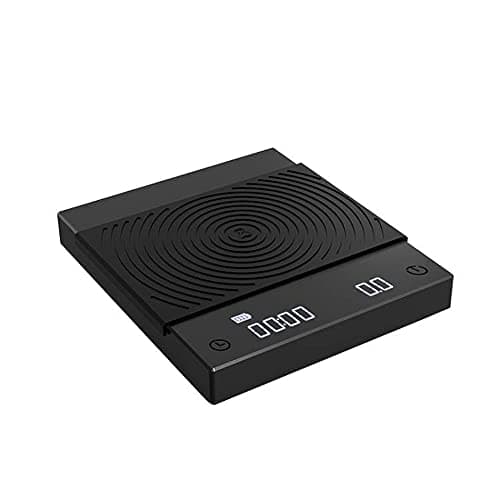
A 0.1 g coffee scale with a built-in timer, small enough to sit under a cup on the drip tray.
We have not compiled a cited spec sheet for this pick yet, so there is no spec table here. What follows is about fit — who it is for and who it is not — not about numbers we cannot source. See how we pick.
Espresso needs 0.1 g resolution because the dose is around 18 g and a gram either way changes the shot noticeably.
The timer matters as much as the weight. The National Coffee Association puts espresso brewing at 20-30 seconds, and you cannot hit a window you are not measuring.
What it does well
0.1 g resolution, which is the actual requirement
Timer built in, so you are not juggling a phone
Small enough to fit under the portafilter on most machines
What you give up
Not waterproof — it lives on a drip tray, so wipe it
No flow-rate display
Skip it only if your machine already weighs the dose for you. Otherwise this is the cheapest thing on the whole list that changes the coffee.
It is under-extracted — the water got through too fast to dissolve enough. Grind finer first; that fixes it most of the time. If it does not, check for channeling and check your tamper is the right diameter.
Why is my espresso bitter?+−
Usually over-extraction: the water spent too long in the coffee. Grind coarser, lower the dose slightly, or stop the shot earlier at about a 1:2 ratio. A dark roast and a dirty group head both add bitterness of their own.
Why is my espresso puck wet?+−
Most machines release pressure back through the puck at the end of the shot, which leaves water on top. If the shot tasted right, this is normal and needs no fix. If it came with a bad shot, the dose is probably too low for the basket.
Why is there no crema on my espresso?+−
Almost always stale beans — crema comes from dissolved carbon dioxide, which coffee loses with age. The National Coffee Association gives whole beans one to three weeks at room temperature. A too-coarse grind is the other common cause.
Why is my espresso machine not brewing?+−
If it is straining with almost no output, the grind is too fine or the basket is over-dosed. If flow has been getting slower over weeks and the steam is weak too, that is scale — descale it.