Heads up: we earn a commission if you buy through the links on this page, at no extra cost to you. It never changes the order of the list. Full disclosure · how we pick.
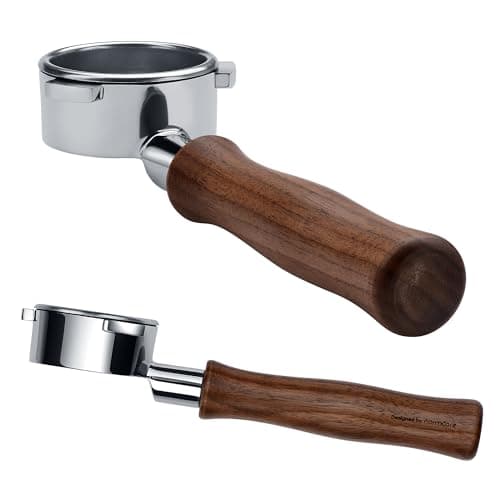
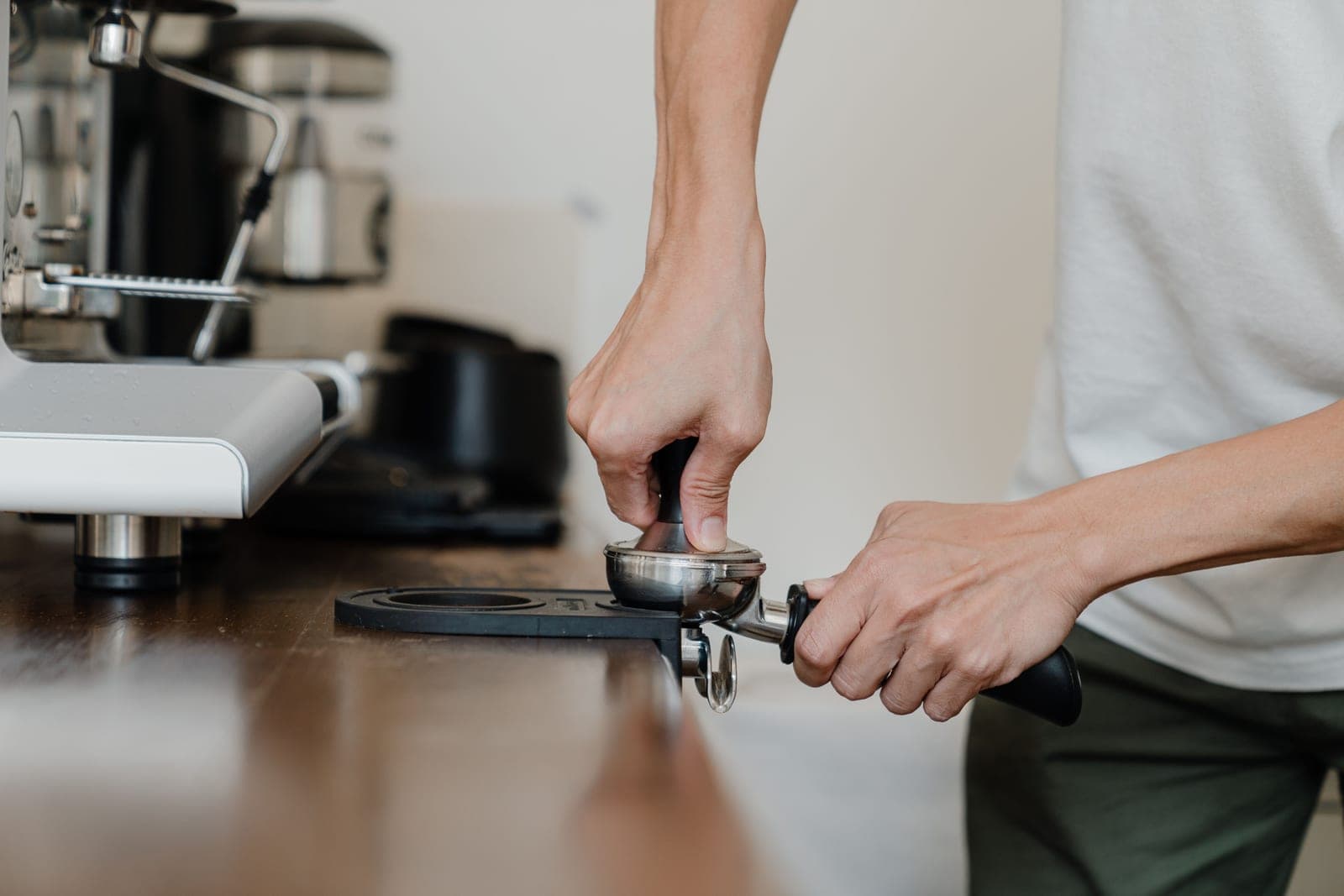
A bottomless — or naked — portafilter has no spout and no base. You see the underside of the basket while the shot pours. That is the entire feature, and it turns an invisible problem into an obvious one.
What you actually see
Reading the underside of the puck
What you see
What it means
What to do
Even droplets forming across the whole base, coming together into one stream
A spouted portafilter hides every one of those. You see the output and none of the cause, which means a bad shot gives you nothing to act on.
Quick picks — Bottomless portafilters
#
Pick
Best for
Type
Price
1
Normcore Bottomless PortafilterTop pickA portafilter with no spout, so you watch the underside of the puck pour. It is a diagnostic tool that happens to look good.
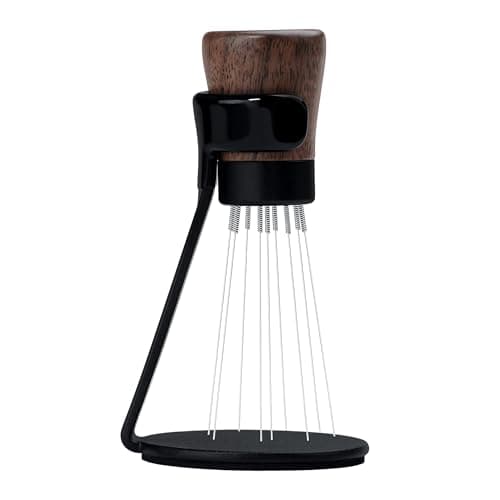
Normcore WDT Distribution ToolA handful of fine needles you stir through the dry grounds to break up clumps. It looks silly and it is the highest-value accessory on this page.
We have not handled these units. Everything above comes from published manufacturer documentation, cited inline, plus arithmetic you can redo yourself. Everyone in this category says they tested twenty machines; we have not tested any, and we say so. Here is what we do instead.
01
Normcore Bottomless Portafilter
Seeing what is actually wrong with your shot
A portafilter with no spout, so you watch the underside of the puck pour. It is a diagnostic tool that happens to look good.
We have not compiled a cited spec sheet for this pick yet, so there is no spec table here. What follows is about fit — who it is for and who it is not — not about numbers we cannot source. See how we pick.
With a spouted portafilter you see the output. With a bottomless one you see where the water came through — a jet from one side is channeling, and it is visible in the first three seconds.
It also sprays coffee across your counter until your puck prep is decent, which is a fair description of the learning curve.
What it does well
Shows channeling directly instead of leaving you to guess
Makes every other puck-prep improvement measurable
What you give up
Messy until your prep is consistent
Cannot split a shot into two cups
Must match your basket diameter
Skip it if your shots taste fine and you have no interest in diagnosing them. It solves a problem you do not have.
A handful of fine needles you stir through the dry grounds to break up clumps. It looks silly and it is the highest-value accessory on this page.
We have not compiled a cited spec sheet for this pick yet, so there is no spec table here. What follows is about fit — who it is for and who it is not — not about numbers we cannot source. See how we pick.
Ground coffee clumps as it leaves the grinder. Clumps mean the water finds a channel through the soft spots and runs past the rest — which tastes sour and thin no matter how well you tamped.
Stirring the dry grounds for five seconds before tamping removes that. It is the cheapest fix for the most common bad-shot cause after grind size.
What it does well
Solves channeling, which is the second most common cause of a bad shot
Costs less than a bag of beans
Works with any machine and any basket
What you give up
Adds five seconds to every shot
Needles bend if you are careless
Skip it if your shots already taste even and pour steadily — do not add steps to a process that is working.
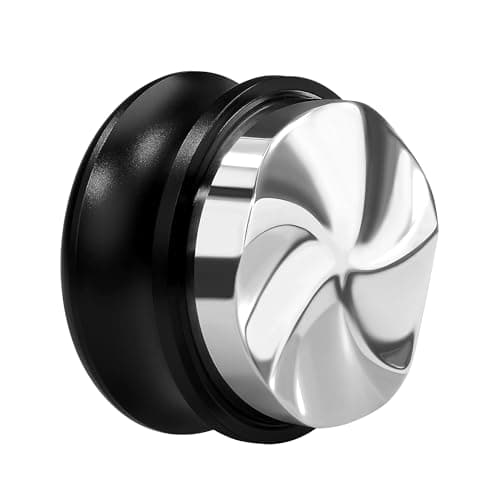
A spinning leveler that flattens the coffee bed. Genuinely useful, and second in line behind a WDT tool.
We have not compiled a cited spec sheet for this pick yet, so there is no spec table here. What follows is about fit — who it is for and who it is not — not about numbers we cannot source. See how we pick.
A distributor levels the surface; it does not un-clump what is underneath. That is why a WDT tool comes first if you only buy one.
Diameter must match the basket, same as a tamper.
What it does well
Makes a level bed effortless
Pairs with a WDT tool rather than replacing it
What you give up
Does nothing about clumping
Another size-specific purchase
Skip it until you own a WDT tool. Buying the leveler first is the common order and the wrong one.
**Mess.** Until your puck prep is consistent, channeling sprays coffee across the counter and the front of the machine. This is not a defect — it is the diagnostic working.
**No split shots.** You cannot direct output into two cups.
**Another size-specific purchase.** It must match your basket: 54 mm on most Breville machines, 58 mm on Gaggia and commercial-standard machines.
Should a beginner buy one?
If your shots taste fine, no — it solves a problem you do not have. If your shots are inconsistent and you cannot tell why, it is the fastest way to find out, and it is cheaper than the grinder upgrade you might otherwise buy for the wrong reason.
Questions people actually ask
What is a bottomless portafilter for?+−
It removes the spout so you can watch the underside of the coffee puck as the shot pours. That makes channeling visible, which is otherwise invisible on a spouted portafilter.
Is a bottomless portafilter better?+−
It is more informative, not inherently better. The extraction is the same; you just get to see it. If your shots are already consistent, it adds mess and no information.
What size bottomless portafilter do I need?+−
The same as your machine's basket — 54 mm on Breville's beginner machines, 58 mm on Gaggia and most commercial-standard machines. See portafilter sizes.
Why does my bottomless portafilter spray everywhere?+−
Channeling: water is finding a soft path through the puck and jetting out. Stir the dry grounds with a WDT tool, level the bed and tamp straight, and it usually stops.