Heads up: we earn a commission if you buy through the links on this page, at no extra cost to you. It never changes the order of the list. Full disclosure · how we pick.
Scale is dissolved calcium and magnesium coming out of solution when water is heated, depositing on every hot surface inside the machine. It insulates the heating element, narrows the water path and eventually blocks it. It is the most common reason a home espresso machine dies before its time, and it is entirely preventable.
The procedure
Your machine's manual comes first — some machines have a guided descaling cycle and some specify a particular product. Where the manual is silent, this is the standard method.
**Empty the water tank** and remove any water filter cartridge from it. Descaler will exhaust a filter in one pass.
**Mix the descaling solution** to the strength on the packet, using the amount of water the packet specifies. Do not make it stronger — more acid does not descale faster, it just attacks seals.
**Fill the tank** with the solution and put a large container under the group head and the steam wand.
**Run about a third of the tank through the group head**, in bursts rather than one long pull.
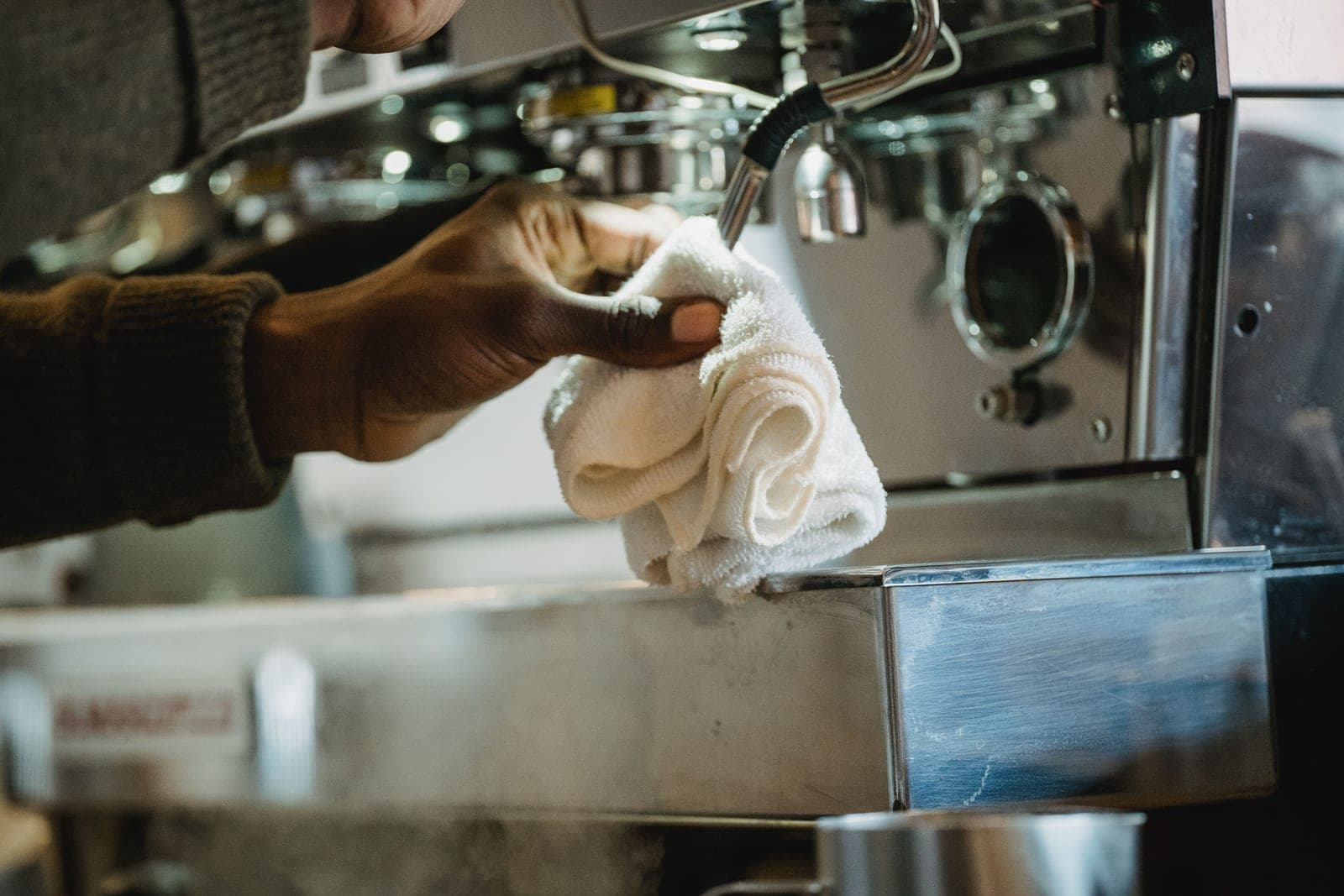
**Run about a third through the steam wand**, opening the steam valve until the solution comes through. This is the step people skip, and the steam path scales up faster than the brew path because it runs hotter.
**Let it stand for 15 to 20 minutes** with the remaining third in the tank. The acid needs contact time; this is where most of the work happens.
**Run the rest through** both the group head and the wand.
**Rinse thoroughly.** Empty the tank, refill with clean water, and run two or three full tanks through both the group head and the wand. Do not shortcut this — residual descaler tastes unmistakable and unpleasant.
**Refit the water filter** and pull one shot you intend to throw away.
Quick picks — How to descale an espresso machine
#
Pick
Best for
Type
Price
1
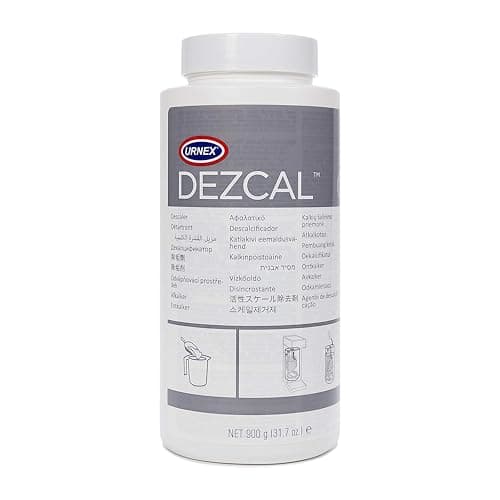
Urnex Dezcal DescalerTop pickA citric-acid-based descaler. This is the product that goes in the water tank, and the one people substitute vinegar for and regret.
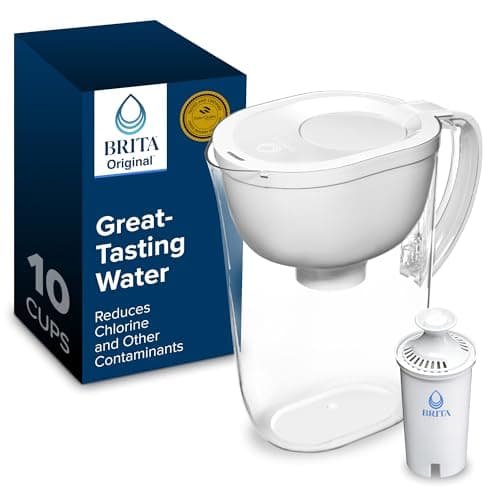
Brita Water Filter PitcherA filter pitcher is the low-effort way to reduce what goes into the boiler in the first place, which is cheaper than descaling more often.
We have not handled these units. Everything above comes from published manufacturer documentation, cited inline, plus arithmetic you can redo yourself. Everyone in this category says they tested twenty machines; we have not tested any, and we say so. Here is what we do instead.
01
Urnex Dezcal Descaler
Scale in the boiler
A citric-acid-based descaler. This is the product that goes in the water tank, and the one people substitute vinegar for and regret.
We have not compiled a cited spec sheet for this pick yet, so there is no spec table here. What follows is about fit — who it is for and who it is not — not about numbers we cannot source. See how we pick.
Scale builds wherever water is heated. It insulates the heating element, slows the flow and eventually stops the machine — and the failure looks like “my machine is not brewing”.
Vinegar does dissolve scale. It also lingers in seals and rubber, and several manufacturers void warranty coverage for it. A purpose-made descaler costs a few dollars a year.
What it does well
The product manuals actually specify
Rinses out cleanly
What you give up
A recurring cost, however small
Descaling frequency depends on your water hardness
Skip it only if your machine manufacturer sells its own branded descaler and voids warranty for anything else — then buy theirs.
A filter pitcher is the low-effort way to reduce what goes into the boiler in the first place, which is cheaper than descaling more often.
We have not compiled a cited spec sheet for this pick yet, so there is no spec table here. What follows is about fit — who it is for and who it is not — not about numbers we cannot source. See how we pick.
Scale comes from dissolved minerals in your water. Less mineral in, less scale out — the descaling interval stretches on its own.
Filtered is not the same as soft. In a hard-water area you will still descale, just less often.
What it does well
Cheap, and you probably already own one
Extends the descaling interval
What you give up
Does not eliminate descaling
Filters are a small recurring cost
Skip it if your machine has its own filter cartridge in the tank and you keep it fresh — doing both is redundant.
If your machine has a descale indicator, follow it — it counts water volume rather than time, which is a better measure. If it does not, put a recurring reminder somewhere you will see it. Nobody descales from memory.
How to tell it is overdue
**Flow has been getting slower** over weeks, with the same grind and dose.
**Steam is weaker** than it used to be, or takes longer to arrive.
**The machine is noisier** — the pump is working against a narrowed path.
**Shots taste flat**, and cleaning the group head did not fix it.
**Visible white deposits** around the shower screen or in the tank.
About vinegar
Vinegar does dissolve scale. It also lingers in rubber seals for a long time, several manufacturers explicitly void warranty coverage for it, and the taste takes many rinse cycles to leave. Purpose-made descaler costs a few dollars a year and does not carry either problem. The full argument, and the alternatives that do work, is on descaling without descaler.
Questions people actually ask
How often should you descale an espresso machine?+−
Every one to three months for typical home use, more often with hard water and heavy use. If your machine has a descale indicator, follow that instead — it counts water through the machine rather than days on a calendar.
What happens if you don't descale an espresso machine?+−
Scale insulates the heating element and narrows the water path. Flow slows, steam weakens, temperature stability suffers and eventually the machine stops passing water. It is the most common cause of a home machine failing early.
Can I descale with vinegar?+−
It works chemically, but it lingers in seals, takes many rinses to clear, and several manufacturers void warranty coverage for it. A purpose-made descaler costs a few dollars a year and avoids all three problems.
Do I need to descale if I use filtered water?+−
Yes, less often. Filtering reduces mineral content but does not eliminate it, so the interval stretches rather than disappearing.
Should I descale the steam wand too?+−
Yes, and it is the step most people skip. The steam path runs hotter than the brew path and scales up faster, so run part of the solution through the wand as well.