Heads up: we earn a commission if you buy through the links on this page, at no extra cost to you. It never changes the order of the list. Full disclosure · how we pick.
The honest answer is that a packet of proper descaler costs a few dollars and lasts months, so this question is rarely about money. It is usually about it being 9pm and the machine flashing at you. So: here is what actually works, and what it costs you.
Citric acid: the one that genuinely works
Most commercial descalers are citric acid based, so food-grade citric acid powder from a supermarket is close to the same product without the packaging. Roughly one tablespoon per liter of water is the commonly used strength.
**Use food-grade citric acid**, not a cleaning-aisle product with additives.
**Do not make it stronger than the ratio above.** More acid does not descale faster; it attacks aluminum and seals.
**Rinse as thoroughly as you would after a commercial descaler** — two or three full tanks.
**Check your manual first.** Some manufacturers specify their own branded product and will decline warranty claims otherwise. That is a real consideration on a machine still in warranty.
Quick picks — Descaling without a descaler
#
Pick
Best for
Type
Price
1
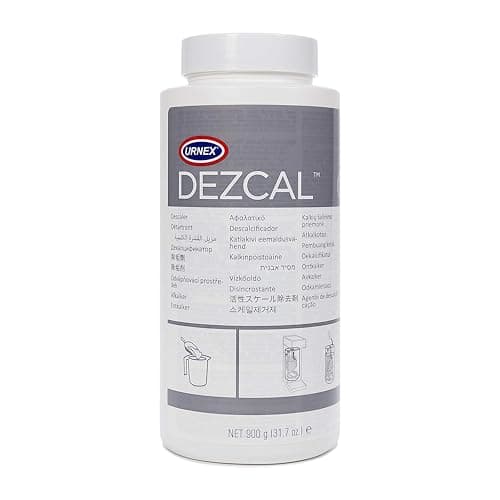
Urnex Dezcal DescalerTop pickA citric-acid-based descaler. This is the product that goes in the water tank, and the one people substitute vinegar for and regret.
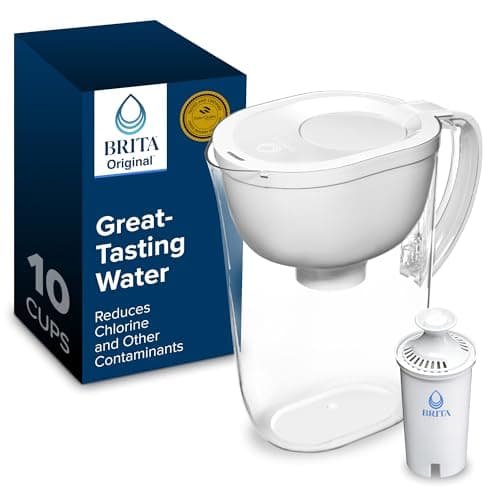
Brita Water Filter PitcherA filter pitcher is the low-effort way to reduce what goes into the boiler in the first place, which is cheaper than descaling more often.
We have not handled these units. Everything above comes from published manufacturer documentation, cited inline, plus arithmetic you can redo yourself. Everyone in this category says they tested twenty machines; we have not tested any, and we say so. Here is what we do instead.
01
Urnex Dezcal Descaler
Scale in the boiler
A citric-acid-based descaler. This is the product that goes in the water tank, and the one people substitute vinegar for and regret.
We have not compiled a cited spec sheet for this pick yet, so there is no spec table here. What follows is about fit — who it is for and who it is not — not about numbers we cannot source. See how we pick.
Scale builds wherever water is heated. It insulates the heating element, slows the flow and eventually stops the machine — and the failure looks like “my machine is not brewing”.
Vinegar does dissolve scale. It also lingers in seals and rubber, and several manufacturers void warranty coverage for it. A purpose-made descaler costs a few dollars a year.
What it does well
The product manuals actually specify
Rinses out cleanly
What you give up
A recurring cost, however small
Descaling frequency depends on your water hardness
Skip it only if your machine manufacturer sells its own branded descaler and voids warranty for anything else — then buy theirs.
A filter pitcher is the low-effort way to reduce what goes into the boiler in the first place, which is cheaper than descaling more often.
We have not compiled a cited spec sheet for this pick yet, so there is no spec table here. What follows is about fit — who it is for and who it is not — not about numbers we cannot source. See how we pick.
Scale comes from dissolved minerals in your water. Less mineral in, less scale out — the descaling interval stretches on its own.
Filtered is not the same as soft. In a hard-water area you will still descale, just less often.
What it does well
Cheap, and you probably already own one
Extends the descaling interval
What you give up
Does not eliminate descaling
Filters are a small recurring cost
Skip it if your machine has its own filter cartridge in the tank and you keep it fresh — doing both is redundant.
Acetic acid dissolves scale perfectly well. The problems are practical rather than chemical:
**It lingers in rubber.** Gaskets and seals absorb it, and it comes back out into your coffee for days. Rinsing helps and does not fully solve it.
**The smell and taste persist.** People routinely run five or six tanks through and still taste it.
**Several manufacturers explicitly void warranty coverage for it.** Check your manual before deciding it is free.
**It is harsher on aluminum** than citric acid at equivalent descaling strength.
Given citric acid works better and costs about the same, there is no situation where vinegar is the right choice for an espresso machine.
Things that do not work
Commonly suggested, and why they fail
Suggestion
Why not
Lemon juice
Weak, inconsistent in strength, and it puts sugars and pulp inside the machine
Baking soda
Alkaline. Scale is dissolved by acid; this does nothing to it
Bleach or household cleaner
Never. Not food safe, and damaging to internals
Running hot water through
Does not remove scale at all
Distilled water as a permanent fix
Aggressive to boiler metals, and some machines cannot detect it as water
A cola-type soft drink
Contains phosphoric acid and a great deal of sugar. The sugar stays inside your machine
If the machine is under warranty
Read the manual's descaling page before you improvise. Some manufacturers require their own product and treat anything else as grounds for refusing a claim. On a machine you have just bought, a few dollars of the specified descaler is much cheaper than losing warranty coverage on a pump.
Questions people actually ask
Can I descale an espresso machine with citric acid?+−
Yes — most commercial descalers are citric acid based. Use food-grade citric acid at roughly a tablespoon per liter, do not make it stronger, and rinse thoroughly. Check your manual first if the machine is under warranty.
Is vinegar safe for an espresso machine?+−
It descales, but it lingers in rubber seals, takes many rinses to clear, and several manufacturers void warranty coverage for it. Citric acid does the same job without those problems.
How much citric acid do I use to descale?+−
Around one tablespoon per liter of water is the commonly used strength. A stronger solution does not work faster and is harder on aluminum and seals.
Can I use distilled water so I never have to descale?+−
Not as a permanent solution. Distilled water is aggressive to boiler metals, and machines that detect water level by conductivity may not register it at all.