Heads up: we earn a commission if you buy through the links on this page, at no extra cost to you. It never changes the order of the list. Full disclosure · how we pick.
Water matters here for two separate reasons, and people usually only think about one of them.
**Taste.** An espresso is overwhelmingly water. Chlorine, off-flavors and heavy mineral content all come through in the cup.
**Scale.** Dissolved calcium and magnesium come out of solution when heated and deposit inside the machine. Less mineral in, less scale out, and a longer gap between descales.
Quick picks — Water for espresso
#
Pick
Best for
Type
Price
1
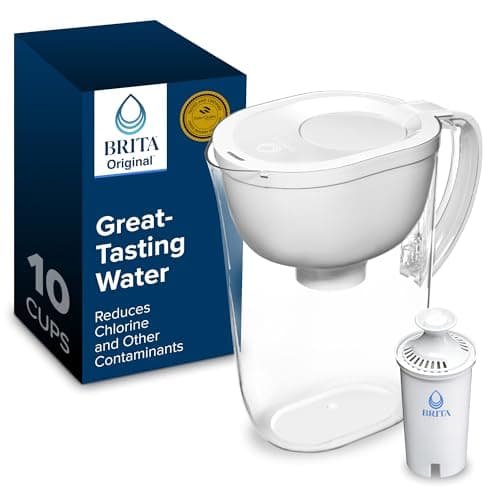
Brita Water Filter PitcherTop pickA filter pitcher is the low-effort way to reduce what goes into the boiler in the first place, which is cheaper than descaling more often.
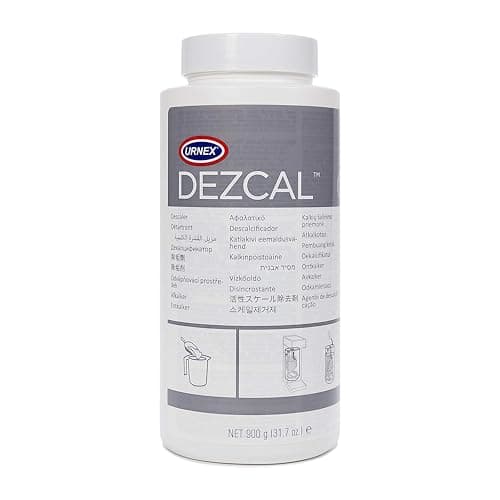
Urnex Dezcal DescalerA citric-acid-based descaler. This is the product that goes in the water tank, and the one people substitute vinegar for and regret.
We have not handled these units. Everything above comes from published manufacturer documentation, cited inline, plus arithmetic you can redo yourself. Everyone in this category says they tested twenty machines; we have not tested any, and we say so. Here is what we do instead.
01
Brita Water Filter Pitcher
Slowing down scale before it starts
A filter pitcher is the low-effort way to reduce what goes into the boiler in the first place, which is cheaper than descaling more often.
We have not compiled a cited spec sheet for this pick yet, so there is no spec table here. What follows is about fit — who it is for and who it is not — not about numbers we cannot source. See how we pick.
Scale comes from dissolved minerals in your water. Less mineral in, less scale out — the descaling interval stretches on its own.
Filtered is not the same as soft. In a hard-water area you will still descale, just less often.
What it does well
Cheap, and you probably already own one
Extends the descaling interval
What you give up
Does not eliminate descaling
Filters are a small recurring cost
Skip it if your machine has its own filter cartridge in the tank and you keep it fresh — doing both is redundant.
A citric-acid-based descaler. This is the product that goes in the water tank, and the one people substitute vinegar for and regret.
We have not compiled a cited spec sheet for this pick yet, so there is no spec table here. What follows is about fit — who it is for and who it is not — not about numbers we cannot source. See how we pick.
Scale builds wherever water is heated. It insulates the heating element, slows the flow and eventually stops the machine — and the failure looks like “my machine is not brewing”.
Vinegar does dissolve scale. It also lingers in seals and rubber, and several manufacturers void warranty coverage for it. A purpose-made descaler costs a few dollars a year.
What it does well
The product manuals actually specify
Rinses out cleanly
What you give up
A recurring cost, however small
Descaling frequency depends on your water hardness
Skip it only if your machine manufacturer sells its own branded descaler and voids warranty for anything else — then buy theirs.
Fine if your water is genuinely soft and tastes clean
Hard tap water, unfiltered
Often heavy
High
Workable, but expect to descale monthly
Bottled spring water
Usually good
Varies by brand
Fine, expensive, and mineral content is rarely printed usefully
Distilled or deionized
Flat and dull
None
**Do not use** — see below
Purpose-made espresso water
Excellent
Very low
Real benefit, real cost, and unnecessary for a first setup
Why distilled water is the wrong answer
It seems logical — no minerals, no scale — and it has two problems.
**Coffee needs some mineral content to taste right.** Minerals participate in extraction; water with none pulls a flat, hollow-tasting shot.
**Many machines detect water by conductivity.** Pure water conducts poorly, so a machine can read a full tank as empty and refuse to run.
**It is aggressive to boiler metals** over time, because very pure water tends to dissolve what it touches.
Working out how hard your water is
**Look at your kettle.** White crusty deposits inside means hard water. A clean interior means soft.
**Check your utility's water quality report.** US suppliers publish one annually, and hardness is usually stated in grains per gallon or parts per million.
**Buy a test strip.** They cost very little and give you a number in a minute.
Then set your descaling interval from it — descaling has the table.
In-tank filters versus a pitcher
If your machine takes a cartridge in the tank, use it — it is convenient and it is designed around that machine's water volume. A filter pitcher does the same job for machines with no cartridge slot, and doing both is redundant. What matters is that whichever one you use is actually fresh; a cartridge left in for a year is a piece of plastic.
Questions people actually ask
What water should I use in an espresso machine?+−
Filtered tap water is the practical answer for almost everyone. It removes chlorine for taste and reduces the mineral content that causes scale, without going so far as distilled.
Can I use distilled water in an espresso machine?+−
No. Coffee needs some mineral content to extract properly, many machines detect water by conductivity and may read a full tank as empty, and very pure water is aggressive to boiler metals.
Does filtered water mean I never have to descale?+−
No, it means you descale less often. Filtering reduces mineral content rather than eliminating it, so the interval stretches.
How do I know if my water is hard?+−
Look inside your kettle for white deposits, check your utility's annual water quality report, or use a test strip. Hardness sets your descaling interval.