Heads up: we earn a commission if you buy through the links on this page, at no extra cost to you. It never changes the order of the list. Full disclosure · how we pick.
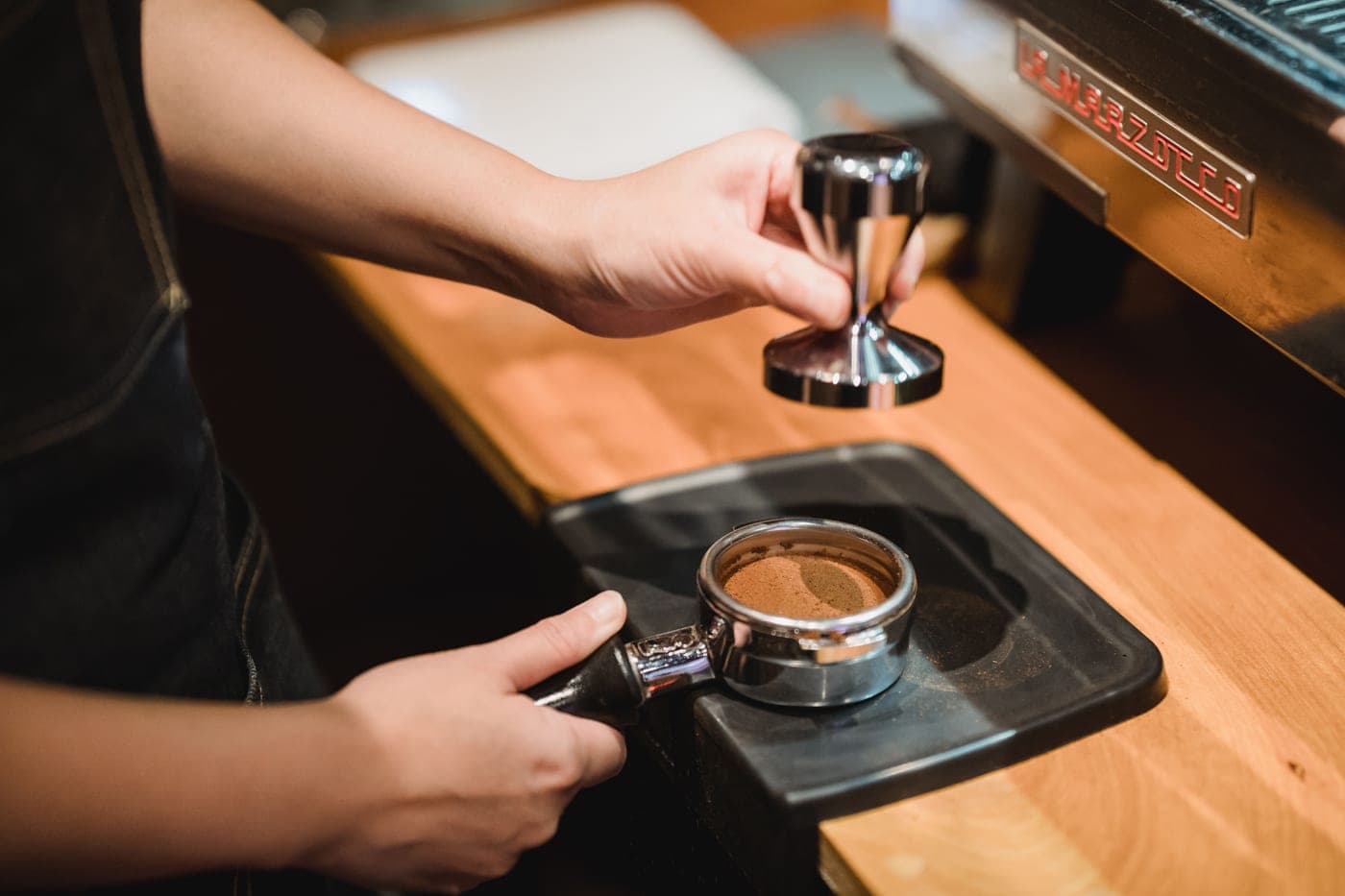
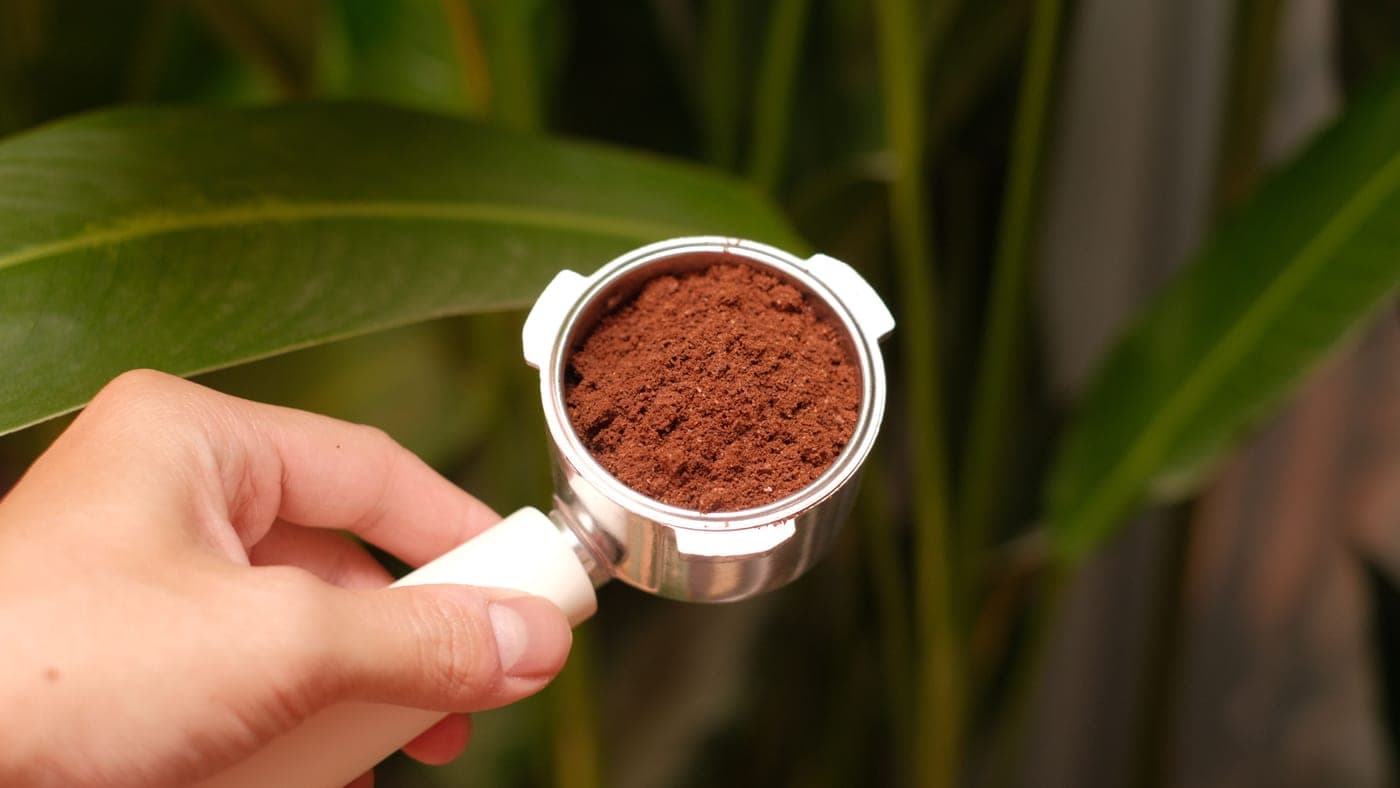
A tamper compresses the ground coffee into an even bed so water has to push through all of it rather than around some of it. That is the entire job, and the specification that determines whether it can do it is diameter.
Diameter first, everything else second
Your tamper must match your basket. Breville states 54 mm for its beginner machines; Gaggia and most commercial machines use 58 mm; cheaper machines often use 51 mm. A tamper two millimeters under your basket leaves an untamped ring of loose coffee around the edge, and water takes that route in preference to the compressed middle. The result is a fast, sour, uneven shot — and it looks like a grind problem.
The plastic tamper that ships in the box of a cheap machine is very often undersized. Measure your basket before you assume otherwise — portafilter sizes explains how in a minute.
Quick picks — Espresso tampers
#
Pick
Best for
Type
Price
1
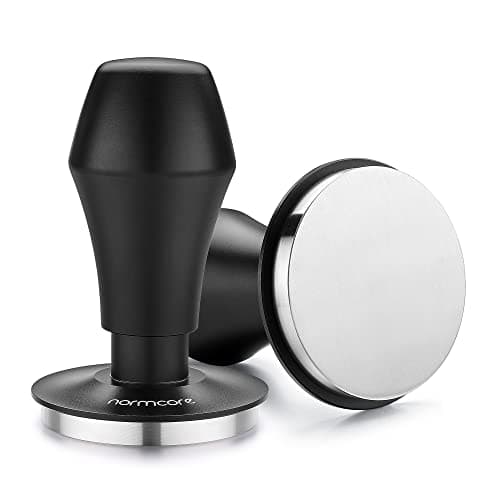
Normcore Spring-Loaded Tamper V4Top pickA calibrated tamper that clicks at a fixed pressure, so the tamp stops being a variable while you are learning everything else.
Taking tamping pressure off the list of things to worry about
We have not handled these units. Everything above comes from published manufacturer documentation, cited inline, plus arithmetic you can redo yourself. Everyone in this category says they tested twenty machines; we have not tested any, and we say so. Here is what we do instead.
01
Normcore Spring-Loaded Tamper V4
Taking tamping pressure off the list of things to worry about
A calibrated tamper that clicks at a fixed pressure, so the tamp stops being a variable while you are learning everything else.
We have not compiled a cited spec sheet for this pick yet, so there is no spec table here. What follows is about fit — who it is for and who it is not — not about numbers we cannot source. See how we pick.
Tamping pressure matters less than people think and consistency matters more. A spring tamper gives you the same pressure every time without you thinking about it.
Size must match your basket: 54 mm for most Breville machines, 58 mm for Gaggia and commercial-standard machines. A tamper a millimeter too small leaves an untamped rim, which is where the water escapes.
What it does well
Removes one variable entirely while you learn the others
Available in both 54 mm and 58 mm
What you give up
Costs several times what a plain flat tamper costs
You must buy the right diameter — this is the most common accessory mistake
Skip it if the tamper that came in the box is the right diameter and you are willing to be deliberate. A calibrated tamper is a convenience, not a requirement.
A plain, well-made flat tamper in the size your machine actually takes. The unglamorous correct answer.
We have not compiled a cited spec sheet for this pick yet, so there is no spec table here. What follows is about fit — who it is for and who it is not — not about numbers we cannot source. See how we pick.
The plastic tamper in the box of a cheap machine is usually undersized and light. Replacing it with a correctly sized metal one is a small, real improvement.
Flat base is the default and the right choice. Convex bases exist and solve a problem beginners do not have.
What it does well
Correct diameter options
Costs a fraction of a calibrated tamper
What you give up
Pressure consistency is on you
Skip it if your machine shipped with a full-size metal tamper in the right diameter — you already have this.
Less than the internet suggests, and consistency matters more than force. What you are trying to achieve is a level, uniformly compressed bed. Once the coffee is compressed enough that pressing harder does not compact it further, extra force is doing nothing except tiring your wrist.
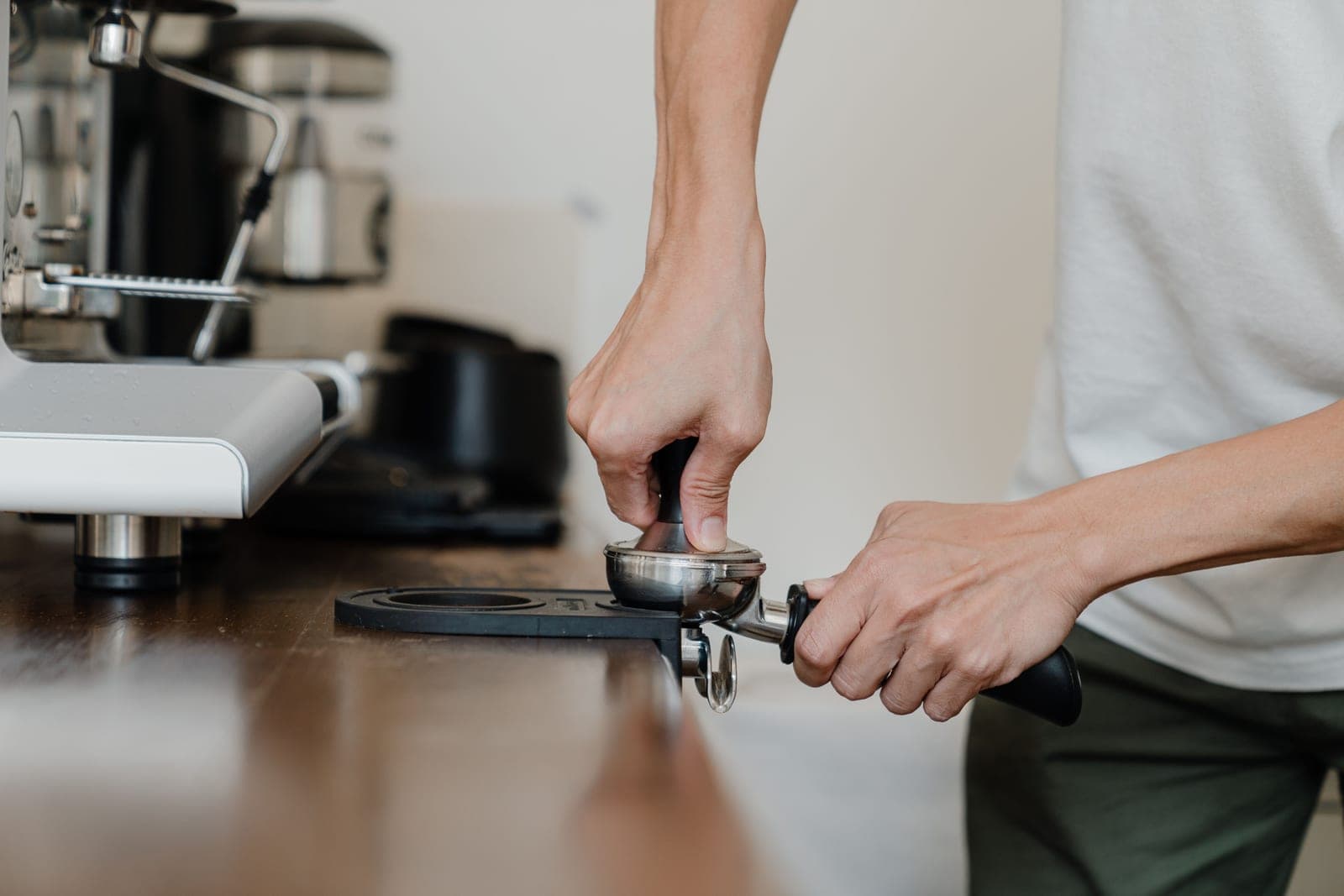
What genuinely matters is that the bed is **level**. A tamp that goes in at an angle makes one side of the puck thinner, water runs through the thin side, and you get the same sour, fast shot. That is why a calibrated tamper — one that clicks at a set pressure — helps beginners: not because the pressure number is magic, but because it removes one thing to think about while you are still learning the others.
Which tamper to buy
Situation
Buy
Your machine came with a full-size metal tamper in the right diameter
Nothing. You have one.
It came with an undersized plastic one
A flat metal tamper in your basket's exact diameter
You keep tamping at an angle
A calibrated spring tamper, or a self-leveling one
You are chasing the last few percent
A distribution tool first, not a better tamper — see puck prep
Questions people actually ask
What size tamper do I need?+−
Exactly your basket's diameter. Breville states 54 mm for its beginner machines; 58 mm is the commercial standard; many cheap machines use 51 mm. A tamper smaller than the basket leaves an untamped rim and water escapes there.
How hard should I tamp espresso?+−
Firmly and consistently, and level matters more than force. Once the bed will not compress further, more pressure achieves nothing.
Is a calibrated tamper worth it?+−
For a beginner, often yes — not because the pressure figure is important, but because it removes a variable while you are learning the others. It is a convenience, not a requirement.
Should I buy a flat or convex tamper?+−
Flat. Convex bases address a specific channeling pattern and add a variable a first setup does not need.