Heads up: we earn a commission if you buy through the links on this page, at no extra cost to you. It never changes the order of the list. Full disclosure · how we pick.
Tamping compresses the coffee into a single uniform bed so water has to push through all of it rather than around part of it. Two things determine whether it worked: **how level it is** and **how consistent you are**. Absolute force is a distant third and gets almost all the attention.
The method
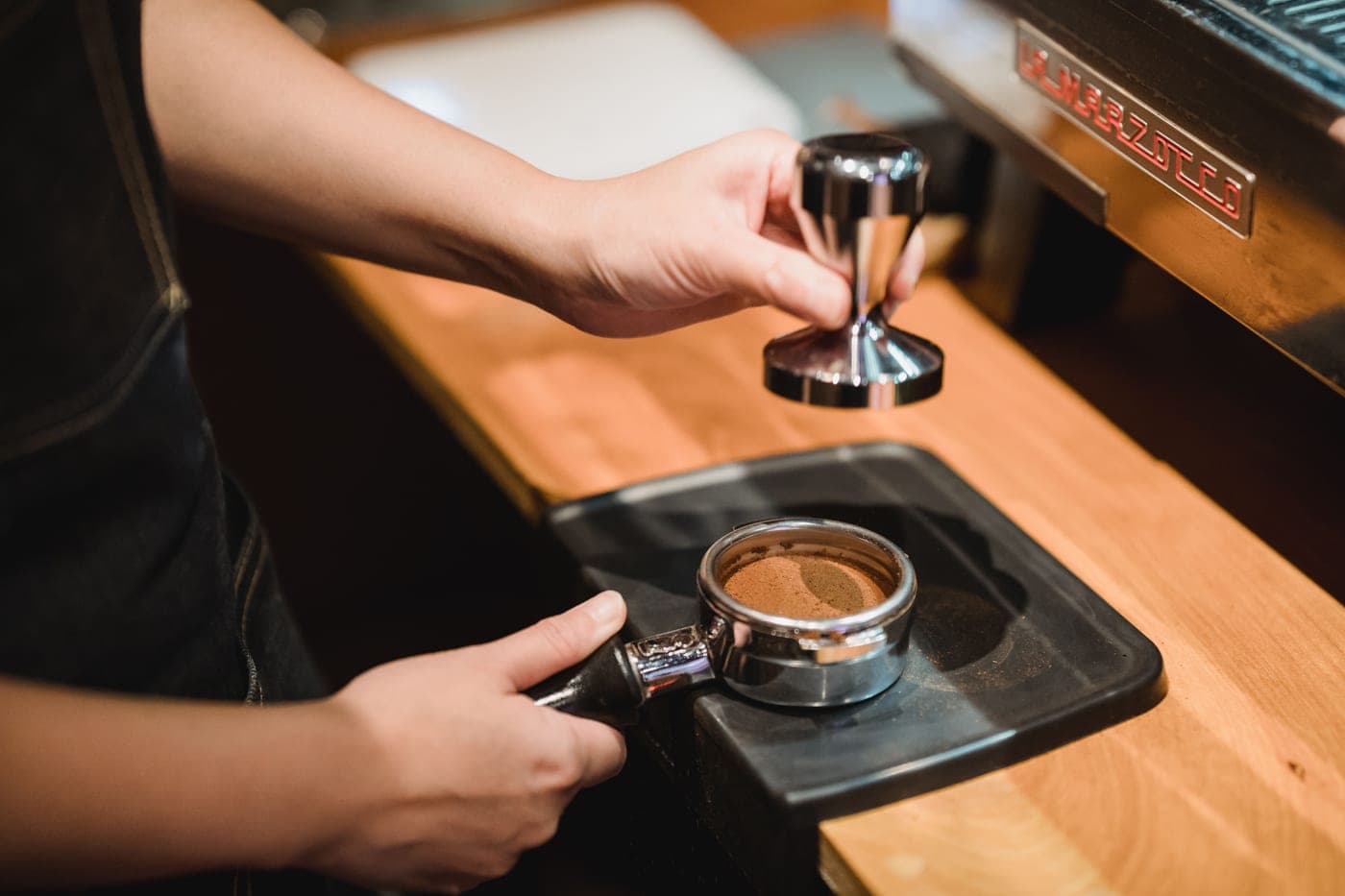
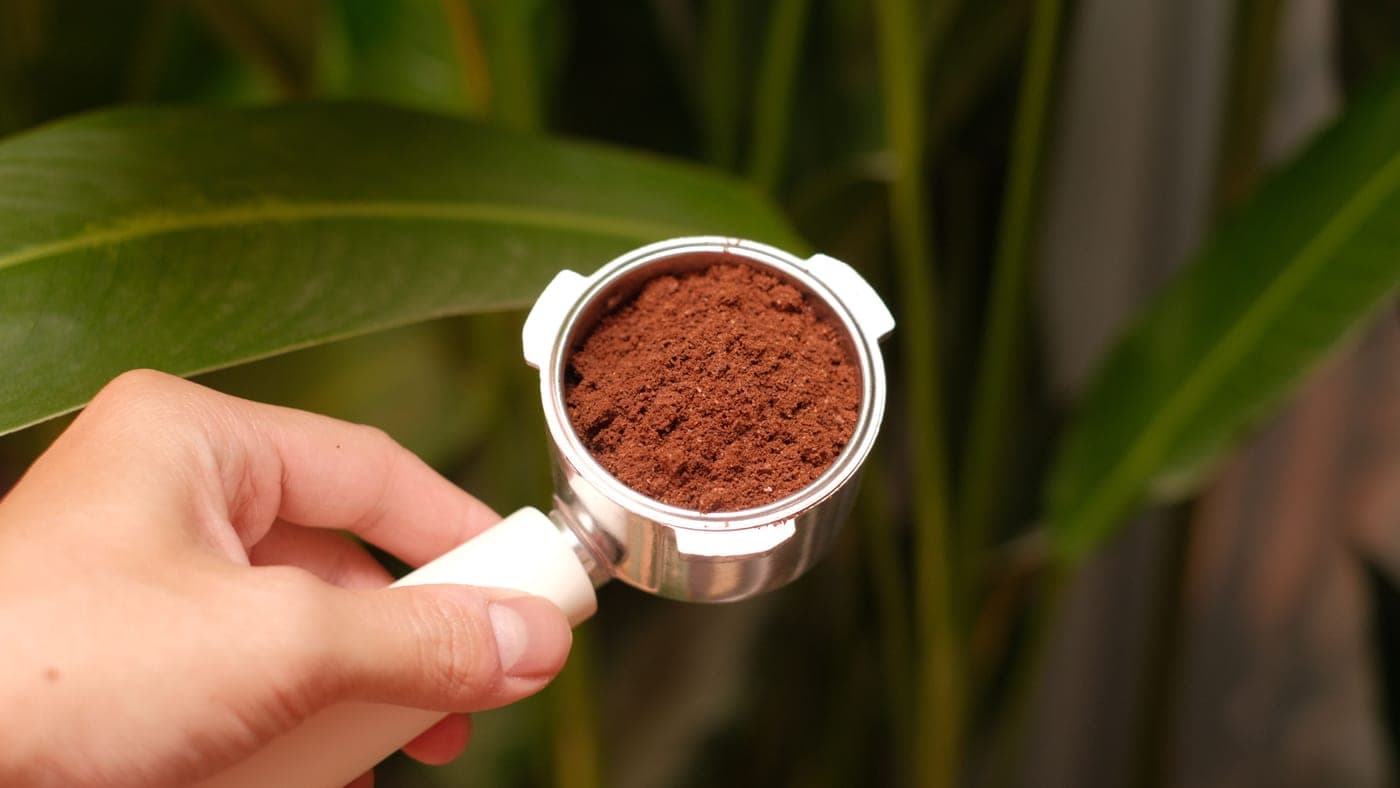
**Level the coffee first.** Tap the portafilter gently on the counter, or draw a finger across the top. Tamping does not fix an uneven surface — it preserves it.
**Set the portafilter on a flat surface** or the edge of the counter so it cannot tip. Holding it in the air is the most common cause of an angled tamp.
**Put the tamper flat on the coffee** and check by eye that it is horizontal before you press.
**Press straight down.** Elbow above the wrist, wrist straight, force coming from your arm rather than your wrist.
**Stop when the bed stops compressing.** You will feel it become solid. Pressing harder past that point achieves nothing.
**Lift straight up** without twisting. A twist can pull the top layer loose at the edges.
Quick picks — How to tamp espresso
#
Pick
Best for
Type
Price
1
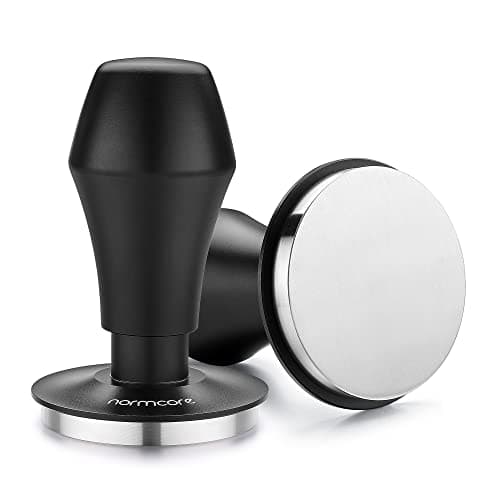
Normcore Spring-Loaded Tamper V4Top pickA calibrated tamper that clicks at a fixed pressure, so the tamp stops being a variable while you are learning everything else.
Taking tamping pressure off the list of things to worry about
We have not handled these units. Everything above comes from published manufacturer documentation, cited inline, plus arithmetic you can redo yourself. Everyone in this category says they tested twenty machines; we have not tested any, and we say so. Here is what we do instead.
01
Normcore Spring-Loaded Tamper V4
Taking tamping pressure off the list of things to worry about
A calibrated tamper that clicks at a fixed pressure, so the tamp stops being a variable while you are learning everything else.
We have not compiled a cited spec sheet for this pick yet, so there is no spec table here. What follows is about fit — who it is for and who it is not — not about numbers we cannot source. See how we pick.
Tamping pressure matters less than people think and consistency matters more. A spring tamper gives you the same pressure every time without you thinking about it.
Size must match your basket: 54 mm for most Breville machines, 58 mm for Gaggia and commercial-standard machines. A tamper a millimeter too small leaves an untamped rim, which is where the water escapes.
What it does well
Removes one variable entirely while you learn the others
Available in both 54 mm and 58 mm
What you give up
Costs several times what a plain flat tamper costs
You must buy the right diameter — this is the most common accessory mistake
Skip it if the tamper that came in the box is the right diameter and you are willing to be deliberate. A calibrated tamper is a convenience, not a requirement.
A plain, well-made flat tamper in the size your machine actually takes. The unglamorous correct answer.
We have not compiled a cited spec sheet for this pick yet, so there is no spec table here. What follows is about fit — who it is for and who it is not — not about numbers we cannot source. See how we pick.
The plastic tamper in the box of a cheap machine is usually undersized and light. Replacing it with a correctly sized metal one is a small, real improvement.
Flat base is the default and the right choice. Convex bases exist and solve a problem beginners do not have.
What it does well
Correct diameter options
Costs a fraction of a calibrated tamper
What you give up
Pressure consistency is on you
Skip it if your machine shipped with a full-size metal tamper in the right diameter — you already have this.
The often-quoted figure is 30 pounds of force, and it is worth knowing that this number is not magic — it is roughly where a typical bed stops compressing further. What matters is that you get to that point every time, not that you hit an exact number.
A calibrated tamper — one that clicks at a set pressure — is genuinely useful for a beginner, not because the pressure figure is important but because it removes a variable while you are learning the others. See tampers.
The mistakes that actually matter
Tamping problems and what they look like in the cup
Mistake
What happens
How you spot it
Tamping at an angle
One side of the bed is thinner; water runs through it
Shot sprays from one side on a bottomless portafilter
A tamper smaller than the basket
An untamped ring at the edge; water escapes there
Fast, sour shots that grinding finer does not fix
Tamping an uneven surface
The unevenness is preserved and compressed
Inconsistent timings between identical shots
Twisting on the way out
The top layer is disturbed at the edges
Occasional erratic shots for no clear reason
Inconsistent force between shots
Different resistance each time
Times varying by several seconds with no other change
Note that two of those five look exactly like a grind problem. That is why portafilter sizes matters more than it sounds — an undersized tamper sends people off to buy a grinder they did not need.
Questions people actually ask
How hard should you tamp espresso?+−
Firmly enough that the bed stops compressing — often quoted as about 30 pounds of force, though the exact number matters far less than doing the same thing every time. Level is more important than hard.
Do you need to tamp level?+−
Yes, and it is the part that matters most. An angled tamp makes one side of the bed thinner, water runs through the thin side, and the shot comes out sour and uneven.
Should you twist the tamper?+−
No. Lift straight up. Twisting can disturb the top layer at the edges, which is one of the causes of shots that are erratic for no obvious reason.
Is a calibrated tamper worth it?+−
For a beginner, often yes — not because the pressure figure is important, but because it takes one variable off the list while you learn the others.