Heads up: we earn a commission if you buy through the links on this page, at no extra cost to you. It never changes the order of the list. Full disclosure · how we pick.
A steam wand runs hot enough to cook milk protein onto its own surface the moment it is out of the pitcher. Leave that for a day and it hardens; leave it for a week and it blocks the holes in the tip. Almost everything in this category is prevented by one habit.
The habit, in five seconds
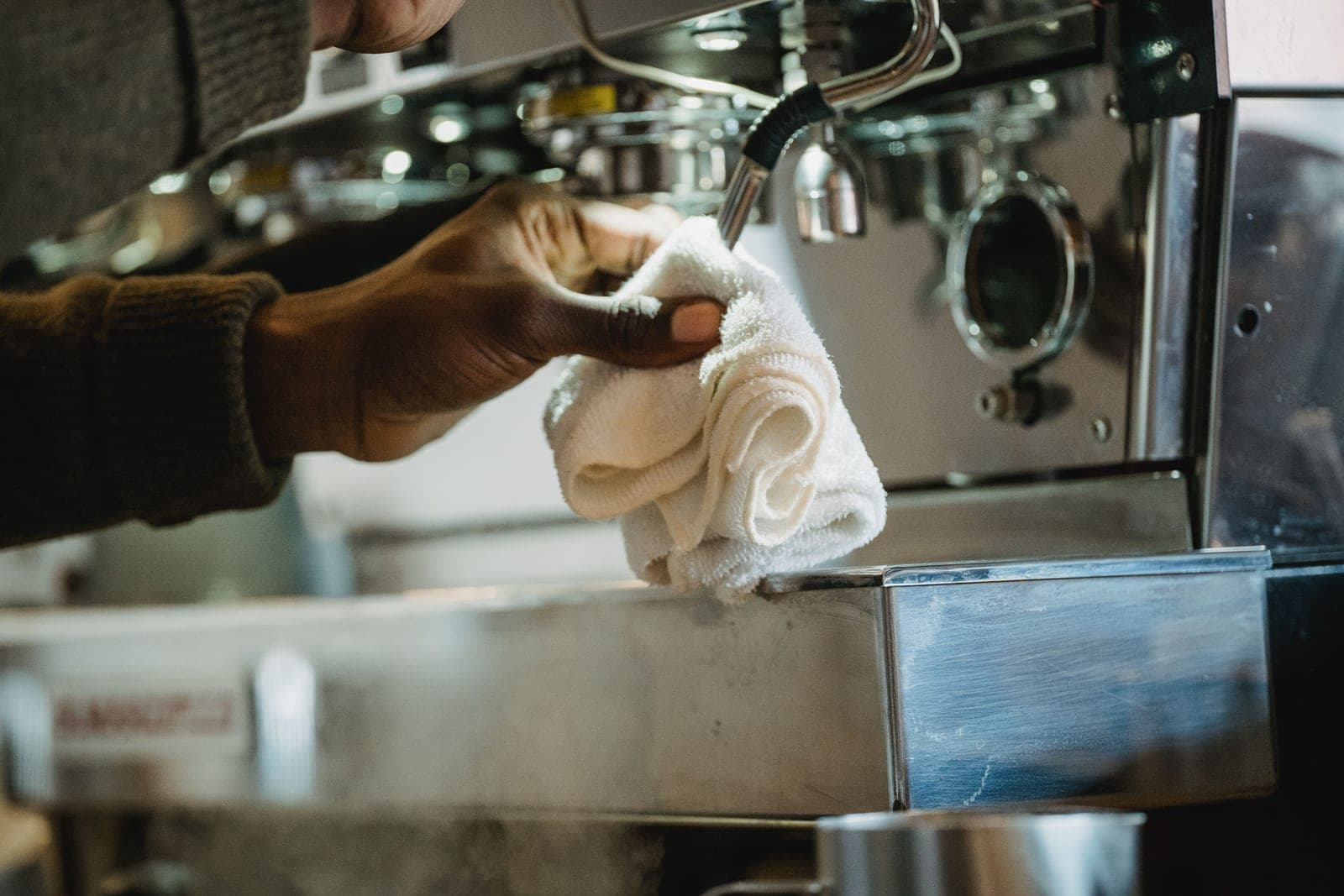
**Wipe the wand with a damp cloth** the instant you take it out of the milk. While it is hot, milk residue comes off with no effort.
**Purge it for one second** into the drip tray. That clears milk that got drawn up into the tip.
That is it. Both, every time, no exceptions.
Keep a dedicated damp cloth beside the machine for this and nothing else. The habit fails when the cloth is somewhere else.
Quick picks — Steam wand and milk system care
#
Pick
Best for
Type
Price
1
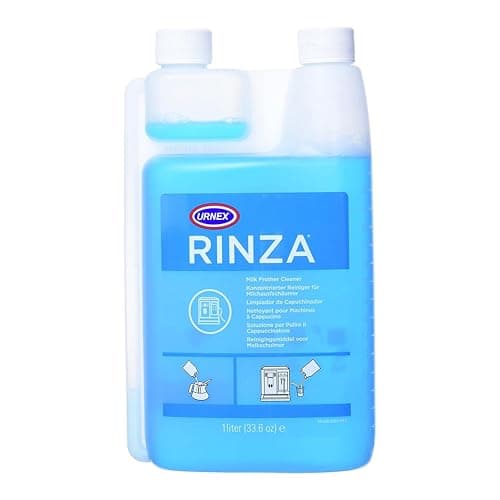
Urnex Rinza Milk Frother CleanerTop pickAn alkaline cleaner for milk residue. Necessary for automatic milk systems, useful for a manual wand you have not been perfect with.
A steam wand or milk system that has had milk in it
Normcore Stainless Milk PitcherA 12 oz stainless pitcher with a defined spout. Size matters more than brand: too big and the wand cannot reach, too small and it overflows.
We have not handled these units. Everything above comes from published manufacturer documentation, cited inline, plus arithmetic you can redo yourself. Everyone in this category says they tested twenty machines; we have not tested any, and we say so. Here is what we do instead.
01
Urnex Rinza Milk Frother Cleaner
A steam wand or milk system that has had milk in it
An alkaline cleaner for milk residue. Necessary for automatic milk systems, useful for a manual wand you have not been perfect with.
We have not compiled a cited spec sheet for this pick yet, so there is no spec table here. What follows is about fit — who it is for and who it is not — not about numbers we cannot source. See how we pick.
Milk protein bakes onto a hot wand within seconds. Purging and wiping the wand immediately after every use prevents almost all of it, for free.
Where a cleaner earns its place is automatic milk systems with tubes you cannot reach with a cloth.
What it does well
Reaches the parts of a milk system a cloth cannot
Cheap per use
What you give up
Unnecessary if you wipe and purge a manual wand every time
Skip it if you have a manual wand and you already purge and wipe it after every drink. That habit does the same job for nothing.
A 12 oz stainless pitcher with a defined spout. Size matters more than brand: too big and the wand cannot reach, too small and it overflows.
We have not compiled a cited spec sheet for this pick yet, so there is no spec table here. What follows is about fit — who it is for and who it is not — not about numbers we cannot source. See how we pick.
For one or two drinks, a 12 oz pitcher is the right size. Fill it to just below the spout base and the milk has room to expand.
A jug from the kitchen cupboard does not work: the wand tip needs the right depth and angle to spin the milk, and a straight-sided vessel will not do it.
What it does well
Correct geometry for the wand
Pointed spout is what makes a pour controllable
What you give up
Wrong size is a common mistake — 20 oz is too big for one latte
Skip it only if a pitcher came with your machine and it is around 12 oz — the Bambino Plus ships with a 16 fl oz one, which is fine.
Even with the daily habit, residue accumulates inside the tip. Once a week, unscrew the tip if it comes off, and soak it in hot water with a milk-system cleaner for ten to fifteen minutes. If it does not unscrew, soak the end of the wand in a small jug of the same solution, then purge it thoroughly.
Clearing a blocked wand
**Turn the machine off and let the wand cool.** Everything here is easier cold and dangerous hot.
**Unscrew the tip** if it is removable and soak it in hot milk-cleaner solution for 20 minutes.
**Clear each hole** with a pin or the cleaning tool that came with the machine. Do not force anything larger — the holes are sized deliberately and enlarging one changes how the wand behaves.
**Refit and purge** with the steam fully on for a few seconds.
**If steam still comes out weak from every hole**, that is scale, not milk — see descaling, and remember to run descaler through the wand as well as the group head.
Automatic milk systems
Bean-to-cup machines that draw milk through tubing need more than a wipe, because you cannot reach the inside of a tube with a cloth. Most run a rinse cycle after each milk drink and ask for a deeper clean periodically — do both, because milk residue in a tube is a genuine hygiene issue rather than just a taste one.
This is also why milk-system design is worth checking before buying an automatic machine: Philips states the LatteGo system is two parts with no tubes and rinses under the tap in about 15 seconds. The systems people abandon are the ones where the daily clean is awkward. See bean-to-cup automatics.
Questions people actually ask
How do you clean a steam wand?+−
Wipe it with a damp cloth and purge it for a second immediately after every use, while it is still hot. Once a week, soak the tip in hot water with a milk-system cleaner.
Why is my steam wand blocked?+−
Milk protein cooked onto the inside of the tip. Soak the tip in a milk cleaner and clear each hole with a pin. If steam is weak from every hole rather than blocked in one, that is scale and needs descaling.
Do I need a special milk cleaner?+−
For a manual wand, the daily wipe does most of the work and a weekly soak in hot water helps. For automatic milk systems with tubing, a dedicated milk-line cleaner is genuinely necessary — you cannot reach inside a tube.
Can I put the steam wand tip in the dishwasher?+−
Better not to. Soaking in hot water with a milk cleaner is more effective and does not risk the small holes being blocked by dishwasher residue.