Heads up: we earn a commission if you buy through the links on this page, at no extra cost to you. It never changes the order of the list. Full disclosure · how we pick.
A machine plus a separate grinder needs roughly twice the counter of one machine that does both. In a lot of kitchens that single fact decides the purchase, and it is a perfectly good reason. This page is about what you are trading for it. If the counter is the whole problem, compact espresso machines approaches it from the other direction — shrinking the machine rather than merging the two.
Quick picks — Espresso machines with a built-in grinder
#
Pick
Best for
Type
Price
1
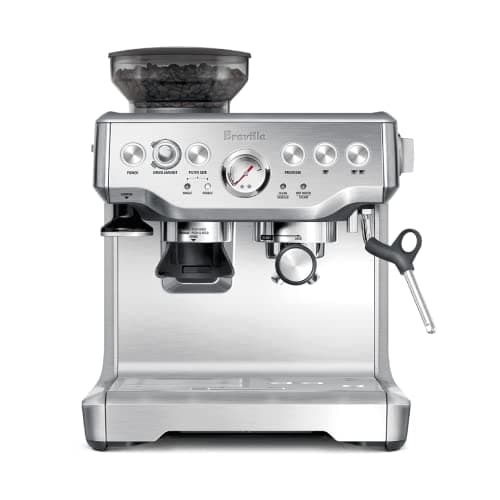
Breville Barista Express (BES870)Top pickThe default all-in-one: a conical burr grinder with 16 settings built into a machine with a 54 mm basket and PID-controlled temperature.
One box, one counter footprint, machine and grinder together
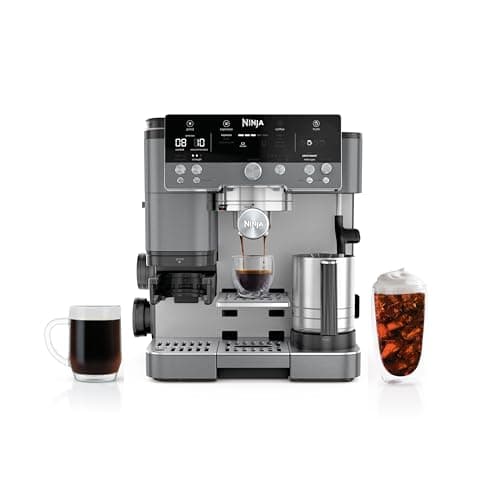
Ninja Luxe Café Premier (ES601)A three-in-one with a built-in conical burr grinder, a built-in scale and guided grind-size prompts — unusually beginner-shaped for the price.
A household that wants espresso, drip and cold brew from one machine
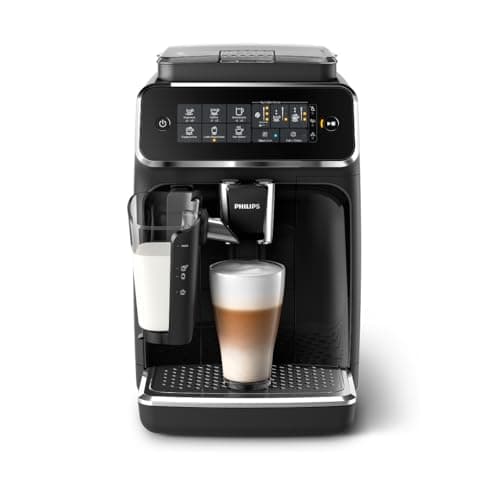
Philips Series 3200 LatteGoA bean-to-cup machine whose milk system is two parts with no tubes, which is the part of an automatic machine people usually come to hate.
Milk drinks with no technique and no cleaning ritual
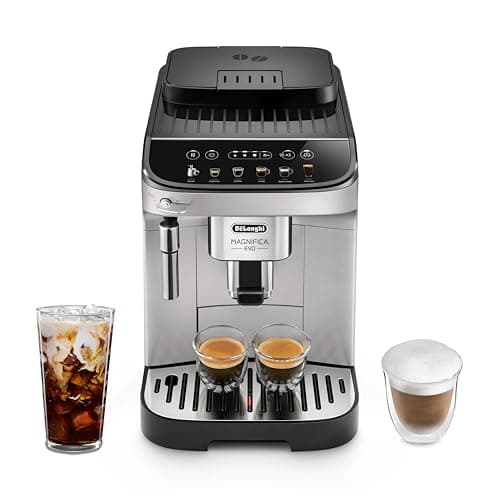
De'Longhi Magnifica EvoA bean-to-cup machine: beans in the top, drink in the cup, no portafilter and no technique. A different product from an espresso machine, and the right one for some people.
We have not handled these units. Everything above comes from published manufacturer documentation, cited inline, plus arithmetic you can redo yourself. Everyone in this category says they tested twenty machines; we have not tested any, and we say so. Here is what we do instead.
01
Breville Barista Express (BES870)
One box, one counter footprint, machine and grinder together
The default all-in-one: a conical burr grinder with 16 settings built into a machine with a 54 mm basket and PID-controlled temperature.
Published specifications for the Breville Barista Express (BES870), with sources
Grinder
Integrated conical burr, 16 grind settings, grinds to the portafilter on demand [source]
Sixteen grind settings is the number to weigh. It is enough to find an espresso grind, and it is not enough to make small corrections once you are close — which is exactly the trade-off you accept for the convenience of one box.
PID temperature control at a stated 200°F is a genuine feature and not a marketing word: it means the water temperature is held rather than allowed to drift between shots.
The footprint argument is the strongest one here. A separate machine and grinder need roughly twice the counter, and on a small kitchen counter that decides it.
What it does well
Machine and grinder in one footprint, which is often the real constraint
Grinds straight into the portafilter — no transfer, no mess step
PID-held brew temperature
Manual wand, so milk skill is learnable on it
What you give up
Sixteen settings is coarse resolution once you are dialing in
The grinder cannot be upgraded independently of the machine
Bigger and heavier than a standalone machine
Skip it if you already own a decent burr grinder — you would be paying twice for the same job, and a separate machine plus your existing grinder will beat it.
A household that wants espresso, drip and cold brew from one machine
A three-in-one with a built-in conical burr grinder, a built-in scale and guided grind-size prompts — unusually beginner-shaped for the price.
Published specifications for the Ninja Luxe Café Premier (ES601), with sources
Grinder
Conical burr with 25 grind settings, covering espresso through drip [source]
Dosing
Built-in scale, dosing by weight per drink [source]
Modes
Espresso, drip coffee and rapid cold brew, with guided grind-size recommendations [source]
A built-in scale is rare at this price and it matters more than it sounds: weighing the dose is the single change that makes shots repeatable, and a machine that does it removes the most-skipped step.
Twenty-five grind settings is more resolution than the Barista Express offers, which is a genuine point in its favor.
The three-in-one framing is the risk. Machines that do three jobs are harder to service and harder to replace one part of.
What it does well
Built-in scale, so the dose is weighed without you owning a scale
25 grind settings — real resolution for the money
Covers drip and cold brew for the rest of the household
What you give up
More to go wrong than a single-purpose machine
The guided prompts are a floor, not a ceiling — control is limited
Skip it if espresso is the only thing you want. A dedicated machine plus a real grinder gives you more headroom for the same money.
Aroma Extract system holding water between 90 and 98°C [source]
Milk system
LatteGo, stated to clean under the tap in about 15 seconds [source]
The 20,000-cup burr rating is a durability claim worth reading literally: at three drinks a day that is roughly eighteen years, so the burrs are not the thing that will fail first.
The milk system is the real differentiator. Automatic machines that pump milk through tubes need a cleaning cycle every day; a two-part carafe that rinses under the tap is the version people actually keep up with.
Twelve grind settings is plenty for a machine that also controls dose and yield itself, and would be tight on a machine where you control them.
What it does well
Milk system that is genuinely quick to clean
Ceramic burrs with a published durability figure
No technique required from anyone in the house
What you give up
You do not control dose or yield directly
Larger footprint than a compact espresso machine
Skip it if you want to learn to pull shots. It is built to make that unnecessary, and it succeeds.
A bean-to-cup machine: beans in the top, drink in the cup, no portafilter and no technique. A different product from an espresso machine, and the right one for some people.
We have not compiled a cited spec sheet for this pick yet, so there is no spec table here. What follows is about fit — who it is for and who it is not — not about numbers we cannot source. See how we pick.
A bean-to-cup machine removes every variable you would otherwise learn to control, which is the point. Nobody in the house needs to be taught anything.
The trade is ceiling and repairability: you cannot adjust dose and yield the way you can on a machine with a portafilter, and there is more inside it to go wrong.
What it does well
Anyone in the house can use it without instruction
No separate grinder, no puck prep, no cleanup ritual
What you give up
Very little control over the shot
More internal complexity than a machine with a portafilter
Skip it if the appeal for you is making the coffee. This machine is specifically designed to take that part away.
Breville states 16 grind settings on the Barista Express; Ninja states 25 on the Luxe Café Premier; Philips states 12 on the 3200 LatteGo. Compare that with the Baratza Encore ESP, where Baratza states the first 20 clicks are a fine, high-resolution espresso range with 20 more for filter. Sixteen settings across the whole range means each step is a bigger jump, so when your shot is running slightly too fast, the next setting up may take it too slow. You end up correcting with dose instead of grind, which works but is fiddlier. Ninja's full range, including the model that publishes 60 grind sizes, is compared on which Ninja espresso machine to buy.
The upgrade path
With separates you can buy a better grinder in two years and keep the machine, or vice versa. With an all-in-one, the two are married. If either fails outside warranty, you are looking at the whole appliance.
Retention
Built-in grinders keep a hopper of beans on top. That means some ground coffee stays in the chute between doses and some beans sit exposed for weeks. Neither is fatal, and both are the reason single dosing exists as a separate approach.
What you get back
One footprint and one power outlet.
Grinding straight into the portafilter, which removes the transfer step where most of the mess and static happens.
One purchase decision instead of two, and one thing to clean.
On the Ninja, a built-in scale — which is unusual, and genuinely useful, because weighing the dose is the most-skipped step that actually matters.
Questions people actually ask
Are built-in grinders any good?+−
They are good enough to make genuinely nice espresso. What they are not is as adjustable as a dedicated espresso grinder, and they cannot be upgraded on their own. Both of those are trades, not defects.
How many grind settings do I need for espresso?+−
More than a handful. The point of adjustment is small corrections, so a grinder with 12 to 16 settings spread across espresso and filter gives you only a few usable espresso positions. Baratza states 20 fine clicks inside the espresso range on the Encore ESP, which is the shape you want.
Can I use a machine with a built-in grinder with pre-ground coffee?+−
Most have a bypass for exactly that. It is useful for decaf so you do not have to empty the hopper — see our decaf note.
Is a bean-to-cup machine the same as an all-in-one?+−
Not quite. Both grind internally, but a bean-to-cup also doses, tamps and brews without a portafilter — you never touch the coffee. See bean-to-cup automatics.