Heads up: we earn a commission if you buy through the links on this page, at no extra cost to you. It never changes the order of the list. Full disclosure · how we pick.
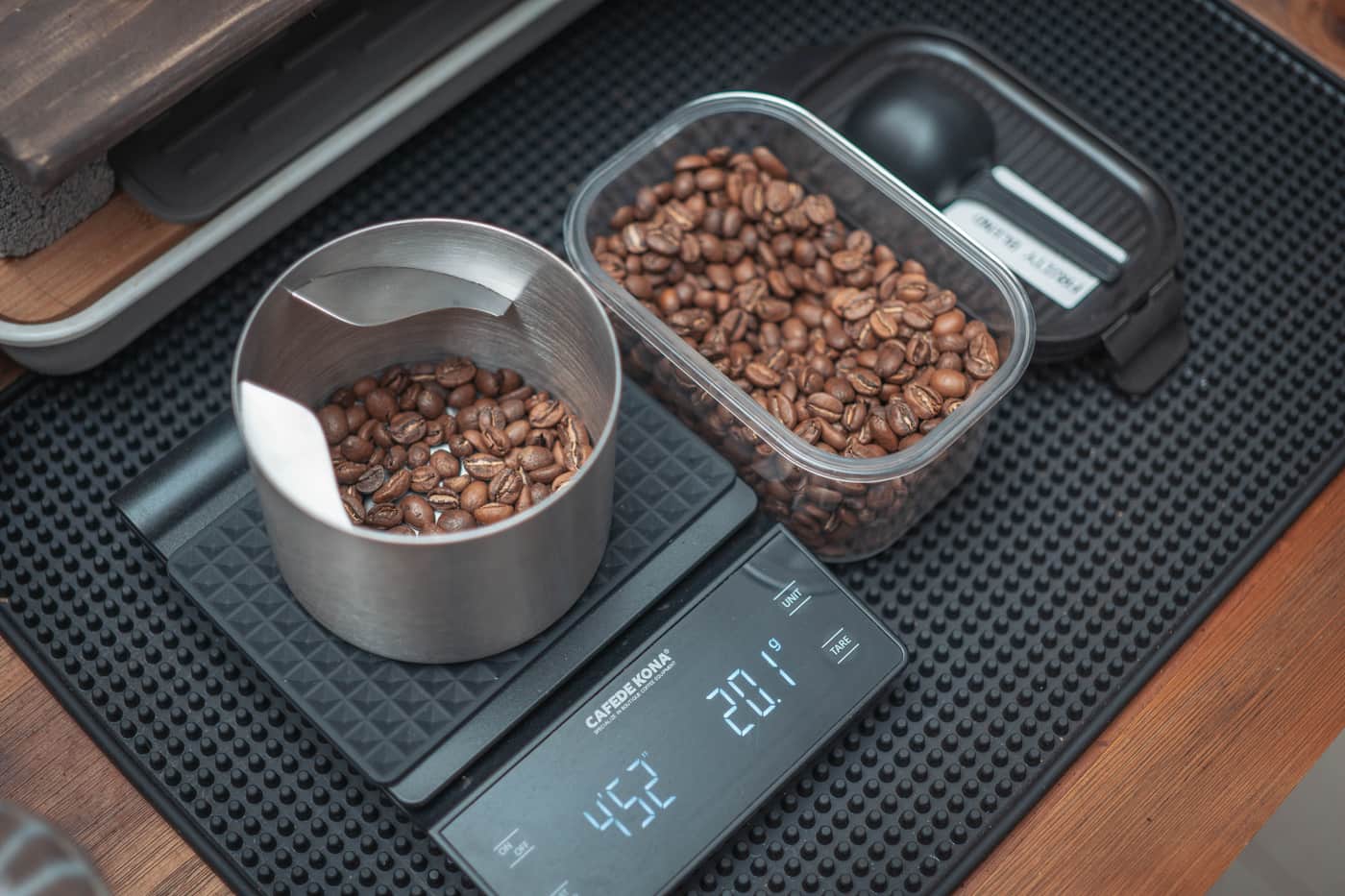
Single dosing means weighing out exactly the beans for one shot — say 18 g — and grinding all of them, instead of keeping a hopper full on top of the grinder and dispensing from it. It solves two real problems and creates one small inconvenience. Encore ESP vs DF54 is that same trade-off as a straight head-to-head between two grinders at a similar price.
Problem one: retention
Every grinder keeps some ground coffee inside, in the chute and around the burrs. With a hopper, that residue is yesterday's coffee, and today's shot contains some of it. The amount is usually small, but it is stale and it is inconsistent — which is why a dose can weigh in correctly and still behave differently from the one before it.
Problem two: beans sitting out
A full hopper is a jar of beans exposed to air and light on your counter. The National Coffee Association lists air, moisture, heat and light as coffee's four enemies and gives whole beans one to three weeks at room temperature. A hopper is the opposite of the opaque, airtight container they recommend. See storage and freshness.
Quick picks — Single dosing, explained
#
Pick
Best for
Type
Price
1
No photo
Turin DF54Top pickA single-dose electric grinder with flat burrs — a category that used to start at three times the price.
1Zpresso JX-ProBigger, heavier and higher-capacity than the Q2, with the adjustment resolution that makes espresso dial-in on a hand grinder realistic.
We have not handled these units. Everything above comes from published manufacturer documentation, cited inline, plus arithmetic you can redo yourself. Everyone in this category says they tested twenty machines; we have not tested any, and we say so. Here is what we do instead.
01No photo
Turin DF54
Flat burrs and single dosing on a home budget
A single-dose electric grinder with flat burrs — a category that used to start at three times the price.
We have not compiled a cited spec sheet for this pick yet, so there is no spec table here. What follows is about fit — who it is for and who it is not — not about numbers we cannot source. See how we pick.
Single dosing means you weigh exactly the beans for one shot and grind them all, instead of keeping a hopper full. Less stale coffee sitting in the machine, less retained grounds between shots.
Flat burrs and conical burrs both make good espresso. The practical difference at home is retention and workflow, not a quality ranking.
What it does well
Single-dose workflow without a hopper full of stale beans
Stepless-style fine adjustment in the espresso range
What you give up
You must weigh beans before every grind — that is the workflow, not a flaw
More grinder than a first setup strictly needs
Skip it if this is your first grinder and your machine is an entry-level one. The grinder would be the most capable part of the setup by a wide margin.
You weigh beans before every single grind. That is one extra step and about ten seconds, and it needs a scale you were probably going to buy anyway. Some people find it a satisfying part of the ritual and some find it an obstacle at 6:40am. Both reactions are valid and you should know which one you are before buying a grinder designed around it.
Hopper against single dosing
Hopper
Single dose
Beans exposed
Whatever is in the hopper, for as long as it takes to use
No. It is a genuine refinement and it is not where a first setup's next improvement lies. If you are choosing between a single-dose grinder and a hoppered grinder with better adjustment resolution in the espresso range, take the adjustment every time. Retention costs you a fraction of a gram of staleness; poor adjustment costs you the ability to dial in at all.
Questions people actually ask
Is a single-dose grinder necessary?+−
No. It reduces retention and keeps beans fresher, which are real improvements, but neither is the limiting factor in a first setup. Adjustment resolution in the espresso range matters more.
What is grinder retention?+−
The ground coffee that stays inside the grinder between doses, in the chute and around the burrs. It means part of today's shot is yesterday's coffee.
Can I single dose with a normal grinder?+−
Yes. Weigh the beans, drop them in the empty hopper, grind and knock the chute. Hand grinders do this by default because they hold only a dose or two.
Does single dosing make better coffee?+−
It makes coffee more consistent, which is not quite the same thing. The taste improvement comes mostly from beans not sitting exposed in a hopper for weeks.