Heads up: we earn a commission if you buy through the links on this page, at no extra cost to you. It never changes the order of the list. Full disclosure · how we pick.
A scale is the item most often left out of a first setup and the one that most reliably improves it. Here is why, in one sentence: without a scale you are adjusting variables you cannot see, so a shot that goes wrong gives you no information about what to change.
The two specifications that matter
0.1 g resolution
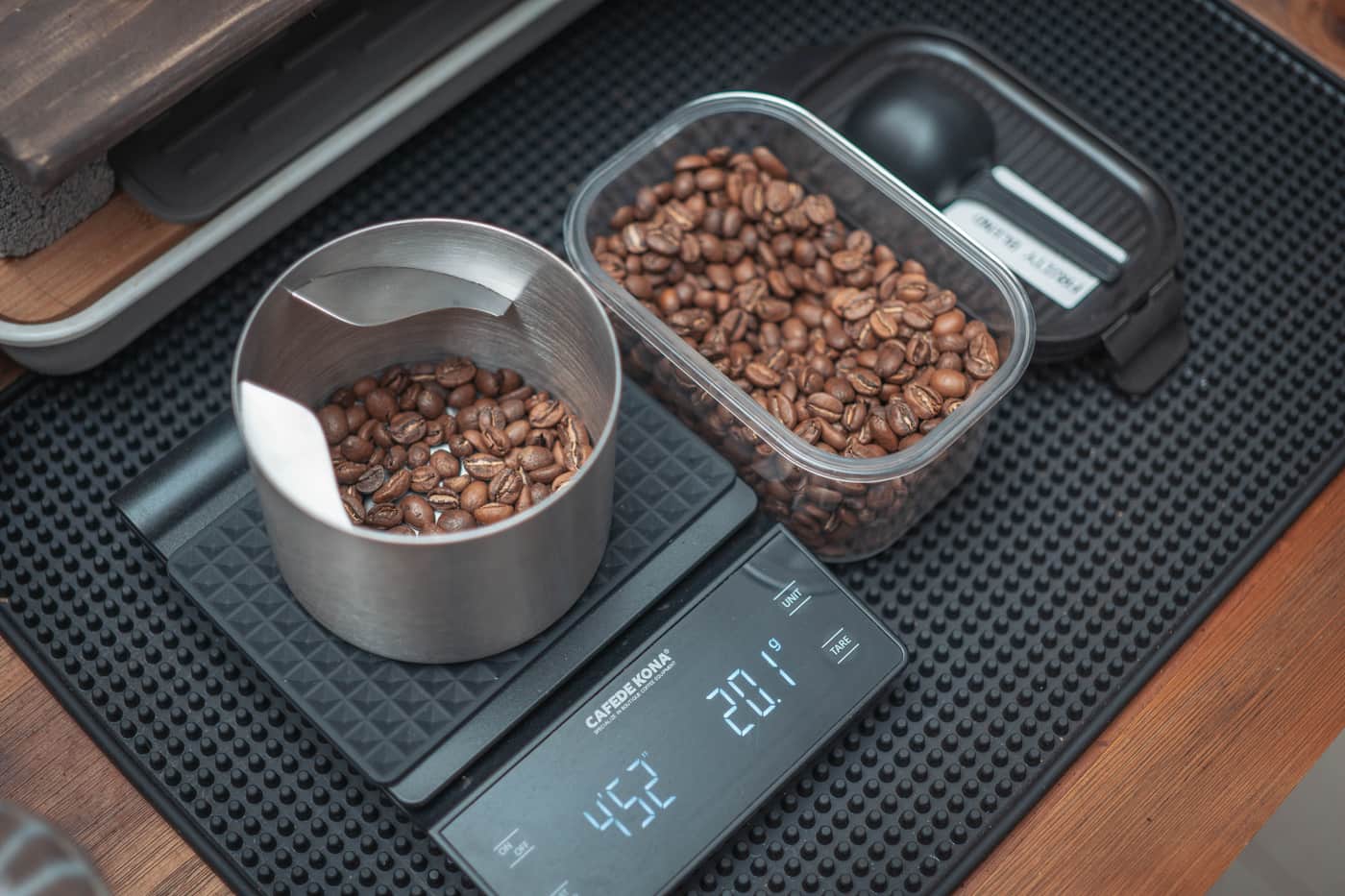
An espresso dose is around 18 g — Breville states exactly that for its 54 mm baskets. A gram either way is a five percent change in the amount of coffee, and it is clearly visible in how the shot runs. A kitchen scale that reads in whole grams rounds that away, so 17.6 g and 18.4 g both read as 18.
A timer
The National Coffee Association gives espresso a brewing time of 20 to 30 seconds. You cannot hit a window you are not measuring, and juggling a phone while a shot pours is how people stop timing shots after a week. A scale with a built-in timer removes that.
Quick picks — Espresso scales
#
Pick
Best for
Type
Price
1
Timemore Black Mirror Basic 2Top pickA 0.1 g coffee scale with a built-in timer, small enough to sit under a cup on the drip tray.
Acaia LunarThe scale everyone eventually sees on a café counter. It is excellent and it is the clearest example on this site of a thing you should not buy yet.
We have not handled these units. Everything above comes from published manufacturer documentation, cited inline, plus arithmetic you can redo yourself. Everyone in this category says they tested twenty machines; we have not tested any, and we say so. Here is what we do instead.
01
Timemore Black Mirror Basic 2
One scale for the dose and the shot
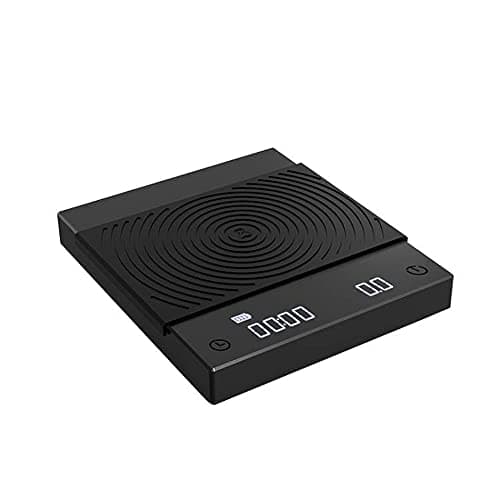
A 0.1 g coffee scale with a built-in timer, small enough to sit under a cup on the drip tray.
We have not compiled a cited spec sheet for this pick yet, so there is no spec table here. What follows is about fit — who it is for and who it is not — not about numbers we cannot source. See how we pick.
Espresso needs 0.1 g resolution because the dose is around 18 g and a gram either way changes the shot noticeably.
The timer matters as much as the weight. The National Coffee Association puts espresso brewing at 20-30 seconds, and you cannot hit a window you are not measuring.
What it does well
0.1 g resolution, which is the actual requirement
Timer built in, so you are not juggling a phone
Small enough to fit under the portafilter on most machines
What you give up
Not waterproof — it lives on a drip tray, so wipe it
No flow-rate display
Skip it only if your machine already weighs the dose for you. Otherwise this is the cheapest thing on the whole list that changes the coffee.
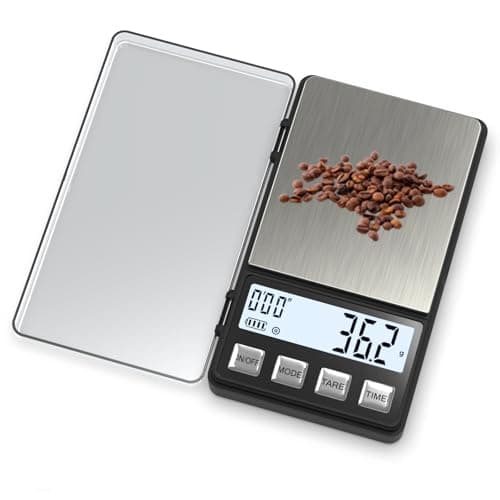
A small, inexpensive 0.1 g scale with a timer. Does the two jobs that matter and nothing else.
We have not compiled a cited spec sheet for this pick yet, so there is no spec table here. What follows is about fit — who it is for and who it is not — not about numbers we cannot source. See how we pick.
The two features that matter for espresso are 0.1 g resolution and a timer. Everything above that on a scale spec sheet is convenience.
A kitchen scale that reads in whole grams is not usable here — it cannot see the difference between a good dose and a bad one.
What it does well
Costs less than a bag of good beans
Fits on a drip tray
What you give up
Slower to settle than a more expensive scale
Build reflects the price
Skip it if you already own any scale that reads to 0.1 g. Any of them will do — this is not a place to spend twice.
The scale everyone eventually sees on a café counter. It is excellent and it is the clearest example on this site of a thing you should not buy yet.
We have not compiled a cited spec sheet for this pick yet, so there is no spec table here. What follows is about fit — who it is for and who it is not — not about numbers we cannot source. See how we pick.
It responds faster and it is water resistant. Both are real improvements over a budget scale and neither changes what is in the cup.
For the price difference between this and a working 0.1 g scale you could buy a considerably better grinder, which would change what is in the cup.
What it does well
Fast, water resistant, built to live on a wet tray
What you give up
Costs more than several complete beginner accessories put together
Skip it now. This is the standing “skip this” pick of the starter kit: buy it in year three if you still want it, not in month one.
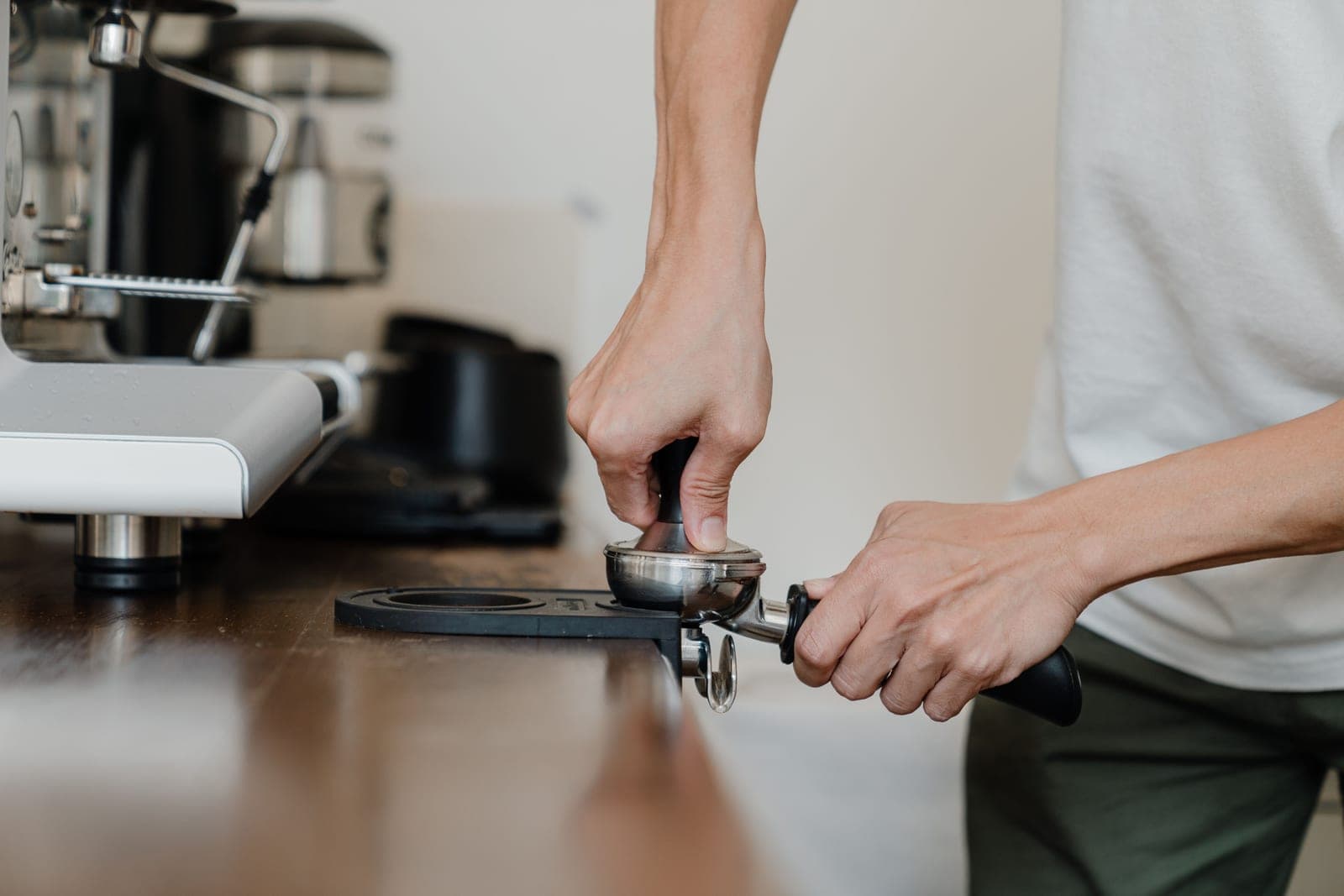
Weigh the dry coffee into the basket. Aim for your machine's stated dose — 18 g on most 54 mm machines.
Put the cup on the scale under the portafilter and zero it.
Start the timer as the pump starts.
Stop the shot at roughly double the dose — 36 g for an 18 g dose, the 1:2 ratio the NCA describes.
Write down the three numbers: in, out, seconds. That record is what makes dialing in a process rather than a guess.
The one to skip
The premium espresso scale — the one you see on cafe counters. It is genuinely better: it settles faster and survives being wet. Neither of those changes what is in the cup. For the price difference between it and a working 0.1 g scale you could buy a considerably better grinder, and the grinder does change what is in the cup. Buy it in year three if you still want it.
If your machine already weighs the dose
Some machines have a built-in scale — Ninja states one on the Luxe Café Premier, dosing by weight per drink. That covers the input side. You may still want a scale for the output, because knowing the yield is what tells you whether the shot ran long or short. See machines with a built-in grinder.
Questions people actually ask
Do I need a scale for espresso?+−
Yes, if you want repeatable shots. Doses are around 18 g and a gram either way changes the shot visibly, which a whole-gram kitchen scale cannot show you.
What resolution does an espresso scale need?+−
0.1 g. That is the whole requirement, along with a timer. Anything beyond those two is convenience.
Is an expensive coffee scale worth it?+−
It responds faster and resists water, and neither changes the coffee. The money is better spent on the grinder, which does.
Can I use my kitchen scale?+−
Only if it reads to 0.1 g. Most kitchen scales read in whole grams or in 5 g steps, which is too coarse for an 18 g dose.