Heads up: we earn a commission if you buy through the links on this page, at no extra cost to you. It never changes the order of the list. Full disclosure · how we pick.
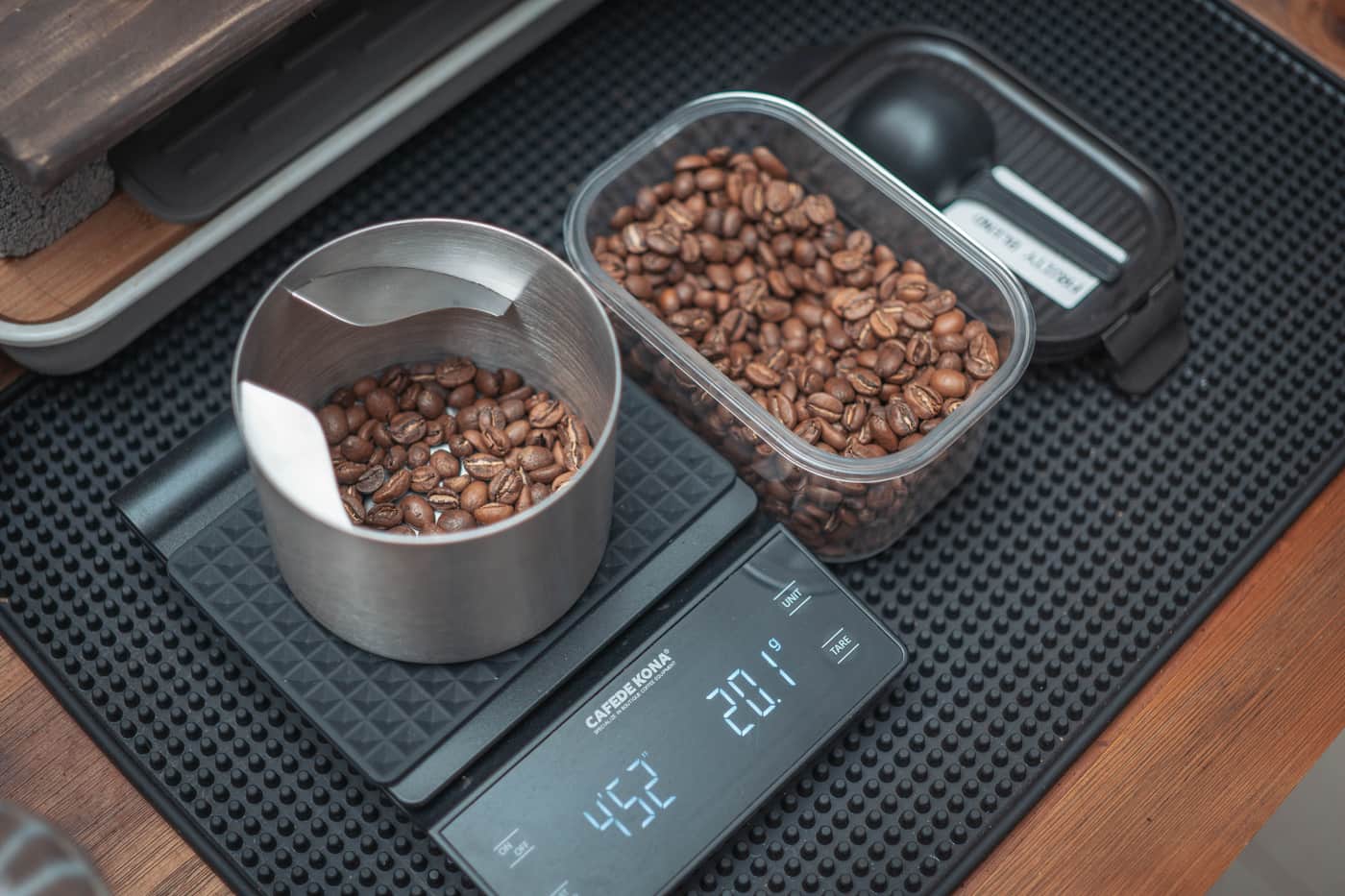
An espresso recipe is written as a ratio: **dry coffee in : liquid espresso out**, both by weight. The National Coffee Association gives 1:2 — 1 gram of dry coffee to 2 grams of brewed espresso. So 18 g in and 36 g out is a 1:2, and so is 20 g in and 40 g out.
Two things trip people up. The output is weighed, not measured by volume — crema makes volume unreliable. And both numbers are the coffee, not the water in the tank.
Quick picks — Espresso ratios explained
#
Pick
Best for
Type
Price
1
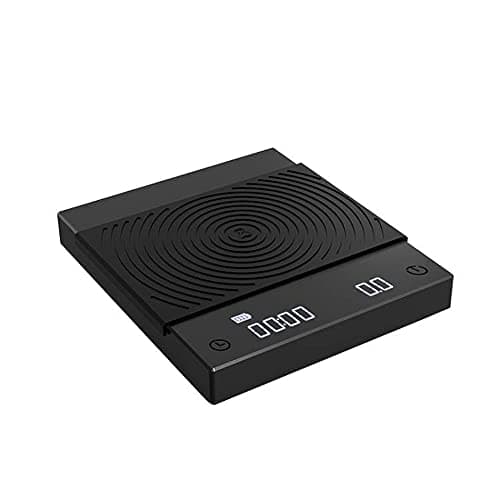
Timemore Black Mirror Basic 2Top pickA 0.1 g coffee scale with a built-in timer, small enough to sit under a cup on the drip tray.
We have not handled these units. Everything above comes from published manufacturer documentation, cited inline, plus arithmetic you can redo yourself. Everyone in this category says they tested twenty machines; we have not tested any, and we say so. Here is what we do instead.
01
Timemore Black Mirror Basic 2
One scale for the dose and the shot
A 0.1 g coffee scale with a built-in timer, small enough to sit under a cup on the drip tray.
We have not compiled a cited spec sheet for this pick yet, so there is no spec table here. What follows is about fit — who it is for and who it is not — not about numbers we cannot source. See how we pick.
Espresso needs 0.1 g resolution because the dose is around 18 g and a gram either way changes the shot noticeably.
The timer matters as much as the weight. The National Coffee Association puts espresso brewing at 20-30 seconds, and you cannot hit a window you are not measuring.
What it does well
0.1 g resolution, which is the actual requirement
Timer built in, so you are not juggling a phone
Small enough to fit under the portafilter on most machines
What you give up
Not waterproof — it lives on a drip tray, so wipe it
No flow-rate display
Skip it only if your machine already weighs the dose for you. Otherwise this is the cheapest thing on the whole list that changes the coffee.
A ristretto is not a shorter espresso in the sense of stopping early by accident — it is a deliberately different recipe, and it usually wants a slightly coarser grind to still run at a sensible speed.
What changes when you change the ratio
As more water passes through the same coffee, two things happen at once and in opposite directions.
**Concentration falls.** More liquid, same coffee, so each milliliter has less in it.
**Extraction rises.** More water dissolves more of the coffee. The early part of a shot is sweet and acidic; the later part is where bitter compounds arrive.
That is why a longer ratio is simultaneously weaker and more bitter, which sounds contradictory until you separate the two ideas.
Working out any ratio
yield = dose × ratio
18 g × 2 = 36 g for a 1:2; 18 g × 1.5 = 27 g for a ristretto
And in reverse: if you pulled 18 g into 45 g, that is a 1:2.5 — which is why it tasted thinner than the shot before it.
Which ratio to use
A starting point by drink and roast
Situation
Try
Why
Learning, any coffee
1:2
The reference. Change it once you know what it tastes like
A dark roast tasting bitter
1:1.5
Stops the shot before the bitter end arrives
A light roast tasting sour
1:2.5 to 1:3
More water dissolves more from a denser, less soluble bean
A latte or flat white
1:2, or 1:1.5
A shorter shot survives being diluted by milk
An americano
1:2 or longer
You are diluting it anyway
Questions people actually ask
What is a 1:2 ratio in espresso?+−
One gram of dry coffee to two grams of liquid espresso out, both by weight — so 18 g in and 36 g out. The National Coffee Association describes espresso as that 1:2 ratio.
What is the difference between ristretto and espresso?+−
Ratio. A ristretto is roughly 1:1 to 1:1.5 rather than 1:2, so it is shorter, thicker and usually sweeter, with less of the bitterness that arrives late in a shot.
Should I measure espresso by weight or volume?+−
Weight. Crema makes volume unreliable — the same shot can look like very different volumes depending on how much crema it produced.
What ratio should I use for a latte?+−
1:2 works, and a shorter 1:1.5 gives a more intense shot that survives being diluted by five parts milk. Try both and see which you prefer in the cup.