Heads up: we earn a commission if you buy through the links on this page, at no extra cost to you. It never changes the order of the list. Full disclosure · how we pick.
Decaf espresso is a completely reasonable thing to want — an evening drink, a second cup, or simply not wanting the caffeine. It comes with two practical wrinkles that nobody mentions until you hit them.
Quick picks — Decaf espresso
#
Pick
Best for
Roast
Price
1
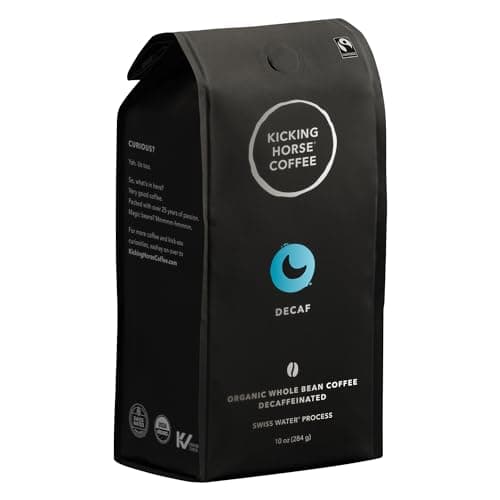
Kicking Horse Decaf, Swiss Water ProcessTop pickA widely available decaf in whole bean, which is the hard part — most decaf on a supermarket shelf is pre-ground. Decaffeinated by the Swiss Water process, which uses no solvents.
We have not handled these units. Everything above comes from published manufacturer documentation, cited inline, plus arithmetic you can redo yourself. Everyone in this category says they tested twenty machines; we have not tested any, and we say so. Here is what we do instead.
01
Kicking Horse Decaf, Swiss Water Process
An evening shot
A widely available decaf in whole bean, which is the hard part — most decaf on a supermarket shelf is pre-ground. Decaffeinated by the Swiss Water process, which uses no solvents.
We have not compiled a cited spec sheet for this pick yet, so there is no spec table here. What follows is about fit — who it is for and who it is not — not about numbers we cannot source. See how we pick.
Decaf beans are more brittle and tend to grind finer at the same setting, so expect to go a click or two coarser than your regular beans.
The practical difficulty with decaf espresso is finding it as whole bean at all. That is the main reason this pick is here.
What it does well
Whole bean decaf that is actually stocked
Dark enough to work in milk
Swiss Water process, so solvent-free without paying a specialty premium
What you give up
Needs its own grinder setting
Fewer decaf options than regular, at any price
Skip it if you only drink espresso in the morning — you are adding a second grind setting for no reason.
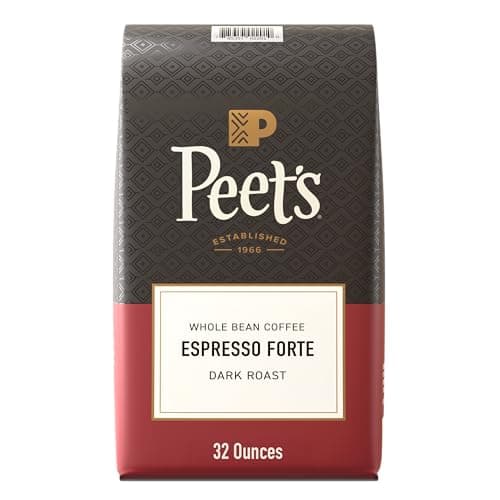
A dark-roast espresso blend. Dark roasts hold their own in a latte, which is what most first setups are making.
We have not compiled a cited spec sheet for this pick yet, so there is no spec table here. What follows is about fit — who it is for and who it is not — not about numbers we cannot source. See how we pick.
The National Coffee Association notes that the lighter the roast, the more acidic the brewed coffee — and that dark roasts give up acidity for that pronounced bitterness people read as “strong”.
In a milk drink, a lighter roast often disappears. A dark blend is the reliable answer for a morning latte.
What it does well
Stands up to milk
Widely available fresh in US supermarkets
What you give up
Oily beans can clog a grinder chute over time
Less interesting black
Skip it if you drink espresso straight and dislike bitterness — go a roast level lighter.
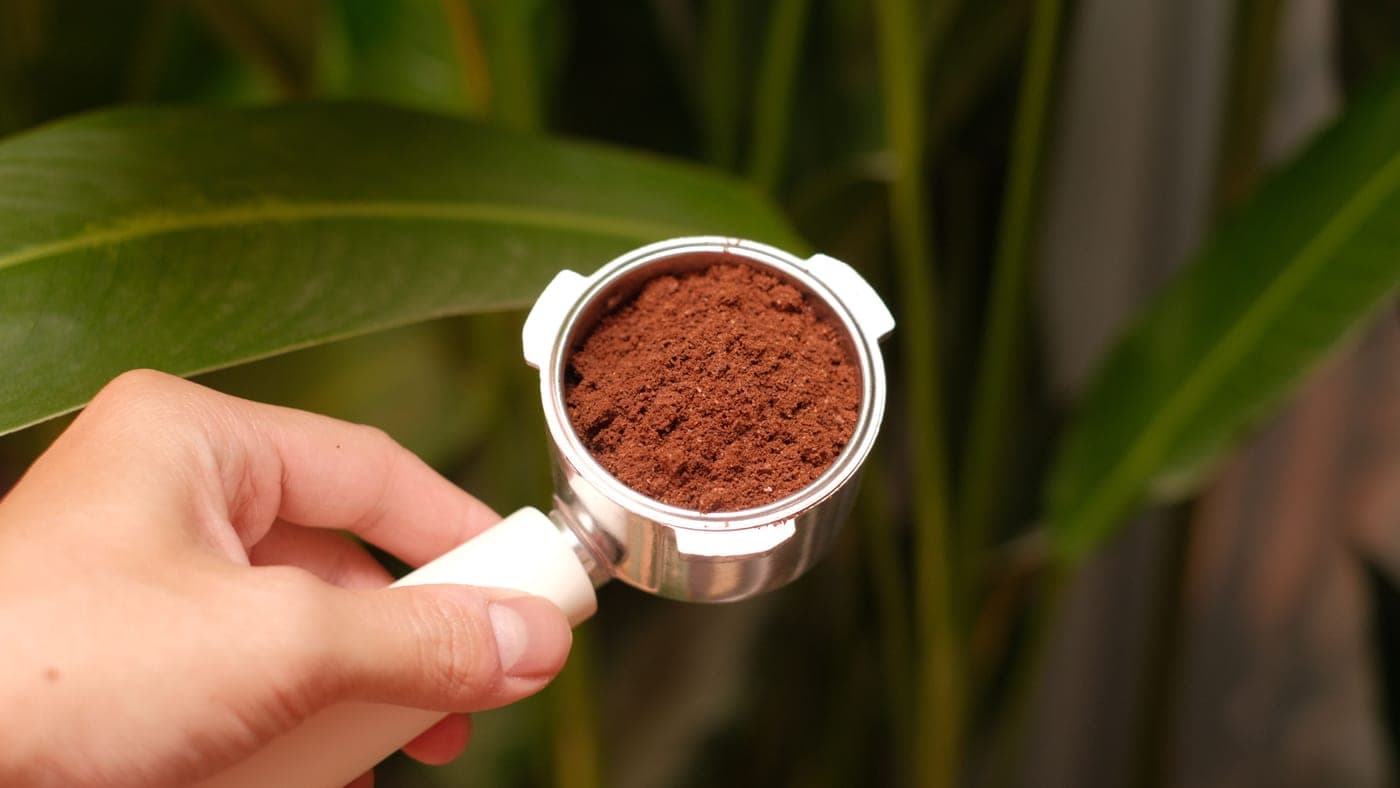
Most supermarket decaf is sold pre-ground, because the assumption is that decaf drinkers use a drip machine. Pre-ground is ground for drip, which is far too coarse for espresso, so it will run straight through a single-wall basket. Whole-bean decaf exists and there is much less choice of it than of regular coffee, at every price point.
Wrinkle two: it grinds differently
The decaffeination process changes the bean's structure before roasting, and decaf beans end up more brittle. At the same grinder setting they fracture more and produce a finer grind, which means the shot chokes or runs slow.
**Go one or two clicks coarser than your regular setting** as a starting point, then dial from there. Write both settings down; you will be switching between them. This is also the situation where countable clicked adjustment earns its keep, because you need to return to two settings reliably rather than one.
What changes when you switch to decaf
Regular
Decaf
Grind setting
Your baseline
One to two clicks coarser
Bean structure
Normal
More brittle from processing
Crema
Normal
Often thinner
Shelf life
Per the NCA, 1-3 weeks whole
Similar, though it stales noticeably faster in practice
Availability whole bean
Everywhere
Limited
The decaffeination methods, briefly
**Swiss Water Process.** No solvents; caffeine removed with water and carbon filtration. The one most often named on specialty bags.
**CO2 process.** Pressurized carbon dioxide extracts the caffeine. Also solvent-free.
**Solvent-based (ethyl acetate, methylene chloride).** The most common industrially. Ethyl acetate occurs naturally in fruit and is often labeled "sugarcane process".
For espresso specifically, the method matters less than the roast date and the roast level. A fresh solvent-processed decaf will beat a stale Swiss Water one every time.
If your machine has a bypass chute
Most bean-to-cup machines have one for exactly this: a slot for pre-ground coffee so you can make a single decaf without emptying the hopper. It is the tidiest solution if you have one. See bean-to-cup automatics.
Questions people actually ask
Can you make espresso with decaf beans?+−
Yes. The two practical issues are that whole-bean decaf is harder to find than pre-ground, and that decaf beans are more brittle so they grind finer at the same setting.
Do I need to change my grind for decaf?+−
Usually yes — start one to two clicks coarser than your regular setting. Decaffeination makes the bean more brittle, so it fractures into finer particles at the same grinder gap.
Which decaf process is best for espresso?+−
The method matters less than freshness and roast level for espresso. Swiss Water and CO2 are solvent-free and commonly named on specialty bags; a fresh solvent-processed decaf will still beat a stale one.
Why does my decaf espresso have less crema?+−
Decaf beans generally produce thinner crema, and decaf also tends to stale noticeably. Buy small bags and check the roast date where one is printed.