Heads up: we earn a commission if you buy through the links on this page, at no extra cost to you. It never changes the order of the list. Full disclosure · how we pick.
Ninja arrived in espresso late and did something the established brands mostly do not: it put a grinder, a scale and guided prompts in every machine, at prices where you normally get none of those. That is why the range is worth taking seriously even though the badge on the front says blender company.
There are four current machines and they are genuinely different products, not trim levels. This page compares them on what Ninja publishes for each — and one of those published numbers runs the opposite way to the price list, which is worth knowing before you spend up.
The four machines, and what separates them
Ninja's espresso lineup on the manufacturer's published specs
Luxe Café Mini
Luxe Café Premier
Luxe Café Pro
AutoBarista Pro
Model
ES301
ES601
ES701
AE1051
Portafilter?
Yes
Yes
Yes
No — fully automatic
Brews
Espresso, drip
Espresso, drip, cold brew
Espresso, drip, cold brew, hot water
13 one-touch drinks
Grind settings
60
25
25
50
Built-in scale
Yes
Yes
Yes
Not published
Milk
Manual steam wand
Not published as presets
5 froth presets incl. cold foam
5 froth presets incl. cold foam
Tamping
By hand
By hand
Integrated lever tamper
Automatic
Brew pressure published
No
No
No
Yes — 9 bar (15-bar system)
Weight
18.96 lbs
Not published
31.66 lbs
39.44 lbs
**The grind-setting row is the surprise.** Ninja publishes 60 grind sizes on the cheapest machine in the range and 25 on the two above it. Grind adjustment is the single most important control on an espresso machine — it is what you change when a shot runs too fast or too slow — so on the published numbers the entry model has the finest control of the three portafilter machines. Ninja does not explain the difference on any of the product pages we read, so we are reporting the numbers as published rather than inventing a reason for them.
How we judged these
In this order, which is the same order we use everywhere on this site:
**Does it let a beginner make a decent shot without a second purchase?** Every Ninja here has a grinder inside it, which is the expensive thing most machines leave out.
**Can you adjust what matters?** Grind resolution first, then dose. A machine that grinds but cannot be adjusted finely is a machine you will outgrow.
**Does it fail you in the first month?** Weight, height and tank size decide whether it stays on the counter.
**Is the specification published?** A maker that states its brew pressure can be held to it. Most of this range does not.
Quick picks — Which Ninja espresso machine to buy
#
Pick
Best for
Type
Price
1
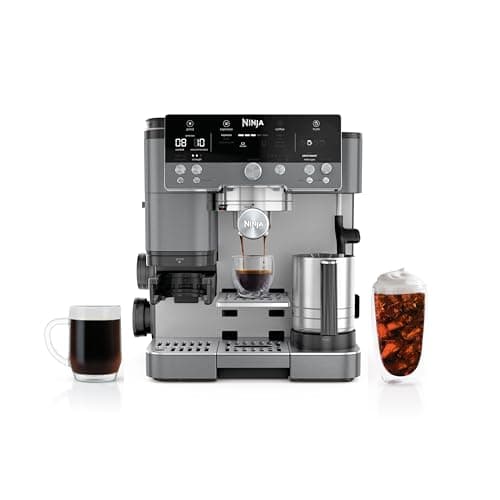
Ninja Luxe Café Mini (ES301)Top pickNinja's compact entry: a conical burr grinder, a built-in scale and a manual steam wand in one body that also brews drip coffee.
A grinder, a scale and a steam wand in the smallest Ninja
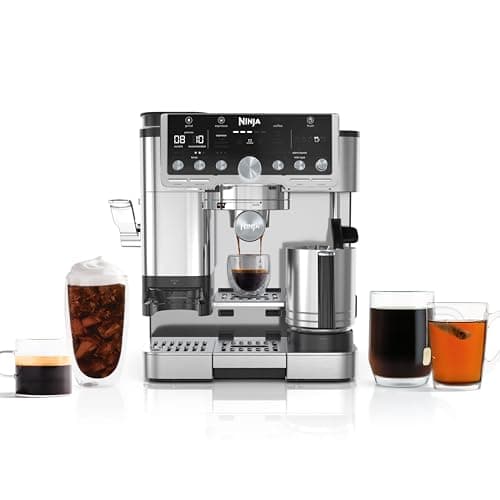
Ninja Luxe Café Premier (ES601)A three-in-one with a built-in conical burr grinder, a built-in scale and guided grind-size prompts — unusually beginner-shaped for the price.
A household that wants espresso, drip and cold brew from one machine
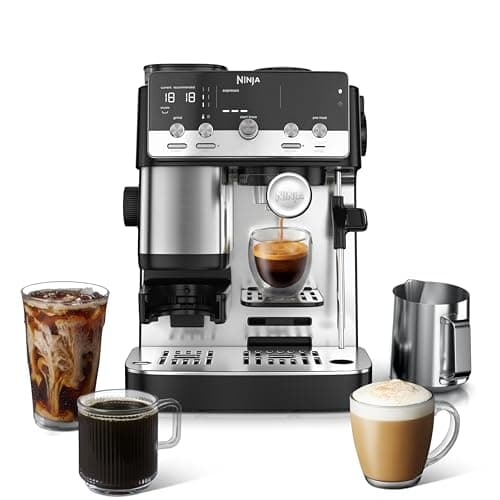
Ninja Luxe Café Pro (ES701)The four-in-one: espresso, drip coffee, cold brew and hot water, with an assisted tamper and five froth presets including cold foam.
Cold brew and hands-free froth in the same box as espresso
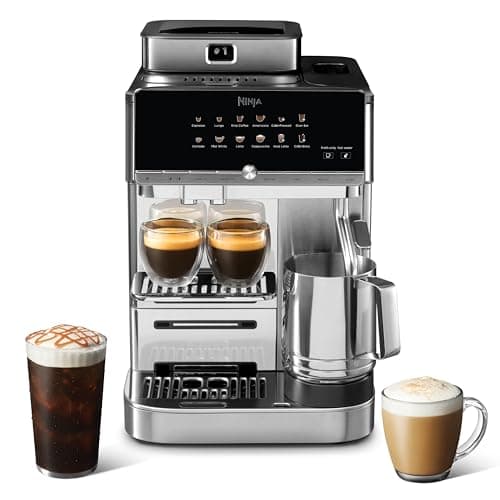
Ninja AutoBarista Pro (AE1051)Ninja's fully automatic: 13 one-touch drinks, 50 grind settings and a published 9-bar brew pressure, which most bean-to-cup makers do not state.
A bean-to-cup machine that states its brew pressure
We have not handled these units. Everything above comes from published manufacturer documentation, cited inline, plus arithmetic you can redo yourself. Everyone in this category says they tested twenty machines; we have not tested any, and we say so. Here is what we do instead.
01
Ninja Luxe Café Mini (ES301)
A grinder, a scale and a steam wand in the smallest Ninja
Ninja's compact entry: a conical burr grinder, a built-in scale and a manual steam wand in one body that also brews drip coffee.
Published specifications for the Ninja Luxe Café Mini (ES301), with sources
Sixty grind sizes is the highest count Ninja publishes on any of its machines, including the ones above it, so grind resolution is not what you give up by buying the smallest one.
A built-in scale is unusual at any price. It means the machine doses by weight rather than by time, which removes the single most common source of inconsistency for a beginner.
The steam wand is manual, so milk is a skill you will be learning. That is a feature if you want to learn and a frustration if you wanted the machine to do it.
What it does well
Grinder, scale and steam wand in one compact body
Also brews drip coffee, hot or over ice
Ninja publishes a full footprint and weight
What you give up
Manual steam wand — no automatic milk
Ninja publishes no portafilter size or brew pressure
One-year warranty is shorter than the two years several rivals publish
Skip it if you want the milk handled for you. Ninja's own range has automatic froth presets further up, and this is the model that does not.
A household that wants espresso, drip and cold brew from one machine
A three-in-one with a built-in conical burr grinder, a built-in scale and guided grind-size prompts — unusually beginner-shaped for the price.
Published specifications for the Ninja Luxe Café Premier (ES601), with sources
Grinder
Conical burr with 25 grind settings, covering espresso through drip [source]
Dosing
Built-in scale, dosing by weight per drink [source]
Modes
Espresso, drip coffee and rapid cold brew, with guided grind-size recommendations [source]
A built-in scale is rare at this price and it matters more than it sounds: weighing the dose is the single change that makes shots repeatable, and a machine that does it removes the most-skipped step.
Twenty-five grind settings is more resolution than the Barista Express offers, which is a genuine point in its favor.
The three-in-one framing is the risk. Machines that do three jobs are harder to service and harder to replace one part of.
What it does well
Built-in scale, so the dose is weighed without you owning a scale
25 grind settings — real resolution for the money
Covers drip and cold brew for the rest of the household
What you give up
More to go wrong than a single-purpose machine
The guided prompts are a floor, not a ceiling — control is limited
Skip it if espresso is the only thing you want. A dedicated machine plus a real grinder gives you more headroom for the same money.
Cold foam as a preset is the part worth paying attention to. Making cold foam by hand needs a frother and some practice; a machine that produces it on a button is doing something a steam wand cannot.
The assisted tamper removes the one step beginners get wrong most often, and it does it mechanically rather than by telling you to press harder.
Twenty-five grind settings is fewer than the Mini's sixty. Ninja does not explain why, and on the published numbers the cheaper machine has the finer grind adjustment.
At 19.33 inches tall it will not fit under a standard wall cabinet with room to fill the tank. Measure before you buy.
What it does well
Espresso, drip, cold brew and hot water in one machine
Cold foam and four other froth presets, hands-free
Integrated tamper removes a beginner failure point
What you give up
Large — nearly 20 inches tall and over 31 lbs
Fewer published grind settings than the cheaper Mini
Ninja publishes no portafilter size, brew pressure or tank capacity
Skip it if you only drink hot espresso. Most of what the extra money buys here is cold drinks and automation you would never switch on.
Removable brew unit, automatic rinse cycles [source]
The 9-bar figure is the useful one. Almost every machine advertises a 15-bar pump, which is a maximum the pump can reach rather than the pressure at the coffee; Ninja states both, and 9 bar at the puck is the number that matches how espresso is actually brewed.
Two swappable bean hoppers is a genuinely practical touch if one person in the house drinks decaf — no emptying the hopper to switch beans.
A removable brew unit matters for a machine you cannot take apart otherwise. It is the part that gets coffee oils in it, and sealed-in versions are the ones that eventually smell.
What it does well
Publishes brew pressure, not just pump pressure
50 grind settings — high resolution for an automatic
Two swappable hoppers and a removable brew unit
What you give up
The most expensive machine Ninja makes, by a distance
No portafilter — you never touch the coffee, by design
Nearly 40 lbs and a 17.8-inch footprint
Skip it if you want to learn espresso. This is the machine you buy to never think about grind, dose or tamp again — which is the opposite of learning.
Worth knowing before you compare these against a Breville or a De'Longhi: Ninja publishes no portafilter size for any of its portafilter machines, and no brew pressure for three of the four. Both matter.
**Portafilter size** decides whether the tampers, distribution tools and bottomless portafilters everyone else sells will fit yours. Breville states 54 mm for its beginner machines; Ninja states nothing, so assume nothing until you measure. Portafilter sizes explained covers how.
**Brew pressure** is the number behind the marketing. Only the AutoBarista Pro states it — a 15-bar system tuned to 9 bar at the coffee, which is the figure that matches how espresso is actually made. The rest publish neither.
**Warranty** is one year across the range. Several competitors publish two.
Guided prompts: help, or hand-holding?
Every Ninja here does something the traditional brands do not: it tells you what to do. Ninja calls it Barista Assist on the Luxe Café machines and Grind iQ on the AutoBarista Pro, and it states the machine recommends a grind size rather than leaving you to guess.
For a first setup that is worth more than it sounds. The reason beginners give up is rarely the machine — it is standing in front of one with no idea whether the shot that just gushed out means grind finer, dose more, or tamp harder. A machine that narrows that to one instruction removes the part of the learning curve that feels like guessing. How to dial in espresso is the same process done manually, and it takes most people a couple of weeks.
The limit is that a recommendation is a starting point, not a verdict. The machine does not taste the coffee. When you want a shot slightly sweeter rather than technically correct, you are back to adjusting by taste — and at that point what matters is how finely the grinder adjusts, which is the row in the table above where the cheapest machine wins.
Cleaning a machine with a grinder inside it
Any machine that grinds, brews and steams in one body has three things to clean instead of one, and on these machines two of them are not obvious.
**The brew unit.** Ninja states a removable brew unit and automatic rinse cycles on the AutoBarista Pro. On a machine where you never touch the coffee, this is the part that collects oils, and a removable one is the difference between a machine that stays fresh and one that eventually tastes stale. How to clean an espresso machine covers what the rinse cycle does not reach.
**The grinder.** Coffee oils build up on burrs regardless of brand, and a built-in grinder cannot be taken to the sink. Run the machine's own cleaning routine on the schedule the manual gives rather than when you notice a problem.
**The steam wand.** Ninja states the AutoBarista Pro's wand is cool-touch and wipes clean with a damp towel. Wipe it after every drink anyway — dried milk is the single most common source of off flavors. See steam wand care.
**Scale.** Every machine here heats water, so every machine here scales up. Descaling is what decides whether any of them reaches year five.
Ninja sells its own cleaning tablets for these machines. Nothing obliges you to buy the branded ones, but do check the manual before substituting: machines with a sealed brew unit are fussier about cleaner chemistry than a portafilter machine you can scrub.
Running costs, since these are big machines
Ninja publishes 1,650 watts for the AutoBarista Pro. That is a meaningful number for a machine that heats on demand several times a morning, and it is the kind of figure most makers leave off the page entirely. Electricity is still a small share of what a home espresso habit costs — beans dominate — and we show the whole calculation, with the U.S. Energy Information Administration's residential average as the input, on what home espresso costs to run.
Ninja against the brands you are also looking at
Ninja's pitch is completeness: the grinder and the scale are in the box. The traditional beginner brands sell you a better-documented machine and expect you to buy the grinder separately.
Which is right depends on what you want to end up with. If you expect to be doing this in two years and improving, a Breville with a standard 54 mm basket plus a real grinder has a ceiling you will not hit quickly. If you want one box and one purchase, Ninja's argument is strong and honestly made. We work the head-to-head through in detail on Ninja vs Breville.
If what you actually want is a machine that makes the drink with no involvement at all, the AutoBarista Pro is Ninja competing with bean-to-cup automatics rather than with espresso machines, and it should be compared against those.
The one Ninja we did not include
Ninja also sells an Espresso & Coffee Maker that takes Nespresso capsules. It is not on this page because it is a capsule machine with a coffee maker attached rather than an espresso machine — you cannot grind for it, dose it or dial it in, because there is nothing to adjust. If that sounds appealing rather than limiting, the honest comparison is espresso machine vs Nespresso, which works through the cost per cup.
So which one
For most first setups, the Mini. It has the finest published grind adjustment in the range, the smallest footprint, a scale, and a manual wand that teaches you the one skill worth learning. The money you save against the bigger machines buys beans for a year, and beans matter more than the machine once the grind is right.
Move up only for a specific reason you can name: cold brew and hands-free froth on the Pro, or the total automation of the AutoBarista Pro. Buying the bigger machine because it costs more is how people end up with a counter full of functions they never switch on.
We have not used any of these machines. Every figure above is from SharkNinja's own current product pages, linked at the bottom, and every price comes live from the listing we link to.
Questions people actually ask
Are Ninja espresso machines any good?+−
On published specifications they are unusually complete for the money: every current model has a built-in burr grinder, and the portafilter machines have a built-in scale, which most rivals leave out at any price. The gaps are that Ninja publishes no portafilter size for any model and no brew pressure for three of the four, and the warranty is one year.
Which Ninja espresso machine is best for beginners?+−
The Luxe Café Mini (ES301). Ninja publishes 60 grind sizes for it — more than the two pricier portafilter machines — plus a built-in scale and a manual steam wand, in the smallest body at a stated 10.24 by 12.17 by 13.43 inches.
What is the difference between the Ninja Luxe Café Premier and Pro?+−
The Pro adds cold brew and hot water to the Premier's espresso and drip, five froth presets including cold foam, and an integrated lever tamper. Both publish the same 25 grind settings. The Pro is also considerably bigger, at a stated 31.66 lbs and 19.33 inches tall.
Do Ninja espresso machines come with a grinder?+−
Yes — every current Ninja espresso machine has a built-in burr grinder. Ninja publishes 60 grind sizes for the Mini, 25 for the Premier and Pro, and 50 for the AutoBarista Pro.
Does Ninja make a bean-to-cup machine?+−
Yes, the AutoBarista Pro (AE1051). It has no portafilter, 13 one-touch drinks and a stated 15-bar system tuned to 9-bar brew pressure — the only machine in Ninja's espresso range that publishes a brew pressure figure.