Heads up: we earn a commission if you buy through the links on this page, at no extra cost to you. It never changes the order of the list. Full disclosure · how we pick.
Every guide in this category tells you what a machine costs. Almost none tell you what a shot costs, which is the number that actually decides whether home espresso is worth it to you. This page does the arithmetic and shows every input, so you can swap in your own numbers and get an answer for your kitchen rather than ours.
We have not tested anything to produce these figures and we are not going to pretend otherwise. What we have done is take published numbers — a bean price you can see, an electricity price from the U.S. Energy Information Administration, a dose from the manufacturer — and multiply them out.
The three recurring costs
**Coffee.** By far the largest. Everything else is rounding.
**Electricity.** Smaller than most people guess, and worth computing rather than assuming.
**Consumables.** Descaler and cleaning tablets, a few times a year.
1. Coffee: the number that matters
Start with the dose. Breville states an 18 g dose for its 54 mm baskets, and the National Coffee Association describes espresso as roughly a 1:2 ratio — about 18 g of dry coffee giving about 36 g in the cup. So the arithmetic is simply how many 18 g doses your bag holds.
Doses per bag
doses = bag weight in grams ÷ dose in grams
454 g (1 lb) ÷ 18 g = 25.2 doses per bag
A standard US 12 oz bag is 340 g, which gives about 18 doses. Use your machine's stated dose if it differs from 18 g.
Coffee cost per double shot
cost per shot = bag price ÷ doses per bag
A $14 bag ÷ 25.2 doses = $0.56 per double shot
Substitute the price of the bag you actually buy. This single input dominates everything else on the page — a $9 supermarket bag and a $22 specialty bag differ by more per shot than a year of electricity.
Coffee cost per double shot, by bag price (1 lb / 454 g bag, 18 g dose)
Bag price
Doses per bag
Cost per double shot
$9
25.2
$0.36
$14
25.2
$0.56
$18
25.2
$0.71
$22
25.2
$0.87
2. Electricity: much less than you think
The U.S. Energy Information Administration puts the average U.S. residential retail price of electricity at 18.34 cents per kilowatthour for June 2026. That is the input. The other half is how much energy your machine uses per drink, which depends on the machine — so rather than invent a figure, here is the formula and a worked example at a stated 1,300 W, which is a common rating for a single-boiler home machine.
(1300 W ÷ 1000) × 0.05 h (3 minutes) = 0.065 kWh × $0.1834 = $0.012 per drink
Three minutes covers heat-up plus the shot on a fast-heating machine. At 18.34 cents/kWh (EIA, June 2026), that is a little over one cent. Check your own machine's wattage on its rating plate and substitute it.
Even multiplied by two drinks a day for a year, that comes to roughly $9. Electricity is not the reason home espresso is or is not worth it — but it is worth knowing, because a machine left switched on all day is a different arithmetic entirely.
(1300 W ÷ 1000) × 0.25 h/day of cycling × 365 × $0.1834 = about $21.75 a year
A boiler machine left on for hours cycles its heater to stay at temperature. Switching it off between uses is the single easiest saving here, and a fast-heating machine makes that painless — Breville states three seconds to temperature on the ThermoJet system.
3. Consumables
Descaler and cleaning tablets. How often you descale depends on your water hardness and how much you use the machine — see descaling and water and filters. A realistic pattern for a home machine is descaling every one to three months and cleaning tablets weekly to monthly.
Consumables per year
annual = (descaler packets per year × packet price) + (tablets per year × tablet price)
6 descales × $2 + 52 tablets × $0.30 = $12 + $15.60 = about $28 a year
Substitute your own prices. Spread over two drinks a day this is under 4 cents a shot — real, but not decisive.
Putting it together
Cost per double shot, two drinks a day, $14 per 1 lb bag
Component
Per shot
Per year (730 shots)
Source of the input
Coffee
$0.56
$408
Your bag price ÷ 25.2 doses
Electricity
$0.012
$8.76
EIA, 18.34 c/kWh, June 2026
Consumables
$0.038
$28
Descaler + cleaning tablets
**Total**
**$0.61**
**$445**
—
Sixty-one cents a double, on those inputs. The point of showing the working rather than the answer is that your number will differ — mostly because of the bag price, which is the input you control and the one every other cost is dwarfed by.
The payback question
The comparison people actually want is against buying coffee out. That is one subtraction: take what you currently pay for a drink, subtract the per-shot cost above plus your milk, and divide the setup cost by the difference. We are not going to invent a cafe price for your city — put your own in. Is an espresso machine worth it? walks through the cases where the answer is no.
Payback period
days to break even = total setup cost ÷ (price you pay out − your cost at home)
$450 setup ÷ ($5.25 − $0.90) = about 104 days at one drink a day
The $0.90 there is $0.61 of coffee, electricity and consumables plus roughly $0.29 of milk for a latte. Substitute your cafe price and your milk cost. Note this ignores the value of your time, which is real.
What we have deliberately not done
Invented a cafe price. Yours is local and you know it.
Invented your machine's wattage. It is on the rating plate on the underside.
Used a national average bean price. Bean prices vary by more than everything else on this page combined.
Included the machine's purchase price in the per-shot figure. It is a one-time cost and it belongs in the payback calculation, not the running one.
Quick picks — What home espresso actually costs to run
#
Pick
Best for
Type
Price
1
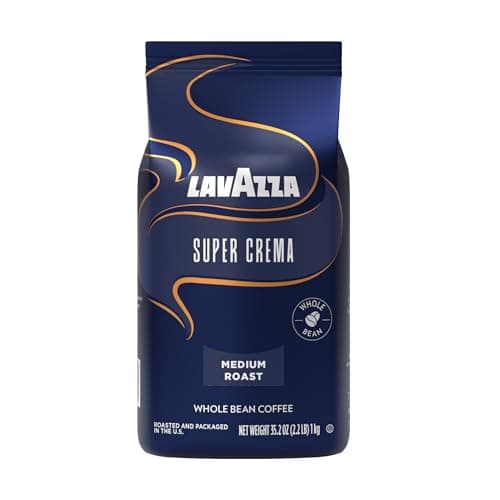
Lavazza Super CremaTop pickA medium-roast blend built for espresso and sold everywhere. Forgiving of an imperfect grind, which is what a first bag needs to be.
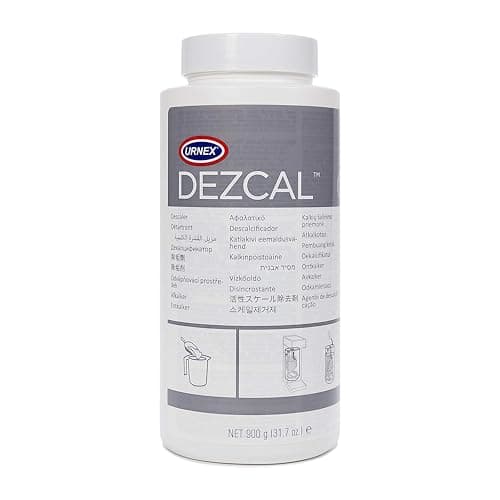
Urnex Dezcal DescalerA citric-acid-based descaler. This is the product that goes in the water tank, and the one people substitute vinegar for and regret.
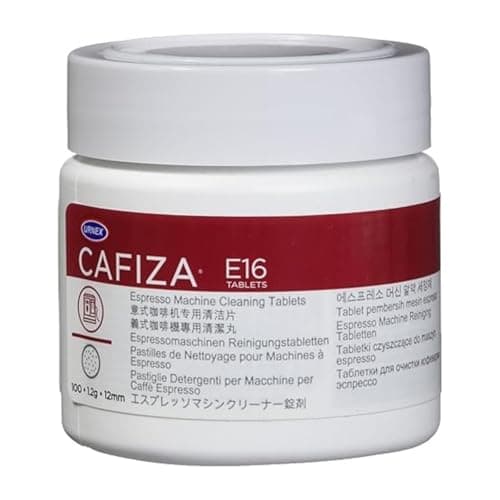
Urnex Cafiza Espresso Machine Cleaning TabletsThe standard espresso-machine detergent tablet. It removes coffee oil residue, which is a different job from descaling.
We have not handled these units. Everything above comes from published manufacturer documentation, cited inline, plus arithmetic you can redo yourself. Everyone in this category says they tested twenty machines; we have not tested any, and we say so. Here is what we do instead.
01
Lavazza Super Crema
A forgiving first bag
A medium-roast blend built for espresso and sold everywhere. Forgiving of an imperfect grind, which is what a first bag needs to be.
We have not compiled a cited spec sheet for this pick yet, so there is no spec table here. What follows is about fit — who it is for and who it is not — not about numbers we cannot source. See how we pick.
Blends built for espresso are easier to dial in than single-origin light roasts, which is why every café starts a new machine on one.
Availability is a real feature at this stage. A bean you can rebuy in any supermarket means you are changing one variable at a time.
What it does well
Very widely stocked
Tolerant of a grind that is not quite right yet
What you give up
Bags often sit on shelves — check the roast date if there is one
Skip it if you already know you like bright, fruity coffee. This is deliberately the opposite of that.
A citric-acid-based descaler. This is the product that goes in the water tank, and the one people substitute vinegar for and regret.
We have not compiled a cited spec sheet for this pick yet, so there is no spec table here. What follows is about fit — who it is for and who it is not — not about numbers we cannot source. See how we pick.
Scale builds wherever water is heated. It insulates the heating element, slows the flow and eventually stops the machine — and the failure looks like “my machine is not brewing”.
Vinegar does dissolve scale. It also lingers in seals and rubber, and several manufacturers void warranty coverage for it. A purpose-made descaler costs a few dollars a year.
What it does well
The product manuals actually specify
Rinses out cleanly
What you give up
A recurring cost, however small
Descaling frequency depends on your water hardness
Skip it only if your machine manufacturer sells its own branded descaler and voids warranty for anything else — then buy theirs.
The standard espresso-machine detergent tablet. It removes coffee oil residue, which is a different job from descaling.
We have not compiled a cited spec sheet for this pick yet, so there is no spec table here. What follows is about fit — who it is for and who it is not — not about numbers we cannot source. See how we pick.
Cleaning and descaling are two different tasks with two different products. Cleaner removes coffee oils from the group head and baskets; descaler removes mineral scale from the boiler.
Using descaler where cleaner is needed leaves the oils, and the shots keep tasting stale and bitter no matter how new the beans are.
What it does well
Does the job the machine manual asks for
Tablets are pre-dosed, so there is nothing to measure
What you give up
Only backflushable machines can use the full procedure
Not a descaler — you need both
Skip it only if your machine's manual specifically forbids backflushing — some entry machines do. Wipe and soak instead.
On the inputs above — a $14 one-pound bag at an 18 g dose, electricity at the EIA's stated 18.34 cents per kilowatthour for June 2026, and normal consumables — about 61 cents for a double shot. Coffee is roughly 90% of that, so your own bag price changes the answer more than anything else.
How much electricity does an espresso machine use?+−
Less than most people assume for the shot itself. A 1,300 W machine running for three minutes uses about 0.065 kWh, which at the EIA's June 2026 US residential average of 18.34 cents/kWh is a little over one cent. Leaving a machine on all day costs far more than using it does.
How many shots are in a bag of coffee?+−
About 25 double shots in a 1 lb (454 g) bag at an 18 g dose, or about 18 in a 12 oz (340 g) bag. Breville states 18 g as the dose for its 54 mm baskets.
Is making espresso at home cheaper than buying it?+−
Per drink, substantially — the ingredient cost is well under a dollar. Whether it is cheaper overall depends on how long it takes the saving to cover the setup, which is one division you can do with your own cafe price.
What are the ongoing costs besides coffee?+−
Electricity, at roughly a cent a drink, and consumables — descaler and cleaning tablets — at around $28 a year on typical prices. Both are small next to the coffee.