Heads up: we earn a commission if you buy through the links on this page, at no extra cost to you. It never changes the order of the list. Full disclosure · how we pick.
**Buy the grinder first.** Not because grinders are more interesting, but because of what each purchase can and cannot be rescued from.
The asymmetry
A modest machine fed by a good grinder makes genuinely good espresso. The grind is the input to everything: it sets how fast the water moves, how evenly it moves, and therefore how the shot tastes. A good grinder gives a cheap machine something to work with. Once you know which machine you are buying, pairing a grinder with your espresso machine covers how to split the budget between the two.
A good machine fed by a bad grinder makes bad espresso, permanently. The machine cannot slow water down that is finding an easy path through unevenly sized grounds. It has no mechanism to. This is why so many people buy a well-reviewed machine, make sour coffee for three weeks and conclude they do not like home espresso.
Quick picks — Machine or grinder first?
#
Pick
Best for
Type
Price
1
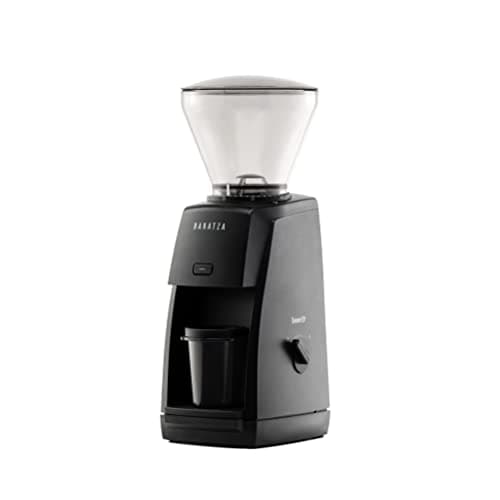
Baratza Encore ESPTop pickAn Encore reworked for espresso: the first 20 clicks are a fine, high-resolution espresso range, and the remaining 20 cover filter.
We have not handled these units. Everything above comes from published manufacturer documentation, cited inline, plus arithmetic you can redo yourself. Everyone in this category says they tested twenty machines; we have not tested any, and we say so. Here is what we do instead.
01
Baratza Encore ESP
The default first electric grinder
An Encore reworked for espresso: the first 20 clicks are a fine, high-resolution espresso range, and the remaining 20 cover filter.
Published specifications for the Baratza Encore ESP, with sources
Burr
40 mm M2 conical, quick-release for cleaning [source]
Grind range
#1-20 optimized for espresso in fine steps; #21-40 for filter [source]
Burr speed
550 RPM, reduced to limit heat, noise and static [source]
Twenty fine clicks inside the espresso range is the specification that matters. Grinders that give you five usable espresso settings cannot be dialed in; this one can.
550 RPM is deliberately slow. Slower burrs mean less heat and less static, which in practice means less ground coffee stuck to the inside of the chute and thrown around your counter.
It ships with both 54 mm and 58 mm dosing, which covers a Breville and a Gaggia without buying anything else.
What it does well
Genuine fine adjustment across the espresso range
Covers filter grinding too, so it is not a single-purpose purchase
Quick-release burr makes cleaning a two-minute job
Fits both common portafilter sizes out of the box
What you give up
Retains some grounds between doses, like most hoppered grinders
Louder than a hand grinder, obviously
Skip it if you already have a capable hand grinder and only make one or two drinks a day — you would be buying convenience, not better coffee.
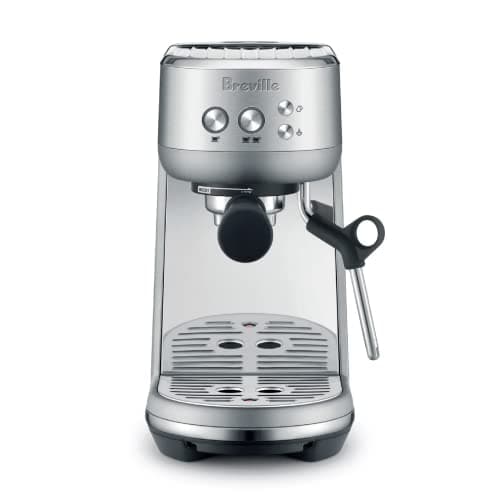
Manual. Breville positions the Plus as the model to choose for an automatic wand [source]
Breville's own page frames the difference in one line: choose the Plus if you want the automatic steam wand. Everything about the shot itself is the same.
If you drink espresso black, or mostly americanos, the automatic wand is a feature you would pay for and never use.
If you drink lattes every morning and have never steamed milk, this is the model that will frustrate you first.
What it does well
The same 54 mm, 18 g, fast-heating shot as the Plus
Cheaper, which frees money for the grinder — the better place to spend it
Manual wand teaches you the skill rather than hiding it
What you give up
Milk texturing is a real skill with a real learning period
No grinder
Skip it if milk drinks are the whole reason you are buying a machine and you would rather not practice — the Plus exists exactly for that.
A $100 grinder and a $100 machine is a real setup and will make coffee you enjoy. What it will not do is be quiet about its limits. The pressurized basket will hide the grind for a while, and when you eventually swap to a single-wall basket you will find out what the grinder can actually do. That is a fine way to start — just budget for the grinder to be the thing you upgrade.
Questions people actually ask
Should I buy a grinder or an espresso machine first?+−
The grinder. A good grinder makes a cheap machine work; a good machine cannot rescue a bad grind. In the meantime the grinder is immediately useful with a moka pot, a press or a pour-over.
How much of my budget should go to the grinder?+−
Roughly a third to a half of the total for machine and grinder together. That reallocation improves the coffee more than any feature the same money buys on the machine side.
Can I start with pre-ground coffee and buy a grinder later?+−
You can, in a pressurized basket, and it will produce something. It will taste flat, because ground coffee stales fast — the National Coffee Association gives it one to two weeks at room temperature against one to three for whole beans.
What if I buy a machine with a grinder built in?+−
Then the question does not apply. You are trading adjustment resolution for a single footprint — see machines with a built-in grinder.