Heads up: we earn a commission if you buy through the links on this page, at no extra cost to you. It never changes the order of the list. Full disclosure · how we pick.
Most people shop for the machine and then discover the grinder. If you are buying both at once — which is the sensible way to do it — the useful question is not “which grinder is best” but “how should this budget be split, and what pairs with the machine I have chosen?”
Our rule, and it is a rule of thumb rather than a law: **on a first setup, do not spend more than about twice as much on the machine as on the grinder.** Below that ratio the grinder becomes the limiting component, and no machine recovers from a grind it cannot use.
What a total setup budget buys, split sensibly
Total budget
Machine
Grinder
What you are accepting
Around $250
An entry pump machine
A capable hand grinder
Real effort every morning, but a grind that actually works
Around $500
A small machine with a standard basket
An entry espresso electric, or a very good hand grinder
Nothing important — this is the sweet spot for a first setup
Around $800
A machine with an automatic wand
A dedicated espresso electric
Counter space for two appliances
Around $500, one box
A machine with the grinder built in
Included
Less grind adjustment, and you cannot upgrade half of it
That last row is the alternative to this whole page: a machine with a built-in grinder collapses the pairing problem into one purchase. It is a legitimate answer, and what you trade is adjustment resolution and the ability to replace one half later.
What “pairs well” actually means
Three things have to line up. None of them is brand matching — there is no advantage to buying the grinder from the same company as the machine.
**Fine enough, with small enough steps.** Espresso needs a fine grind, and more importantly it needs the ability to move a small amount finer or coarser. A grinder that jumps too far between settings will straddle the correct grind without landing on it. Baratza states the Encore ESP dedicates settings #1-20 to espresso in fine steps, with #21-40 for filter — that is what purpose-built resolution looks like written down.
**Dose matching.** Breville states an 18 g dose for its 54 mm baskets. A grinder that cannot deliver a repeatable 18 g without a scale beside it will cost you consistency every morning.
**Workflow matching.** A machine that heats in three seconds paired with a hand grinder that takes ninety is a setup where the grinder is the bottleneck. That is fine if you accept it, and annoying if nobody told you.
Quick picks — Pairing a grinder with your espresso machine
#
Pick
Best for
Type
Price
1
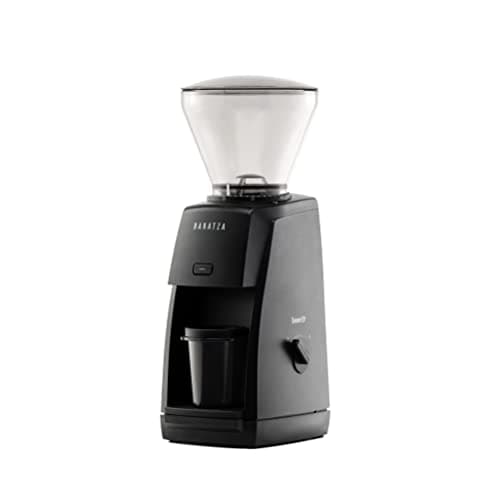
Baratza Encore ESPTop pickAn Encore reworked for espresso: the first 20 clicks are a fine, high-resolution espresso range, and the remaining 20 cover filter.
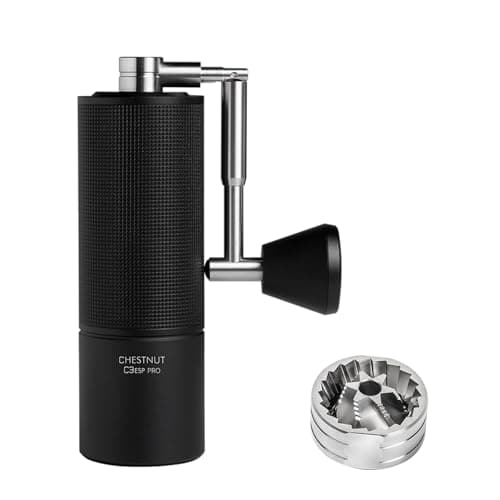
Timemore Chestnut C3 ESP ProThe usual answer to “what is the least I can spend on a grinder that actually works for espresso” — an espresso-tuned version of a very common entry hand grinder.
We have not handled these units. Everything above comes from published manufacturer documentation, cited inline, plus arithmetic you can redo yourself. Everyone in this category says they tested twenty machines; we have not tested any, and we say so. Here is what we do instead.
01
Baratza Encore ESP
The default first electric grinder
An Encore reworked for espresso: the first 20 clicks are a fine, high-resolution espresso range, and the remaining 20 cover filter.
Published specifications for the Baratza Encore ESP, with sources
Burr
40 mm M2 conical, quick-release for cleaning [source]
Grind range
#1-20 optimized for espresso in fine steps; #21-40 for filter [source]
Burr speed
550 RPM, reduced to limit heat, noise and static [source]
Twenty fine clicks inside the espresso range is the specification that matters. Grinders that give you five usable espresso settings cannot be dialed in; this one can.
550 RPM is deliberately slow. Slower burrs mean less heat and less static, which in practice means less ground coffee stuck to the inside of the chute and thrown around your counter.
It ships with both 54 mm and 58 mm dosing, which covers a Breville and a Gaggia without buying anything else.
What it does well
Genuine fine adjustment across the espresso range
Covers filter grinding too, so it is not a single-purpose purchase
Quick-release burr makes cleaning a two-minute job
Fits both common portafilter sizes out of the box
What you give up
Retains some grounds between doses, like most hoppered grinders
Louder than a hand grinder, obviously
Skip it if you already have a capable hand grinder and only make one or two drinks a day — you would be buying convenience, not better coffee.
The usual answer to “what is the least I can spend on a grinder that actually works for espresso” — an espresso-tuned version of a very common entry hand grinder.
We have not compiled a cited spec sheet for this pick yet, so there is no spec table here. What follows is about fit — who it is for and who it is not — not about numbers we cannot source. See how we pick.
The ESP suffix on a hand grinder means the adjustment has been rescaled so the espresso range occupies more of the dial, not that the burrs are different in kind.
This is the floor of the honest answer. Below it, you are buying a grinder that cannot reach espresso fineness with any consistency, whatever the listing claims.
What it does well
The lowest price that still gives usable espresso adjustment
Small, quiet, nothing to plug in
What you give up
Small capacity
Manual effort daily
Skip it if you drink more than a couple of doubles a day, or if the grinding step is the part you were hoping to avoid.
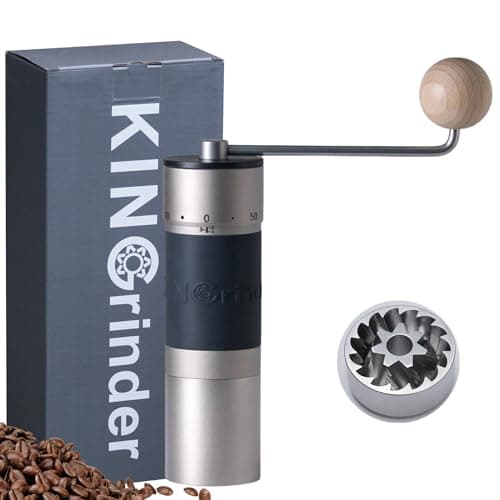
An external-adjustment hand grinder aimed squarely at espresso, from the value end of the market.
We have not compiled a cited spec sheet for this pick yet, so there is no spec table here. What follows is about fit — who it is for and who it is not — not about numbers we cannot source. See how we pick.
External adjustment means you change the grind without taking the grinder apart or losing your setting, which is the difference between dialing in and guessing.
This category exists because espresso needs adjustment steps small enough that a five-position dial is useless.
What it does well
External adjustment you can count and return to
Espresso-focused rather than filter-first
What you give up
Manual effort
Less established support than the bigger names
Skip it if you want the shortest path to a working setup with no research — a well-known electric grinder is the lower-effort answer.
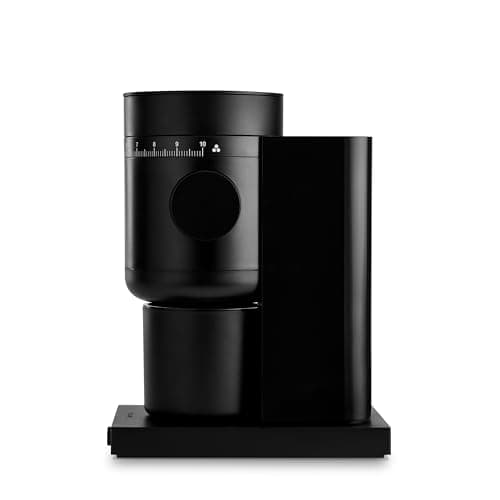
An all-brew-method electric grinder with an espresso range, aimed at people who also make pour-over and cold brew.
We have not compiled a cited spec sheet for this pick yet, so there is no spec table here. What follows is about fit — who it is for and who it is not — not about numbers we cannot source. See how we pick.
The pitch is range: one grinder that goes from espresso fine to cold brew coarse without a compromise setting.
Grinders that cover everything trade some espresso-range resolution for that breadth. If espresso is the only thing you brew, an espresso-first grinder gives you more usable clicks where you need them.
What it does well
Covers every brew method in one machine
Single-dose friendly
What you give up
Espresso resolution is thinner than an espresso-first grinder's
Skip it if you only make espresso. You are paying for a range you will never leave.
Spending up on the machine and down on the grinder
This is the common one. An expensive machine fed by a grinder that cannot reach espresso fineness produces a fast, sour shot, and no amount of technique fixes it — the water is finding channels through grounds that are too coarse and too uneven. The machine is not the problem and replacing it will not help.
If your budget only stretches to one good component, make it the grinder. Burr vs blade explains the floor you have to clear before any machine works.
Spending up on the grinder for a machine that cannot use it
The less-discussed mismatch. A machine with a pressurized (dual-wall) basket forces crema regardless of grind, which is exactly what makes it forgiving for beginners — and it also means a precision grinder's advantage largely disappears behind it. Pairing a serious grinder with a pressurized-basket machine is not wrong, but the benefit arrives later, when you move to a single-wall basket or a better machine.
Hand grinder or electric for the pairing?
At a first-setup budget this is the real fork, and it is less about grind quality than about what your mornings look like.
The same money, spent two ways
Hand grinder
Entry electric
Grind quality per dollar
Higher — there is no motor to pay for
Lower at the same price
Effort per double
Real: half a minute or more of cranking
None
Counter space
None — it lives in a drawer
A footprint and a plug
Noise at 6am
Quiet
Loud enough to notice
Keeps up with a queue
No
Yes
Pairs best with
A lever press, or one drink a morning
A fast-heating machine used repeatedly
The mismatch to avoid is pairing a hand grinder with a machine bought for speed. If the argument for your machine was that it heats in seconds, spending a minute cranking beans undoes it every morning. Manual vs electric grinders works the comparison through properly.
What if the machine already has a grinder?
Then the pairing question is mostly settled, and the honest advice is to leave it alone. Adding a separate grinder to a machine with one built in means paying twice for the same job, and the built-in one does not become useless just because a better grinder exists.
The exception is the upgrade path. Built-in grinders are the component you cannot replace independently, so if you eventually want finer adjustment than the machine offers, the separate grinder is bought alongside a new machine rather than beside the old one. That is the trade machines with a built-in grinder sets out in full, and it is worth understanding before you buy rather than after.
Buy both now, or stage the purchase?
Buying together is usually better value and always simpler, because you set the split deliberately instead of discovering the grinder budget after the machine has eaten it.
Staging works in exactly one order: **grinder first, machine second.** A good grinder improves the coffee you are already making — filter, French press, whatever is in the cupboard now — so it earns its keep from the first week. The reverse does not work, because an espresso machine with no grinder cannot make espresso worth drinking, and supermarket pre-ground will not stand in for a month.
If money is the reason for staging, lower the machine budget rather than the grinder budget. A modest machine with a capable grinder beats the reverse every time.
Upgrading one half later
The advantage of two appliances is that you can replace one. In practice people replace the machine first — usually for a standard basket, a better steam wand or held temperature — and keep the grinder across two or three machines.
Plan for that at purchase. A grinder bought slightly beyond your current machine's needs is not wasted; a machine bought beyond your grinder's ability is. If you expect to upgrade, check the grinder can dose neatly into the portafilter size you are likely to move to — portafilter sizes covers the 51, 54 and 58 mm split and why it matters for accessories.
Do you need a scale as well?
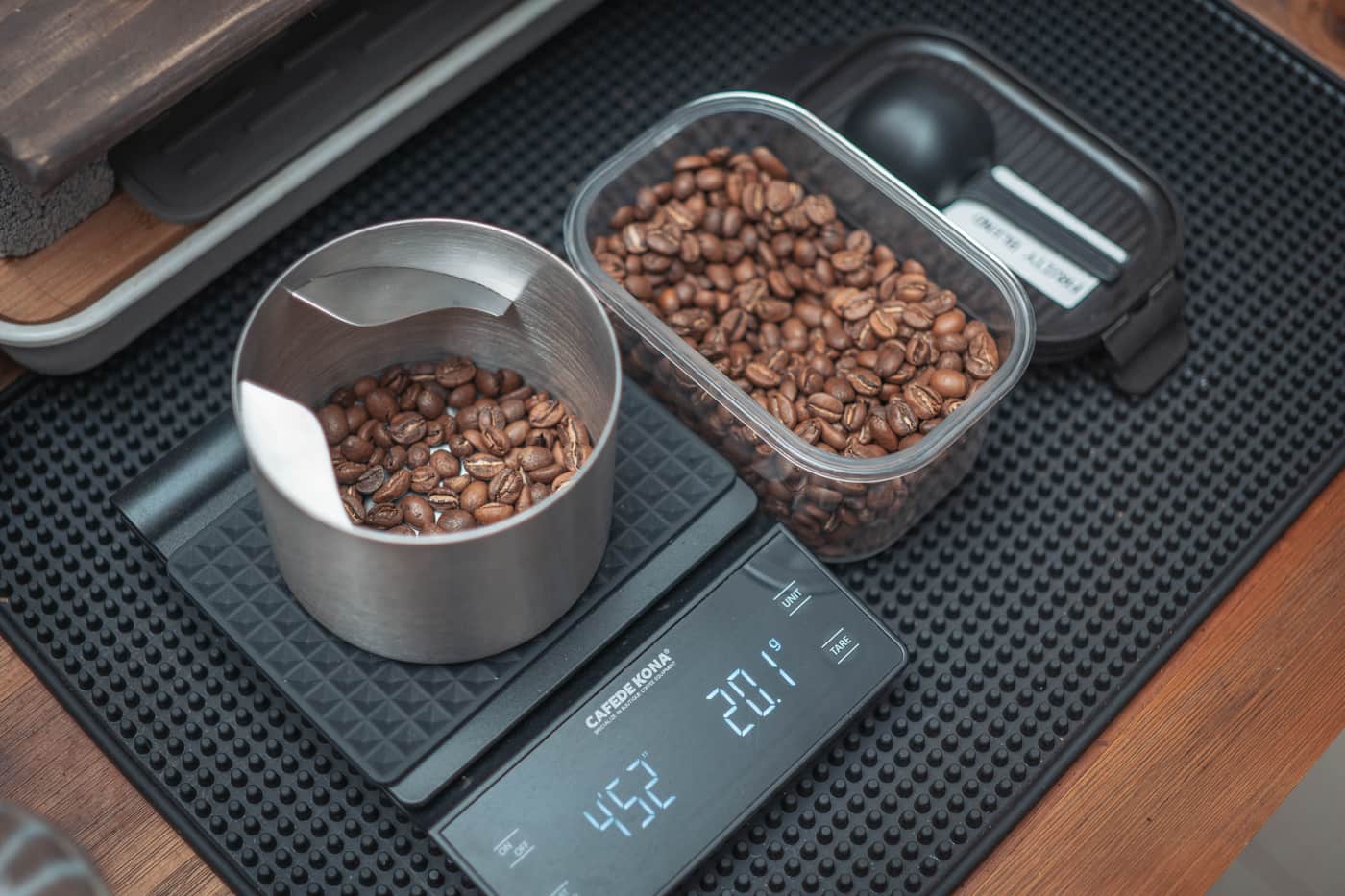
Eventually yes, and it is a small purchase against either of the two appliances. Grinding by time is approximate because beans change as they age; weighing the dose is what makes yesterday's shot repeatable today. Some machines and grinders now include a scale — Ninja publishes a built-in scale on its espresso range — and if yours does not, a scale with a timer is the cheapest consistency you can buy.
Work out what the whole setup will cost to run before you commit, including beans and electricity: what home espresso costs to run does the arithmetic with every input shown.
We have not used this equipment. Specifications come from the manufacturers' own published pages, linked below, and prices come live from the listings we link to.
Questions people actually ask
How much should I spend on a grinder versus an espresso machine?+−
As a rule of thumb, do not spend more than about twice as much on the machine as on the grinder. Below that ratio the grinder becomes the limiting component, and a grind that is too coarse or too uneven produces a fast, sour shot no machine can correct.
Does the grinder need to match the brand of my espresso machine?+−
No. There is no technical advantage to brand matching. What matters is that the grinder reaches espresso fineness in small steps and can deliver your machine's stated dose repeatably.
Can I use a hand grinder with an electric espresso machine?+−
Yes, and it is a common pairing on a first setup — a capable hand grinder costs less than an equivalent electric and takes no counter space. The trade is real effort every morning and a slower workflow than a machine that heats in seconds.
Should I buy an all-in-one instead of a machine and a grinder?+−
If counter space or a single purchase is the constraint, yes. You trade grind adjustment resolution and the ability to upgrade one half later. See machines with a built-in grinder.
Do I need a scale if my grinder doses by time?+−
Eventually. Timed dosing drifts as beans age and as the burrs season, so the same seconds give a different weight. A scale with a timer is the cheapest way to make shots repeatable.