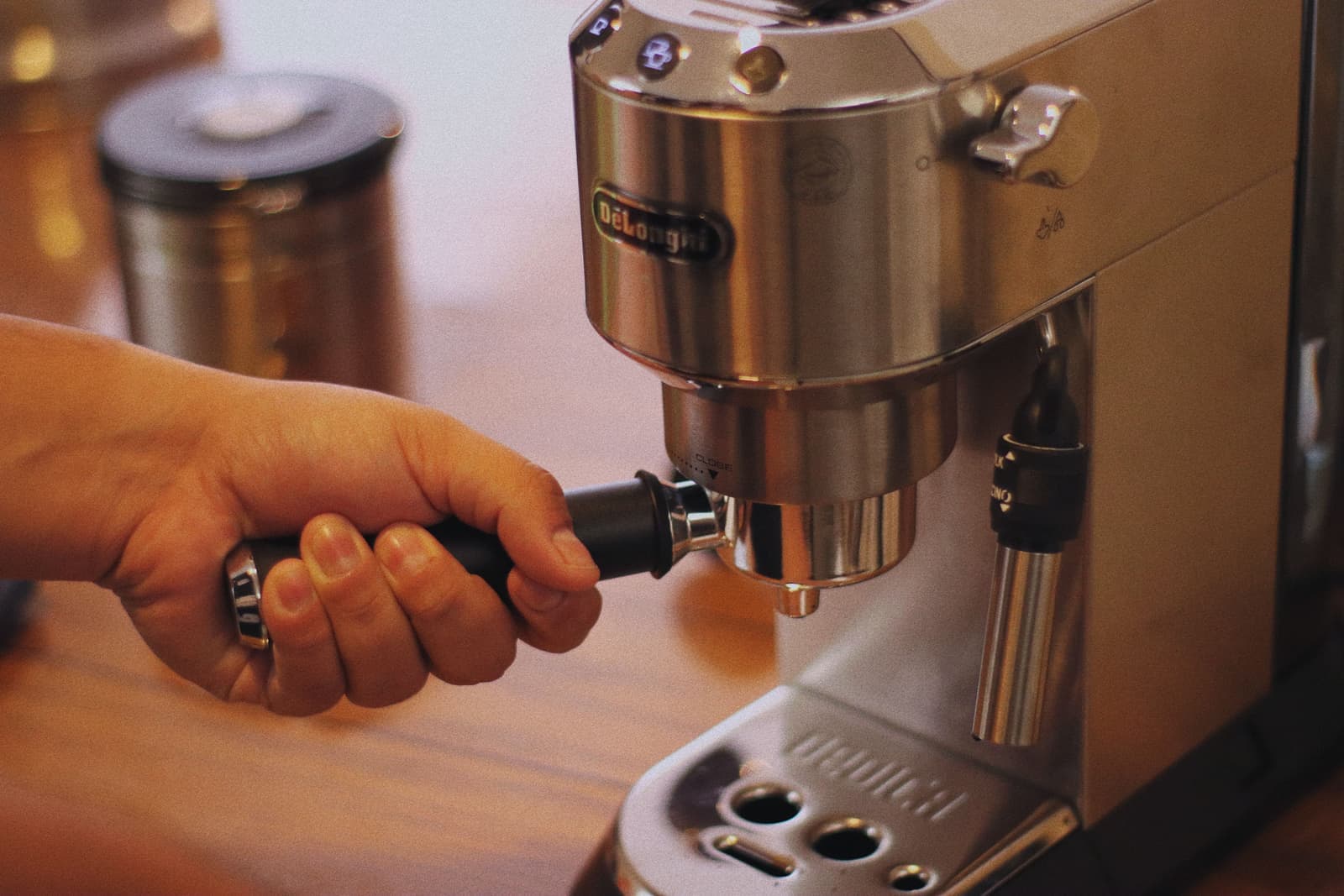
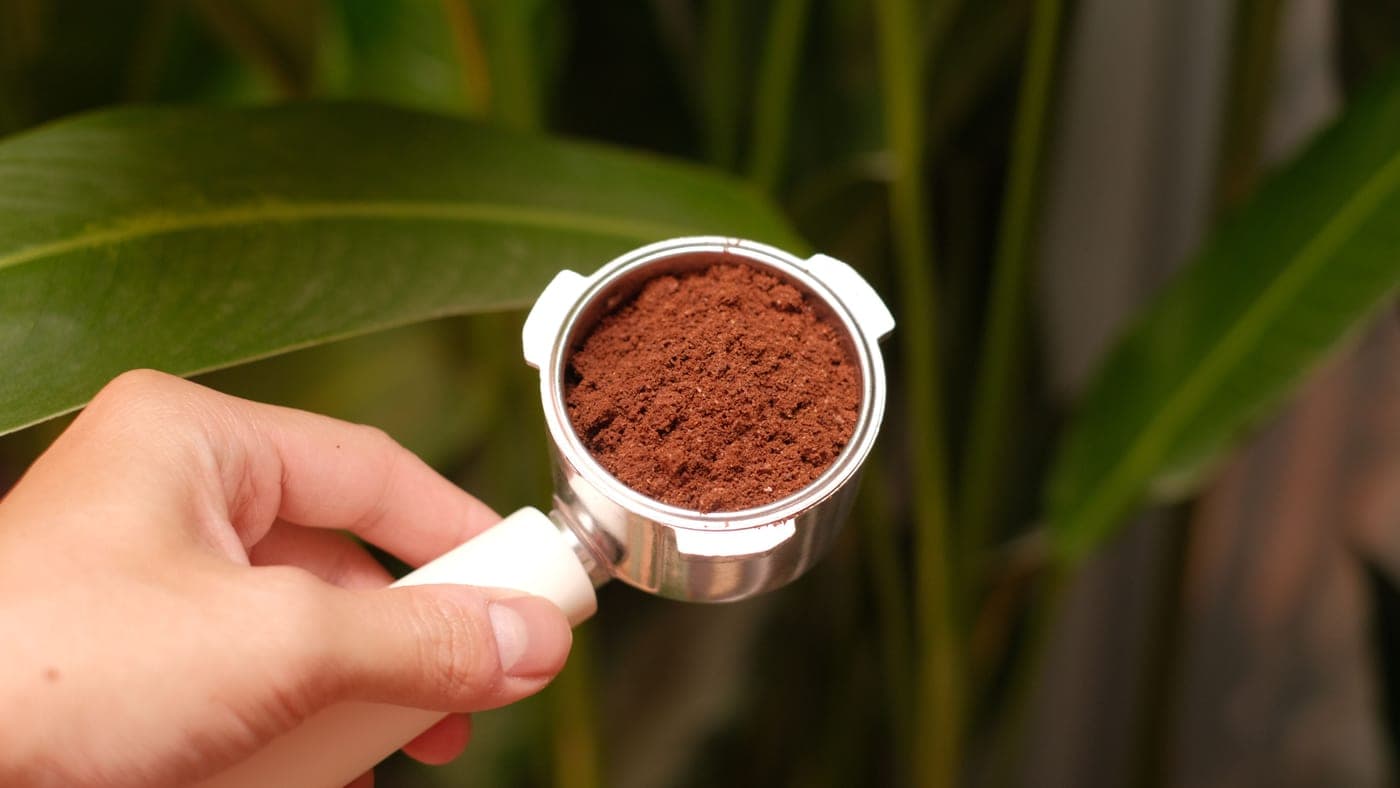
Real pressure, no electricity, no footprint. The category that solves a problem no mains machine can — at a throughput no household should plan around.
Heads up: we earn a commission if you buy through the links on this page, at no extra cost to you. It never changes the order of the list. Full disclosure · how we pick.
There are two reasons to buy a manual espresso maker and they are almost opposite. One is that you have no counter, no outlet or no room in the suitcase. The other is that you want more control over the shot than any pump machine at a first-setup price will give you. This page covers both, because the same handful of products serve them.
How we judged these
Criteria first, so you can disagree with the ranking on the reasoning rather than the conclusion.
**Does it make genuine espresso, or a concentrate?** A hand pump or a lever reaches espresso pressure. A stovetop moka pot does not, and it is a different drink.
**Basket standardization.** A full-size basket means recipes and accessories transfer from a home machine. A proprietary small basket means they do not.
**Effort per shot, honestly stated.** All of these are work. The question is how much.
**What else you need.** Every one of these needs a kettle and a grinder. None has a steam wand.
**Throughput.** One shot at a time, every time. This is the constraint that decides whether the category suits you at all.
**Is it still sold?** Checked on each maker's own site for this page. One long-recommended model in this category has been discontinued — see the note below.
Quick picks — Best manual and portable espresso makers
#
Pick
Best for
Type
Price
1
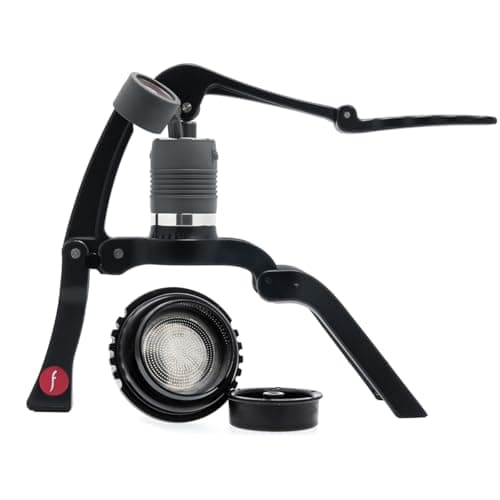
Flair 2GOTop pickA manual lever press that collapses into a bag. You supply the pressure and the hot water; it supplies a genuine espresso-style extraction and stores in a drawer.
Real espresso with no electricity and no counter space
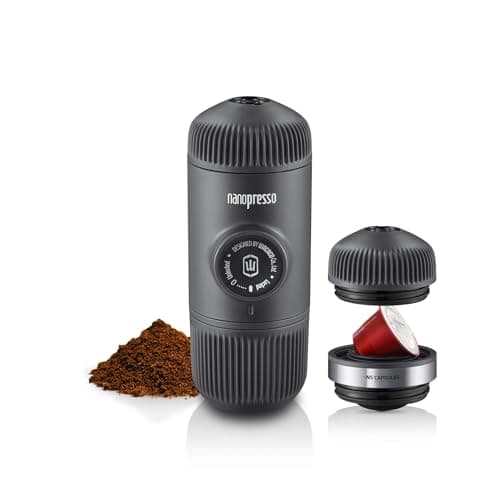
Wacaco NanopressoA hand-pumped pocket espresso maker. You supply the pressure and the hot water; it fits in a jacket pocket and needs no electricity at all.
Flair ClassicA lever press with a detachable brew head and an optional pressure gauge. Slower than a pump machine and far more informative about what is happening.
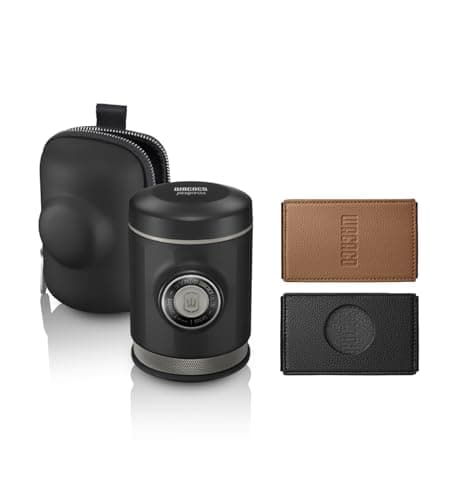
Wacaco PicopressoWacaco's serious one: a naked portafilter and a full-size basket, aimed at people who already dial shots in and want to do it away from the machine.
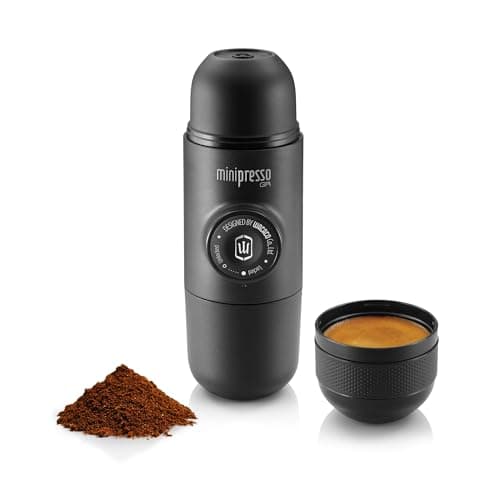
Wacaco Minipresso GRThe original and the cheapest of the family. It costs about as much as a couple of bags of beans, which makes it a low-regret experiment.
Flair 58 (sold as the 58 Plus 2)The lever that takes a 58 mm portafilter, which means every commercial-standard basket, tamper and distribution tool fits it directly.
We have not handled these units. Everything above comes from published manufacturer documentation, cited inline, plus arithmetic you can redo yourself. Everyone in this category says they tested twenty machines; we have not tested any, and we say so. Here is what we do instead.
01
Flair 2GO
Real espresso with no electricity and no counter space
A manual lever press that collapses into a bag. You supply the pressure and the hot water; it supplies a genuine espresso-style extraction and stores in a drawer.
Published specifications for the Flair 2GO, with sources
A hand pump is a genuine pressure system rather than a steam trick, which is why these produce something much closer to espresso than a travel moka pot does.
The whole workflow is manual: boil water separately, load the basket, pump. That is fine for one cup and tedious for a household round.
The realistic use is travel, an office desk, a camper or a dorm — anywhere a mains machine is not going to happen.
What it does well
No power, no plumbing, no counter space
Genuine pressure rather than a stovetop workaround
Rinses clean in a sink in under a minute
What you give up
One small shot at a time, and you need a kettle
Pumping is real physical effort at espresso fineness
No steam wand, so milk needs a separate frother
Skip it if this is meant to be your main machine at home. It is a travel and desk solution, and using it as a daily driver gets old inside a fortnight.
A lever press with a detachable brew head and an optional pressure gauge. Slower than a pump machine and far more informative about what is happening.
We have not compiled a cited spec sheet for this pick yet, so there is no spec table here. What follows is about fit — who it is for and who it is not — not about numbers we cannot source. See how we pick.
A lever gives you direct control of the pressure curve. You can ramp it, hold it and taper it, which no pump machine at a first-setup price will do.
The gauge is the part people underrate. Seeing pressure while the shot runs teaches you more about extraction in a week than reading about it does in a month.
It is one shot at a time, with a kettle, and preheating matters. That is the trade.
What it does well
Direct control of the pressure curve
Nothing to descale, no pump to fail
Stores in a drawer between uses
What you give up
One shot at a time and a separate kettle
Preheating the brew head is a real step, not optional
No steam wand
Skip it if you make several milk drinks before work. The throughput is genuinely low and no amount of practice changes that.
Wacaco's serious one: a naked portafilter and a full-size basket, aimed at people who already dial shots in and want to do it away from the machine.
We have not compiled a cited spec sheet for this pick yet, so there is no spec table here. What follows is about fit — who it is for and who it is not — not about numbers we cannot source. See how we pick.
The important difference from the cheaper portables is the basket. A full dose in a bottomless basket means recipes written for a normal machine transfer directly.
It also means it is far less forgiving than the pressurized-basket portables. A rough grind shows immediately, exactly as it would on a home machine.
This is the one to buy if you already own a capable grinder. It is the wrong one if the portable is meant to be the easy option.
What it does well
Takes a proper dose in a bottomless basket
Recipes and technique transfer from a home machine
Still packs down to something you can travel with
What you give up
Needs a genuinely capable grinder to be worth it
More parts to clean than the simpler portables
Costs more than an entry mains machine
Skip it if you do not already own a grinder that reaches espresso fineness. Without one this is an expensive way to make a fast, sour shot in a nicer basket.
The original and the cheapest of the family. It costs about as much as a couple of bags of beans, which makes it a low-regret experiment.
We have not compiled a cited spec sheet for this pick yet, so there is no spec table here. What follows is about fit — who it is for and who it is not — not about numbers we cannot source. See how we pick.
This is the model to buy if you are not sure whether a portable suits how you actually travel. The money at stake is small enough that a wrong answer does not matter.
It takes a smaller dose than the Picopresso and is more forgiving of a coarse grind, which cuts both ways: easier to use, lower ceiling.
What it does well
Very low cost of finding out
Simple enough to use half asleep in a hotel room
Nothing electronic to fail
What you give up
Small dose, small shot
Less control than the dearer models in the range
Skip it if you already know you want portable espresso as a permanent habit. The money is better spent once, further up the range.
The lever that takes a 58 mm portafilter, which means every commercial-standard basket, tamper and distribution tool fits it directly.
We have not compiled a cited spec sheet for this pick yet, so there is no spec table here. What follows is about fit — who it is for and who it is not — not about numbers we cannot source. See how we pick.
58 mm is the argument. It puts a lever press on the same accessory standard as a commercial machine, so nothing about your existing kit becomes obsolete.
It is also the most expensive way to buy a lever, and it costs more than several capable pump machines. You are paying for control, not convenience.
Flair currently lists this as the 58 Plus 2, so check which revision a listing is actually selling before you buy.
What it does well
58 mm commercial-standard basket
Direct pressure control with a heated brew head
No pump, no boiler, no descaling
What you give up
Costs more than a good pump machine
Still one shot at a time, still needs a kettle
Revision names change, so confirm what a listing is shipping
Skip it if you want espresso to be quick. This is a deliberate, slow, hands-on way to make one drink, and that is the point of it.
**Heat their own water.** Every one needs a kettle, and water temperature becomes a variable you control by hand.
**Grind.** You still need a grinder that reaches espresso fineness, and it is still the component that decides the result. A hand grinder pairs naturally with these.
**Make a second drink quickly.** Plan on three to five minutes per shot including preheating.
Why the cheap ones are still worth considering
A hand pump costs about what a decent tamper costs. That makes it the lowest-risk way to find out whether you actually enjoy the ritual of making espresso — which is a genuinely useful thing to know before spending several hundred dollars on a machine. If the answer turns out to be no, you have lost very little; if it is yes, you know what to look for in a first machine.
Questions people actually ask
Do manual espresso makers make real espresso?+−
Lever presses and hand pumps do — they reach genuine espresso pressure, unlike a stovetop moka pot which brews at a fraction of it. What they do not do is heat their own water or steam milk.
Is a portable espresso maker worth it?+−
For travel, a desk, a camper or a dorm, yes — it is the only thing in the category that solves that problem. As a household's main machine it is not, because it makes one shot at a time and needs a kettle every time.
Do I still need a grinder for a manual espresso maker?+−
Yes, and it matters just as much as on a mains machine. The grind sets the resistance the pressure works against, so a grinder that cannot reach espresso fineness produces the same fast, sour shot it would anywhere else.
Can you make a latte with a manual espresso maker?+−
Not on its own — none of them has a steam wand. Pair it with a handheld whisk or a standalone frother and you can make a very good latte or cappuccino.
Is the Flair NEO Flex still available?+−
No. Flair has discontinued it and its product page returns a 404 as of September 2026. The Flair 2GO is the direct replacement in the same slot — an all-manual lever press that collapses to fit a bag.
Lever or hand pump for a beginner?+−
A hand pump if portability is the point; a lever if it will sit on a counter and you want to learn how pressure changes a shot. The lever teaches more, the pump travels better.