Heads up: we earn a commission if you buy through the links on this page, at no extra cost to you. It never changes the order of the list. Full disclosure · how we pick.
The verdict first, because it is simple. One or two drinks a day: buy the hand grinder, get better burrs for the money, and enjoy the quiet. Three or more, or more than one person making coffee: buy the electric one, because the hand grinder will lose.
Quick picks — Manual vs electric grinder for espresso
#
Pick
Best for
Type
Price
1
No photo
1Zpresso JX-ProTop pickBigger, heavier and higher-capacity than the Q2, with the adjustment resolution that makes espresso dial-in on a hand grinder realistic.
We have not handled these units. Everything above comes from published manufacturer documentation, cited inline, plus arithmetic you can redo yourself. Everyone in this category says they tested twenty machines; we have not tested any, and we say so. Here is what we do instead.
01No photo
1Zpresso JX-Pro
A hand grinder you will not replace
Bigger, heavier and higher-capacity than the Q2, with the adjustment resolution that makes espresso dial-in on a hand grinder realistic.
Published specifications for the 1Zpresso JX-Pro, with sources
Twenty fine clicks inside the espresso range is the specification that matters. Grinders that give you five usable espresso settings cannot be dialed in; this one can.
550 RPM is deliberately slow. Slower burrs mean less heat and less static, which in practice means less ground coffee stuck to the inside of the chute and thrown around your counter.
It ships with both 54 mm and 58 mm dosing, which covers a Breville and a Gaggia without buying anything else.
What it does well
Genuine fine adjustment across the espresso range
Covers filter grinding too, so it is not a single-purpose purchase
Quick-release burr makes cleaning a two-minute job
Fits both common portafilter sizes out of the box
What you give up
Retains some grounds between doses, like most hoppered grinders
Louder than a hand grinder, obviously
Skip it if you already have a capable hand grinder and only make one or two drinks a day — you would be buying convenience, not better coffee.
At the same price, a hand grinder generally has larger or better-supported burrs than an electric one, because there is no motor, no gearbox and no housing to pay for. So if you were hoping this comparison would tell you the electric grinder makes better coffee, it does not.
What electric grinders buy is everything around the grind: speed, capacity, and not having to want to do it.
The trade, honestly
Manual
Electric
Grind quality per dollar
Better
Good
Time for an 18 g dose
60-90 seconds of effort
About 10 seconds, unattended
Two drinks in a row
Tiring; may need a refill
No difference
Noise
Almost silent
Loud briefly
Counter space
None — lives in a drawer
A footprint and a plug
Static and mess
Minimal
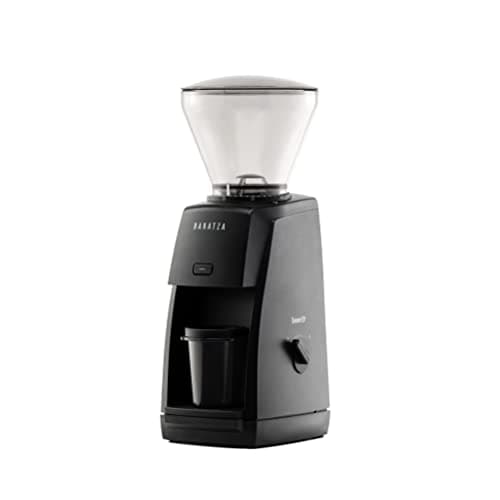
Some, less on slower grinders — Baratza states 550 RPM on the Encore ESP to limit it
Adjustment
External numbered dial on espresso models
Baratza states 20 fine clicks in the espresso range on the Encore ESP
Travel
Yes
No
The question that actually decides it
How many espresso drinks will be made in your house on a normal weekday? Count everyone. If the honest answer is one or two, a hand grinder is a genuinely better buy and you keep the money. If it is three or more, or if someone else in the house will make coffee and will not want to crank, the electric grinder wins before any spec is compared.
You can also have both, cheaply
A small hand grinder is useful even if you own an electric one — for travel, and for decaf, so you are not switching your main grinder's setting back and forth. See our decaf note for why that matters.
Questions people actually ask
Is a hand grinder better than an electric one for espresso?+−
For grind quality at the same price, usually yes. For daily life with more than a couple of drinks, no. Neither answer is about the coffee — it is about throughput.
How long does hand grinding take?+−
Roughly 60 to 90 seconds of steady effort for an 18 g espresso dose. Filter grinding on the same grinder is much faster and easier.
Do electric grinders make more mess?+−
They can, because faster burrs generate static that throws grounds around. Slower grinders reduce it — Baratza states the Encore ESP runs at 550 RPM specifically to limit heat, noise and static.
Which holds its value better?+−
Both hold value well relative to machines, because burrs wear slowly and neither has much to fail. That is part of why the grinder is the component worth over-buying.