Heads up: we earn a commission if you buy through the links on this page, at no extra cost to you. It never changes the order of the list. Full disclosure · how we pick.
Most pages answering this question are published by people who want you to buy an espresso machine. So are we — we earn a commission when you buy through our links. That is exactly why this page leads with the cases where the answer is no.
The honest no
Three situations where an espresso machine will disappoint you, and where saying so costs us money:
**You drink large black coffees.** Espresso makes about 36 g of liquid. If your habit is a mug you sip for an hour, a drip machine makes that drink better, cheaper and with no technique — see espresso machine vs coffee maker.
**You want it to be fast and you do not want to learn anything.** Espresso is grind, dose, tamp, pull, clean, plus a couple of weeks before the shots are consistent. If reading that sentence felt like a chore, a bean-to-cup machine or a capsule machine is the honest recommendation.
**The budget only covers the machine.** A machine with no grinder makes bad espresso permanently. If $250 is genuinely all there is, buy a moka pot and a grinder and revisit the machine later.
The honest yes
It is worth it when at least two of these are true:
**You buy milk drinks out regularly.** This is where the money argument actually lives. A latte is mostly milk, and milk is cheap.
**You want to be able to change how the coffee tastes.** A capsule machine is specifically designed so that you cannot.
**The making of it appeals to you**, not just the drinking. Plenty of people find the five-minute morning ritual is the point.
**More than one person will use it**, so the fixed cost gets spread across more drinks.
The arithmetic, with your numbers
We will not invent a cafe price for your city. Here is the calculation with the inputs named, so you can put your own in.
The 25.2 comes from a 454 g bag divided by the 18 g dose Breville states for its 54 mm baskets. Electricity uses the EIA's US residential average. Full working on what home espresso costs to run.
How long the setup takes to pay for itself
days to break even = total setup cost ÷ (what you pay out − your cost at home)
$450 ÷ ($5.25 − $0.90) = about 104 days at one drink a day
Substitute your own cafe price and your own setup cost. Two drinks a day halves the number; buying coffee out twice a week roughly quadruples it. This ignores the value of your time, which is real and which only you can price.
The number that surprises people is how sensitive this is to how often you currently buy coffee out. If you buy one flat white a week, the payback runs to years and the machine has to be worth it as a hobby rather than as a saving.
Quick picks — Is an espresso machine worth it?
#
Pick
Best for
Type
Price
1
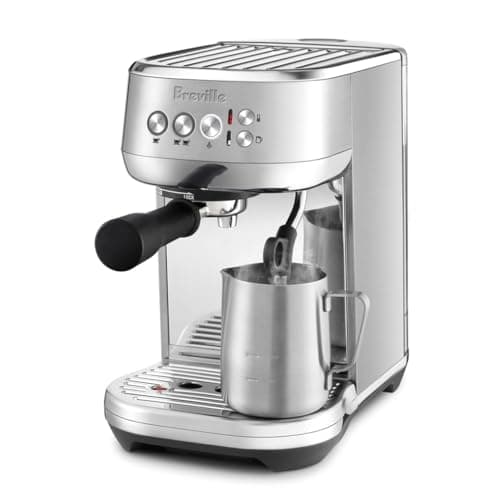
Breville Bambino Plus (BES500)Top pickThe standard answer to “which first machine” — full 54 mm portafilter and an 18 g dose, with the milk step automated so a flat white is possible on day one.
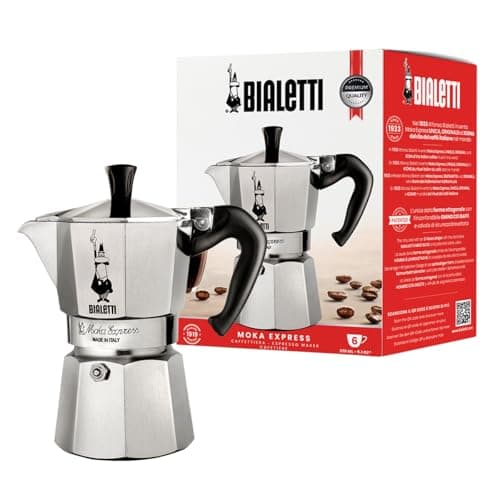
Bialetti Moka ExpressNot an espresso machine and not pretending to be one. It makes a strong, concentrated stovetop coffee, and it is the honest first step for a lot of people.
Strong coffee now, for the price of a takeaway lunch
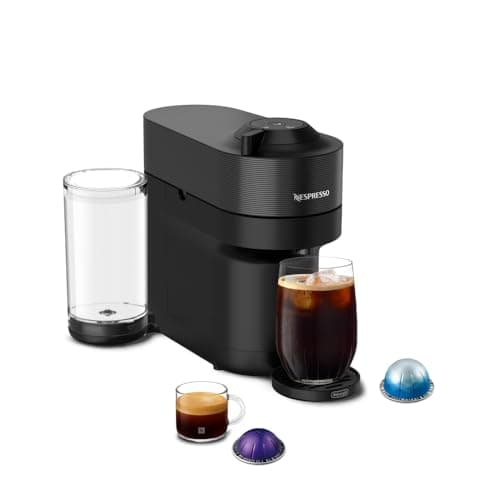
Nespresso Vertuo Pop+A capsule machine. Included here because it is the real alternative most first-time buyers are weighing, and for a lot of them it is the right call.
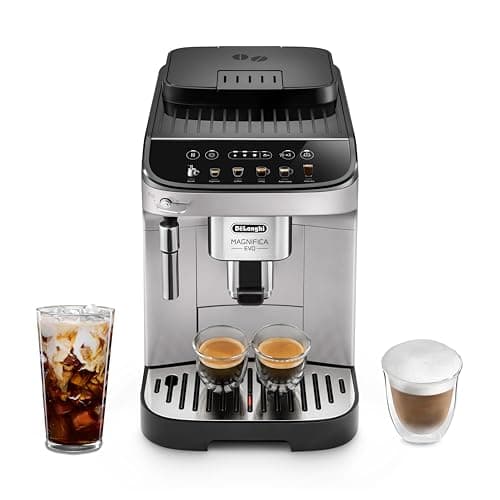
De'Longhi Magnifica EvoA bean-to-cup machine: beans in the top, drink in the cup, no portafilter and no technique. A different product from an espresso machine, and the right one for some people.
We have not handled these units. Everything above comes from published manufacturer documentation, cited inline, plus arithmetic you can redo yourself. Everyone in this category says they tested twenty machines; we have not tested any, and we say so. Here is what we do instead.
01
Breville Bambino Plus (BES500)
A first machine you will not outgrow in a year
The standard answer to “which first machine” — full 54 mm portafilter and an 18 g dose, with the milk step automated so a flat white is possible on day one.
Published specifications for the Breville Bambino Plus (BES500), with sources
54 mm tamper, Razor dosing tool, 16 fl oz milk jug, single- and dual-wall baskets, cleaning tool and disc [source]
The 54 mm portafilter and 18 g dose matter more than they sound: they put the machine on the same dose a cafe uses, so any recipe you read applies to it directly and every 54 mm accessory fits.
The three-second heat-up is the difference between espresso being a weekday habit and a weekend project. A machine that takes fifteen minutes to be ready is a machine you use on Sundays.
The automatic steam wand is the single biggest reason this suits a first setup. Milk texturing is the skill that takes longest to learn; handing it to the machine removes the part most likely to make you give up.
What it does well
Standard 54 mm basket, so recipes and accessories from anywhere fit
Ready in seconds, which is what makes it a habit rather than a project
Automatic milk means a drinkable cappuccino before you can texture by hand
The manual wand is still there when you want to learn
What you give up
No grinder — budget for one separately, and that is the right trade
Small water tank compared with a bean-to-cup machine; refills are frequent
Nothing here helps if your grinder cannot go fine enough
Skip it if you want one box that does everything with no learning curve — a bean-to-cup machine is the honest answer for that, and it is a different product.
Strong coffee now, for the price of a takeaway lunch
Not an espresso machine and not pretending to be one. It makes a strong, concentrated stovetop coffee, and it is the honest first step for a lot of people.
We have not compiled a cited spec sheet for this pick yet, so there is no spec table here. What follows is about fit — who it is for and who it is not — not about numbers we cannot source. See how we pick.
A moka pot brews at a fraction of espresso pressure, so it produces a concentrate rather than espresso with crema. That is a category difference, not a quality one.
It is the correct recommendation for anyone who wants a strong milk drink at home and does not want to own a grinder yet.
What it does well
Costs less than most espresso accessories
Nothing to descale, nothing to plug in, nothing to break
Works with supermarket pre-ground coffee
What you give up
It is not espresso and cannot be dialed in like espresso
No steam wand, so milk drinks need a separate frother
Skip it if you specifically want espresso with crema and the ability to control the shot. A moka pot cannot do that and never will.
A capsule machine. Included here because it is the real alternative most first-time buyers are weighing, and for a lot of them it is the right call.
We have not compiled a cited spec sheet for this pick yet, so there is no spec table here. What follows is about fit — who it is for and who it is not — not about numbers we cannot source. See how we pick.
The comparison people actually need is cost per drink over time, not machine price. A capsule machine is cheap to buy and permanently more expensive per cup than beans.
There is no grind, no dose, no yield and no technique. If none of those words appeal to you, this is a feature list, not a limitation.
What it does well
Nothing to learn, nothing to clean, no grinder
Consistent from the first cup to the thousandth
What you give up
Permanently higher cost per drink than beans
Locked to one company's capsules
No control over anything
Skip it if you want to change how the coffee tastes. A capsule machine's whole design goal is that you cannot.
A bean-to-cup machine: beans in the top, drink in the cup, no portafilter and no technique. A different product from an espresso machine, and the right one for some people.
We have not compiled a cited spec sheet for this pick yet, so there is no spec table here. What follows is about fit — who it is for and who it is not — not about numbers we cannot source. See how we pick.
A bean-to-cup machine removes every variable you would otherwise learn to control, which is the point. Nobody in the house needs to be taught anything.
The trade is ceiling and repairability: you cannot adjust dose and yield the way you can on a machine with a portafilter, and there is more inside it to go wrong.
What it does well
Anyone in the house can use it without instruction
No separate grinder, no puck prep, no cleanup ritual
What you give up
Very little control over the shot
More internal complexity than a machine with a portafilter
Skip it if the appeal for you is making the coffee. This machine is specifically designed to take that part away.
It is almost never the machine. It is buying a capable machine, pairing it with a grinder that cannot reach espresso fineness, making sour coffee for three weeks, concluding you are bad at this, and putting the machine in a cupboard.
That is the single most common way this purchase goes wrong, it costs more than buying nothing, and it is entirely preventable by spending a third to a half of the budget on the grinder. Why the grinder comes first.
What people underestimate
**The upkeep.** Wiping the wand after every drink, rinsing the basket, backflushing weekly, descaling every one to three months. About fifteen seconds a day and twenty minutes every couple of months — see the maintenance schedule.
**The counter space.** A machine plus a grinder is a real amount of it.
**The learning period.** A few days to something drinkable, a couple of weeks to consistent, assuming the grinder is adequate. An honest timeline.
**Milk.** Texturing is the skill that takes longest, and it is the one most people actually want. An automatic wand removes it entirely.
Questions people actually ask
Is an espresso machine worth it?+−
It is if you regularly buy milk drinks out, want control over how the coffee tastes, and will spend a third to a half of the budget on a grinder. It is not if you drink large black coffees, want zero technique, or can only afford the machine.
How long does an espresso machine take to pay for itself?+−
Divide your setup cost by the difference between what you pay for a drink out and what it costs you at home — roughly 90 cents for a latte on the inputs we show. At one drink a day and a $5.25 cafe price that is about 104 days; at one drink a week it runs into years.
Is it cheaper to make espresso at home?+−
Per drink, substantially — the ingredients come to well under a dollar. Whether it is cheaper overall depends entirely on how often you currently buy coffee out, which is the input most of these comparisons quietly leave out.
What is the most common regret?+−
Buying a good machine and pairing it with a grinder that cannot reach espresso fineness. It produces a fast, sour shot no technique corrects, and it is the reason most abandoned machines were abandoned.
Should I buy a cheap espresso machine to try it out?+−
A cheap machine plus a real grinder is a genuine setup and a reasonable way to start. A cheap machine plus no grinder is not, and it is the version most people accidentally buy.