Heads up: we earn a commission if you buy through the links on this page, at no extra cost to you. It never changes the order of the list. Full disclosure · how we pick.
**The short answer: these make different drinks.** A drip coffee maker makes a large, clean, low-concentration cup. An espresso machine makes a small, concentrated one that milk drinks are built on. Neither is an upgrade of the other, and most of the disappointment in this category comes from buying one while wanting the other.
So the question is not which machine is better. It is which drink you actually reach for.
Start here: what do you drink?
Match the machine to the habit
If your normal order is...
Buy
Why
A large black coffee you sip for an hour
A drip coffee maker
Espresso makes about 36 g of liquid. It is not that drink.
A latte, flat white or cappuccino
An espresso machine
Milk drinks are built on a concentrated base. Drip cannot supply it.
A short, strong black coffee
An espresso machine
This is exactly what it is for.
Several mugs across a morning, for a household
A drip coffee maker
It brews a carafe unattended. Espresso is one drink at a time.
An americano
Either
An americano is espresso plus hot water, but a good drip cup gets you somewhere similar for far less effort.
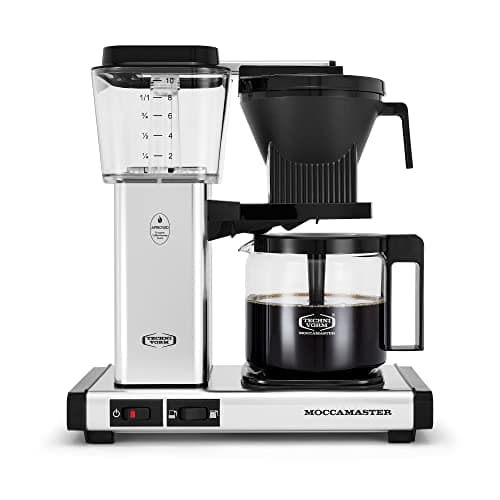
Technivorm Moccamaster KBGV SelectTop pickA certified drip brewer, here as the honest alternative: if what you want is a very good mug of coffee rather than espresso, this is where that argument ends.
The drip machine that makes the espresso question worth asking
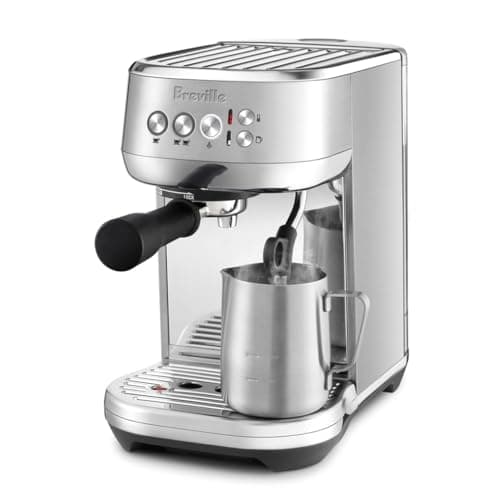
Breville Bambino Plus (BES500)The standard answer to “which first machine” — full 54 mm portafilter and an 18 g dose, with the milk step automated so a flat white is possible on day one.
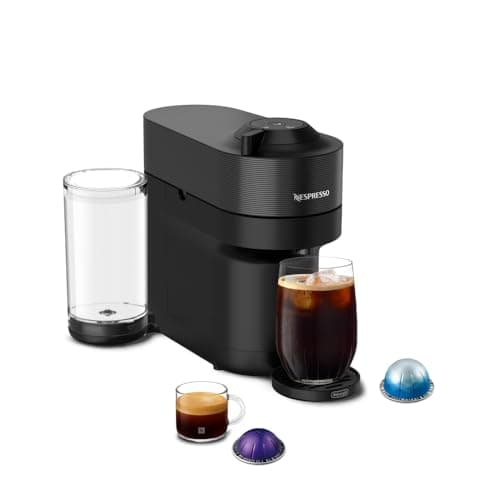
Nespresso Vertuo Pop+A capsule machine. Included here because it is the real alternative most first-time buyers are weighing, and for a lot of them it is the right call.
We have not handled these units. Everything above comes from published manufacturer documentation, cited inline, plus arithmetic you can redo yourself. Everyone in this category says they tested twenty machines; we have not tested any, and we say so. Here is what we do instead.
01
Technivorm Moccamaster KBGV Select
The drip machine that makes the espresso question worth asking
A certified drip brewer, here as the honest alternative: if what you want is a very good mug of coffee rather than espresso, this is where that argument ends.
We have not compiled a cited spec sheet for this pick yet, so there is no spec table here. What follows is about fit — who it is for and who it is not — not about numbers we cannot source. See how we pick.
A drip brewer and an espresso machine are not competing at the same job. Drip makes a large, clean, low-concentration cup; espresso makes a small, concentrated one that milk drinks are built on.
If nobody in the house drinks milk-based coffee, a good drip machine will make you happier than an entry espresso machine will, for less total money and far less technique.
It still wants a grinder. The grind matters less than it does for espresso, and it still matters.
What it does well
Makes a full carafe with no technique at all
Nothing to dial in, nothing to tamp
Built to be repaired rather than replaced
What you give up
Cannot make espresso, a latte or a flat white
Costs more than several entry espresso machines
No milk system of any kind
Skip it if you want milk drinks. It makes one thing, and that thing is not a cappuccino.
The standard answer to “which first machine” — full 54 mm portafilter and an 18 g dose, with the milk step automated so a flat white is possible on day one.
Published specifications for the Breville Bambino Plus (BES500), with sources
54 mm tamper, Razor dosing tool, 16 fl oz milk jug, single- and dual-wall baskets, cleaning tool and disc [source]
The 54 mm portafilter and 18 g dose matter more than they sound: they put the machine on the same dose a cafe uses, so any recipe you read applies to it directly and every 54 mm accessory fits.
The three-second heat-up is the difference between espresso being a weekday habit and a weekend project. A machine that takes fifteen minutes to be ready is a machine you use on Sundays.
The automatic steam wand is the single biggest reason this suits a first setup. Milk texturing is the skill that takes longest to learn; handing it to the machine removes the part most likely to make you give up.
What it does well
Standard 54 mm basket, so recipes and accessories from anywhere fit
Ready in seconds, which is what makes it a habit rather than a project
Automatic milk means a drinkable cappuccino before you can texture by hand
The manual wand is still there when you want to learn
What you give up
No grinder — budget for one separately, and that is the right trade
Small water tank compared with a bean-to-cup machine; refills are frequent
Nothing here helps if your grinder cannot go fine enough
Skip it if you want one box that does everything with no learning curve — a bean-to-cup machine is the honest answer for that, and it is a different product.
A capsule machine. Included here because it is the real alternative most first-time buyers are weighing, and for a lot of them it is the right call.
We have not compiled a cited spec sheet for this pick yet, so there is no spec table here. What follows is about fit — who it is for and who it is not — not about numbers we cannot source. See how we pick.
The comparison people actually need is cost per drink over time, not machine price. A capsule machine is cheap to buy and permanently more expensive per cup than beans.
There is no grind, no dose, no yield and no technique. If none of those words appeal to you, this is a feature list, not a limitation.
What it does well
Nothing to learn, nothing to clean, no grinder
Consistent from the first cup to the thousandth
What you give up
Permanently higher cost per drink than beans
Locked to one company's capsules
No control over anything
Skip it if you want to change how the coffee tastes. A capsule machine's whole design goal is that you cannot.
Espresso forces water through finely ground coffee at around 9 bar of pressure in 20 to 30 seconds, at roughly a 1:2 ratio by weight — that is the National Coffee Association's description of the method. Drip brewing uses gravity alone, a medium grind and several minutes, and produces something like fifteen times the volume from a similar amount of coffee.
That single difference cascades into everything else: the grind, the equipment, how much technique is involved and what you can do with the result.
A pod machine is a third category and it is the honest answer for a lot of people: no grinder, no technique, no cleanup, and a permanently higher cost per drink because you are buying coffee by the capsule rather than by the bag. We work that comparison through properly, with the arithmetic, on espresso machine vs Nespresso — the same reasoning applies to any capsule system. And if the household genuinely wants both drinks from one box, coffee and espresso combo machines covers the machines that brew a carafe and pull a shot.
The cost comparison people expect, and the one that matters
Machine prices overlap almost completely. You can spend $80 or $800 on either kind, which makes the purchase price close to useless as a deciding factor.
What actually differs is the running cost, and it favors drip: a drip machine extracts a carafe from roughly the same dose an espresso machine turns into two shots. If cost per caffeinated hour is genuinely what you care about, drip wins and it is not close. The full arithmetic for the espresso side, with every input shown, is on what home espresso costs to run.
Questions people actually ask
What is the difference between an espresso machine and a coffee maker?+−
Pressure and concentration. An espresso machine forces water through fine grounds at around 9 bar in 20 to 30 seconds to make about 36 g of concentrated liquid. A coffee maker uses gravity, a medium grind and several minutes to make a full carafe.
Can an espresso machine make regular coffee?+−
It can make an americano — espresso with hot water added — which is close but not identical to drip coffee. It cannot brew a carafe, and it makes one drink at a time.
Is an espresso machine harder to use than a coffee maker?+−
Considerably. A drip machine needs almost no technique; espresso needs a grinder that reaches espresso fineness and a couple of weeks of practice to become consistent.
Which is cheaper to run?+−
Drip, clearly. A similar dose of coffee produces a whole carafe rather than two shots. Purchase prices overlap so completely that they are not a useful deciding factor.
Do I need a grinder for a drip coffee maker?+−
It helps and it is not essential, because drip brewing is far more forgiving of uneven grounds. For espresso a capable grinder is non-negotiable — see burr vs blade.