Heads up: we earn a commission if you buy through the links on this page, at no extra cost to you. It never changes the order of the list. Full disclosure · how we pick.
This page exists for one specific household: somebody drinks a mug of filter coffee in the morning, somebody else drinks a latte, and there is one stretch of counter. A combination machine solves that with one plug and one footprint.
It is a real category with real products in it, and it is also the category where marketing is loosest — plenty of machines advertise “coffee and espresso” when what they mean is a big weak espresso in a mug. So start with the distinction that decides everything.
Two things called the same thing
What a machine means when it says it makes coffee and espresso
A true combination machine
An espresso machine with a long-shot button
What it has
A drip brewer with its own filter and carafe, plus an espresso group
One espresso group
What the coffee is
Filter coffee — gravity through a paper or gold filter
A long espresso, called an americano or lungo
Batch size
A carafe, often 10 cups
One cup at a time
Tastes like
Drip coffee
Diluted espresso — clean, but not the same drink
Good for
A household with two different coffee habits
One person who mostly drinks espresso
Neither is wrong. But if the filter-coffee drinker in your house wants a pot to work through, an americano button will not satisfy them, and that is the most common disappointment in this category. Espresso machine vs coffee maker goes through the difference between the drinks in full.
How we judged these
**Is the coffee side a real brewer?** A carafe, a filter and a brew cycle — not a long espresso shot relabeled.
**Can it do both without waiting?** Single-heater combos make you choose. A machine that states it brews both at once is worth the difference.
**Is the espresso side compromised?** Two systems in one body usually means a smaller tank, a smaller basket or a weaker steam wand than a dedicated machine at the same money.
**What happens when it breaks?** One machine doing two jobs means one repair takes both away. That is the cost nobody prices in.
Quick picks — Coffee and espresso in one machine
#
Pick
Best for
Type
Price
1
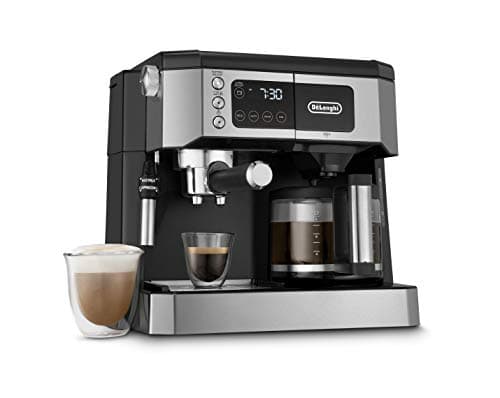
De'Longhi All-In-One Combination (COM532M)Top pickA real 10-cup drip coffee maker and a 15-bar espresso machine in one body, with a dual heating system De'Longhi states can run both at the same time.
A drip carafe and an espresso shot from one machine, at once
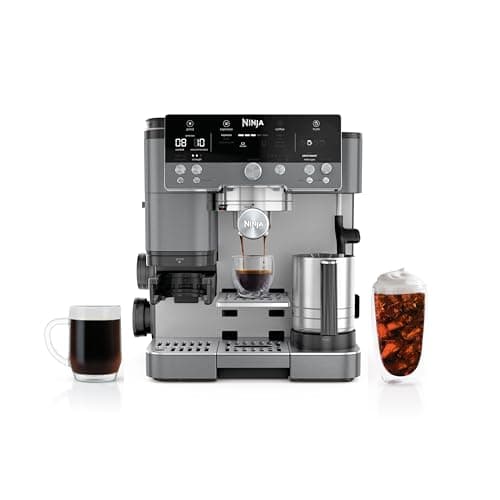
Ninja Luxe Café Premier (ES601)A three-in-one with a built-in conical burr grinder, a built-in scale and guided grind-size prompts — unusually beginner-shaped for the price.
A household that wants espresso, drip and cold brew from one machine
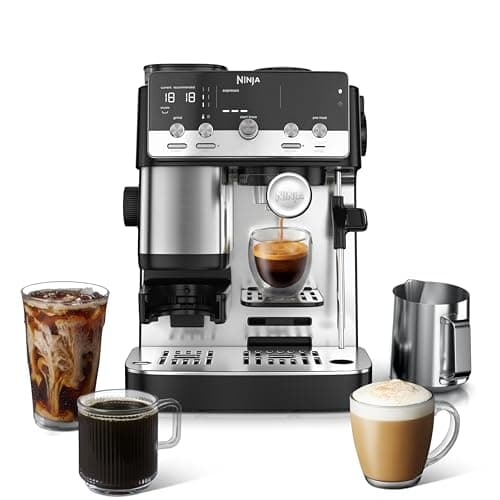
Ninja Luxe Café Mini (ES301)Ninja's compact entry: a conical burr grinder, a built-in scale and a manual steam wand in one body that also brews drip coffee.
A grinder, a scale and a steam wand in the smallest Ninja
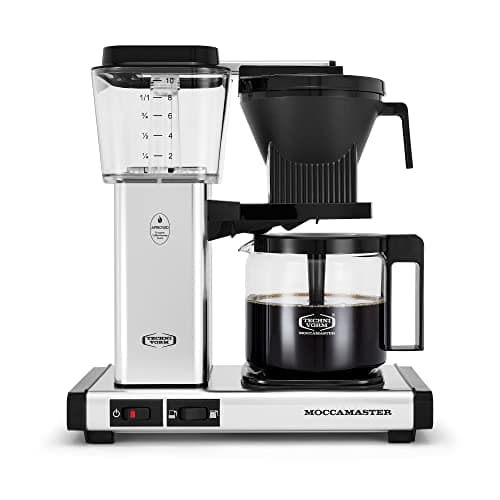
Technivorm Moccamaster KBGV SelectA certified drip brewer, here as the honest alternative: if what you want is a very good mug of coffee rather than espresso, this is where that argument ends.
The drip machine that makes the espresso question worth asking
We have not handled these units. Everything above comes from published manufacturer documentation, cited inline, plus arithmetic you can redo yourself. Everyone in this category says they tested twenty machines; we have not tested any, and we say so. Here is what we do instead.
01
De'Longhi All-In-One Combination (COM532M)
A drip carafe and an espresso shot from one machine, at once
A real 10-cup drip coffee maker and a 15-bar espresso machine in one body, with a dual heating system De'Longhi states can run both at the same time.
Published specifications for the De'Longhi All-In-One Combination (COM532M), with sources
24-hour programmable digital timer and digital touchscreen [source]
The dual heating system is the whole argument for this machine over a cheaper combo. Machines with one heater make you wait between the carafe and the shot; De'Longhi states this one does not.
It is a genuine drip coffee maker, not an americano button. If somebody in the house drinks mugs of filter coffee while somebody else drinks lattes, that is the problem this solves.
The pod basket is a hedge rather than a selling point — it accepts E.S.E. pods, which is a small and shrinking format.
What it does well
A real 10-cup carafe and real espresso in one footprint
De'Longhi states both can brew at once
Programmable timer for the drip side
What you give up
No grinder — budget for one separately
De'Longhi publishes no dimensions, weight or tank capacity
Two brewing systems in one box means two things that can fail
Skip it if nobody in the house drinks filter coffee. You are paying for a carafe you will not use, and a dedicated espresso machine at this money is better at the one job.
A household that wants espresso, drip and cold brew from one machine
A three-in-one with a built-in conical burr grinder, a built-in scale and guided grind-size prompts — unusually beginner-shaped for the price.
Published specifications for the Ninja Luxe Café Premier (ES601), with sources
Grinder
Conical burr with 25 grind settings, covering espresso through drip [source]
Dosing
Built-in scale, dosing by weight per drink [source]
Modes
Espresso, drip coffee and rapid cold brew, with guided grind-size recommendations [source]
A built-in scale is rare at this price and it matters more than it sounds: weighing the dose is the single change that makes shots repeatable, and a machine that does it removes the most-skipped step.
Twenty-five grind settings is more resolution than the Barista Express offers, which is a genuine point in its favor.
The three-in-one framing is the risk. Machines that do three jobs are harder to service and harder to replace one part of.
What it does well
Built-in scale, so the dose is weighed without you owning a scale
25 grind settings — real resolution for the money
Covers drip and cold brew for the rest of the household
What you give up
More to go wrong than a single-purpose machine
The guided prompts are a floor, not a ceiling — control is limited
Skip it if espresso is the only thing you want. A dedicated machine plus a real grinder gives you more headroom for the same money.
Sixty grind sizes is the highest count Ninja publishes on any of its machines, including the ones above it, so grind resolution is not what you give up by buying the smallest one.
A built-in scale is unusual at any price. It means the machine doses by weight rather than by time, which removes the single most common source of inconsistency for a beginner.
The steam wand is manual, so milk is a skill you will be learning. That is a feature if you want to learn and a frustration if you wanted the machine to do it.
What it does well
Grinder, scale and steam wand in one compact body
Also brews drip coffee, hot or over ice
Ninja publishes a full footprint and weight
What you give up
Manual steam wand — no automatic milk
Ninja publishes no portafilter size or brew pressure
One-year warranty is shorter than the two years several rivals publish
Skip it if you want the milk handled for you. Ninja's own range has automatic froth presets further up, and this is the model that does not.
The drip machine that makes the espresso question worth asking
A certified drip brewer, here as the honest alternative: if what you want is a very good mug of coffee rather than espresso, this is where that argument ends.
We have not compiled a cited spec sheet for this pick yet, so there is no spec table here. What follows is about fit — who it is for and who it is not — not about numbers we cannot source. See how we pick.
A drip brewer and an espresso machine are not competing at the same job. Drip makes a large, clean, low-concentration cup; espresso makes a small, concentrated one that milk drinks are built on.
If nobody in the house drinks milk-based coffee, a good drip machine will make you happier than an entry espresso machine will, for less total money and far less technique.
It still wants a grinder. The grind matters less than it does for espresso, and it still matters.
What it does well
Makes a full carafe with no technique at all
Nothing to dial in, nothing to tamp
Built to be repaired rather than replaced
What you give up
Cannot make espresso, a latte or a flat white
Costs more than several entry espresso machines
No milk system of any kind
Skip it if you want milk drinks. It makes one thing, and that thing is not a cappuccino.
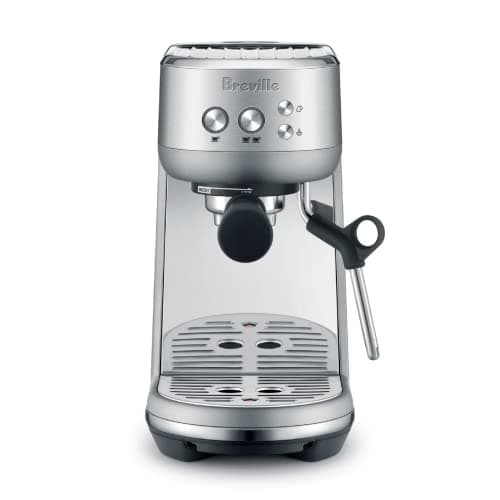
Manual. Breville positions the Plus as the model to choose for an automatic wand [source]
Breville's own page frames the difference in one line: choose the Plus if you want the automatic steam wand. Everything about the shot itself is the same.
If you drink espresso black, or mostly americanos, the automatic wand is a feature you would pay for and never use.
If you drink lattes every morning and have never steamed milk, this is the model that will frustrate you first.
What it does well
The same 54 mm, 18 g, fast-heating shot as the Plus
Cheaper, which frees money for the grinder — the better place to spend it
Manual wand teaches you the skill rather than hiding it
What you give up
Milk texturing is a real skill with a real learning period
No grinder
Skip it if milk drinks are the whole reason you are buying a machine and you would rather not practice — the Plus exists exactly for that.
We rank a drip machine plus a small espresso machine alongside the combos above rather than below them, because for a lot of people it is the better answer and nobody selling combination machines will tell you so.
The arithmetic is simple. A good dedicated drip brewer and a small dedicated espresso machine, bought separately, will each be better at their one job than the combined version at a similar total. They also fail independently — when the drip side dies you still have espresso — and you can replace one half without replacing both.
What you give up is counter space and a plug. If you have those, two machines is the more durable setup. If you do not, the combination machines above exist precisely because that is a real constraint — and compact espresso machines covers the footprint question properly.
What the combination costs you
**Documentation.** De'Longhi publishes a pump pressure and a heating system for its combo but no dimensions, tank capacity or weight. That is a step down from what it publishes for its single-purpose machines.
**Counter height.** These are tall machines with a carafe underneath. Measure to the wall cabinet, not just the counter run.
**Descaling twice over.** Two water paths, both of which scale. Descaling is the maintenance job that decides how long any of these last.
**A shared water tank.** Fine until somebody brews a full carafe and the espresso side runs dry.
The drip side is a real machine, so judge it like one
It is easy to scrutinize the espresso half and accept whatever the coffee half does. Do not — for most households the carafe is the side that gets used every single day.
**Filter type.** De'Longhi states a gold tone filter on the COM532M, which is permanent and reusable. Gold filters let more oils through than paper, which makes a fuller cup and a slightly cloudier one. Neither is better; it is a taste preference worth knowing before you own it.
**Carafe.** A glass pot on a hotplate keeps coffee hot by continuing to cook it, which is why the last cup tastes worse than the first. If somebody works through a pot slowly, that matters more than any espresso spec on the box.
**Programmability.** A 24-hour timer, which De'Longhi states here, is the feature that makes a drip machine worth owning to someone who is not a coffee hobbyist. It is also the feature the espresso-focused buyer forgets to check.
**Grind for the drip side.** Filter coffee wants a medium grind, espresso wants a fine one. If you own one grinder you will be moving it back and forth daily — see grind size for what that costs you in consistency.
How much counter you actually save
Less than you would hope, and the makers do not make it easy to check. De'Longhi publishes no dimensions at all for its combination machine. Ninja publishes a footprint for the Mini at a stated 10.24 by 12.17 by 13.43 inches and for the Pro at 15.51 by 15 by 19.33 inches.
A combination machine is wider and taller than either machine alone, because it contains both. What it saves is the second plug and the gap between two appliances, not half the counter. If footprint is the binding constraint rather than tidiness, compact espresso machines is the page that treats it as the primary criterion — including the three measurements that decide whether anything fits.
Who this category is wrong for
**Anyone who wants to learn espresso properly.** The espresso half of a combination machine is rarely the best espresso machine at that money, and you will feel the ceiling before you feel the convenience.
**Single-person households.** If nobody else is drinking filter coffee, you are buying and cleaning a carafe to justify one americano a week.
**Anyone short on height.** These are tall, and the carafe has to slide out underneath.
**Anyone who already owns a drip machine that works.** Adding a small espresso machine beside it is cheaper, better at espresso, and does not throw away a working appliance.
The pod-based combos are a different product
A large part of this category is machines that pair a drip brewer with a capsule slot rather than a portafilter — Ninja sells one that takes Nespresso capsules, and several brands offer a pod-and-carafe machine.
They are not on this page because the espresso half cannot be ground for, dosed or dialed in; there is nothing to adjust, which is either the appeal or the objection depending on who you are. If it is the appeal, the comparison you want is cost per cup over a few years rather than the purchase price, and espresso machine vs Nespresso does that arithmetic with every input shown.
What to check before you commit
**Does it brew both at once, or take turns?** This is the difference between a machine that serves two people at 7am and one that makes them queue. De'Longhi states a dual heating system on the COM532M for exactly this reason; machines that do not mention it usually share one heater.
**Where does the water come from?** One shared tank means a full carafe can leave the espresso side empty. Two tanks means two things to fill. Either is fine — surprises are not.
**Is the espresso side a real portafilter?** If the espresso half is a pod slot or a pressurized-only basket, you are buying a coffee maker with an espresso-flavored attachment, which is a legitimate product but not the same purchase.
**What is the height to your wall cabinet?** These machines are tall, and a carafe has to come out from underneath.
**Who is it really for?** If the honest answer is one person who drinks espresso and occasionally wants a mug of coffee, an americano from a dedicated machine solves it for less money and less counter.
Then this is the wrong page and machines with a built-in grinder is the right one. That category solves the other version of the same problem — fewer boxes on the counter — by absorbing the grinder instead of the coffee maker.
And if the filter-coffee drinker is the one you are really buying for, be honest about it: a good drip machine and a kettle serve them better than any combination machine, and the espresso side can wait until there is room for a proper one.
We have not used any of these machines. Every specification here comes from the manufacturer's own published page and is linked at the bottom; prices come live from the listings we link to.
Questions people actually ask
Are coffee and espresso combo machines worth it?+−
They are worth it for a household with two different coffee habits and one stretch of counter. They are not worth it if only one person drinks filter coffee occasionally — a dedicated espresso machine at the same money is better at espresso, and the carafe goes unused.
Can a combination machine brew coffee and espresso at the same time?+−
Some can. De'Longhi states a dual heating system on the COM532M that brews coffee and espresso simultaneously. Machines with a single heater make you wait between the two, which is worth checking before buying.
Is an americano the same as drip coffee?+−
No. An americano is espresso with hot water added; drip coffee is brewed by gravity through a filter at a much lower concentration. They taste different, and a filter-coffee drinker will usually notice immediately.
Do combo machines come with a grinder?+−
The ones on this page that have a grinder are the Ninja machines; the De'Longhi combination does not. Budget for a grinder with any machine that lacks one — see grinders under $200.
Is it better to buy one combo machine or two separate machines?+−
Two separate machines are each better at their job, fail independently and can be replaced one at a time. One machine saves counter space and a plug. If space is not your constraint, two is the more durable setup.