Heads up: we earn a commission if you buy through the links on this page, at no extra cost to you. It never changes the order of the list. Full disclosure · how we pick.
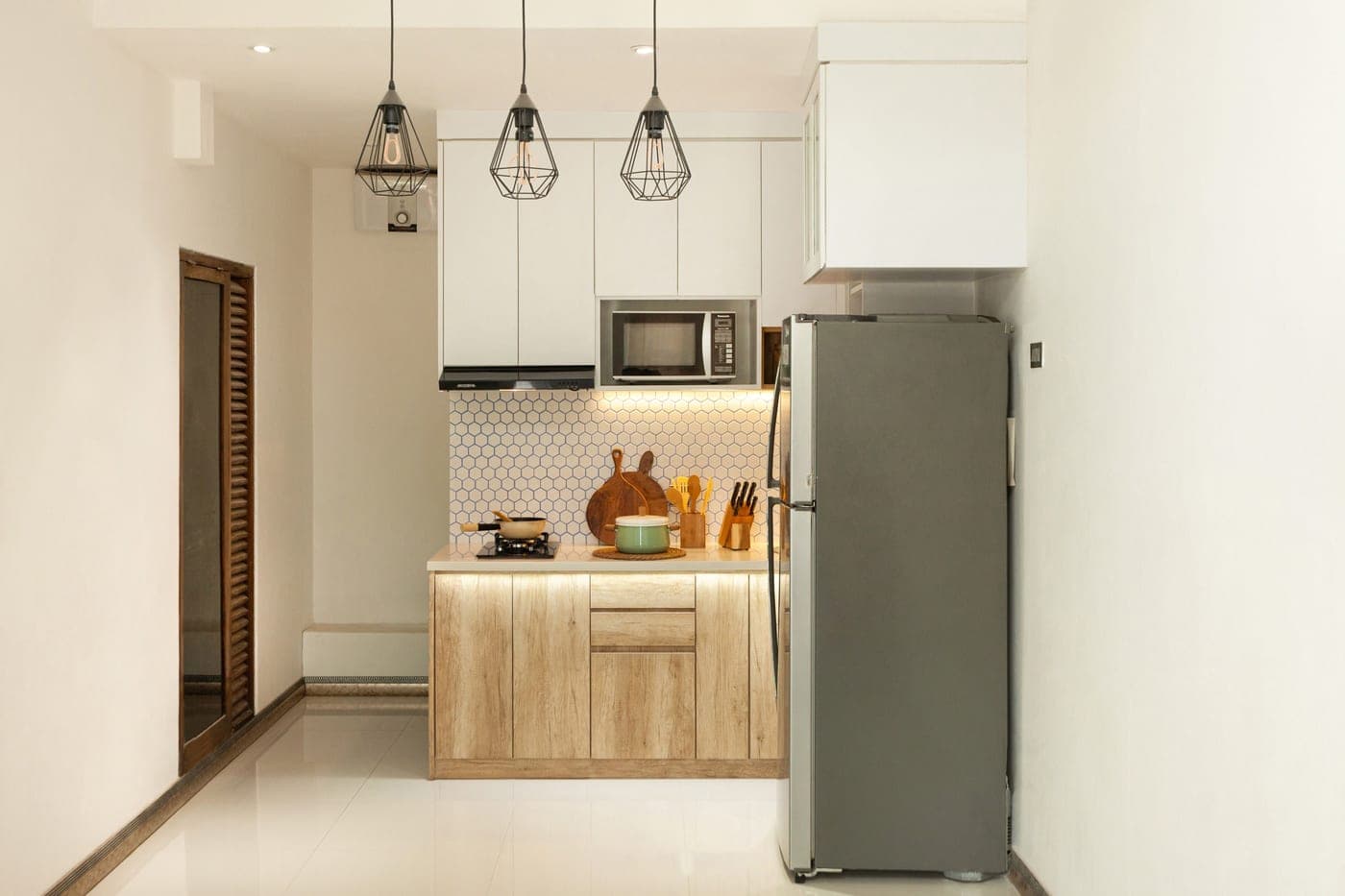
If you are searching for a compact espresso machine, you almost certainly have a number in your head — the gap between the kettle and the end of the counter, or the height under the wall cabinet. That number is the whole purchase. Everything else on a spec sheet is negotiable and that one is not.
So this page is ordered by space rather than by price or by shot quality. It also opens with something the category would rather not admit: **most espresso machine makers do not publish a footprint at all.** We checked the manufacturer pages for every machine here, and the results are below with each figure attributed to the page it came from. Where a maker publishes nothing, this page says nothing — we do not repeat a retailer's measurement as though the manufacturer had stated it. If noise rather than space is the constraint — thin walls, someone asleep — quiet espresso setups covers that instead.
“Compact” is three different products
The word gets applied to machines that solve completely different space problems, which is why shortlists in this category feel incoherent. There are really three answers, and which one you want depends on which dimension is short.
Three kinds of compact, and the constraint each one solves
If your problem is...
The answer is
What you give up
A narrow counter run — you have length, not width
A slim mains machine
A smaller water tank and, usually, a non-standard basket size
A small kitchen generally, but you do have a spot
A small mains machine with a standard basket
Very little, if you pick one that kept the 54 mm basket
No permanent counter space at all
A manual press that lives in a cupboard
Electricity does not do the work; you do, one shot at a time
A low wall cabinet above the counter
Check the height AND how the tank fills
A rear-fill tank needs clearance you will not see on the spec line
A rental, a dorm room or a camper
A hand pump
Everything except the pressure, frankly
Measure three things, in this order
Before you look at a single machine, go and measure. It takes two minutes and it removes most of the shortlist for you.
**The width of the gap.** Not the counter — the gap. The usable run between whatever is already there and the edge or the wall. Add an inch on the side the portafilter handle swings toward.
**The height to the cabinet.** Then ask where the water tank fills from. A machine that is 13 inches tall but fills through a lid on top needs closer to 18 inches of clearance, or it needs to be pulled forward every time. This is the single most common way a machine that fits on paper does not fit in the kitchen.
**The depth, plus room behind.** Many tanks sit at the back and slide out rearward. If the machine is pushed against a wall, that tank has nowhere to go.
Quick picks — Compact espresso machines
#
Pick
Best for
Type
Price
1
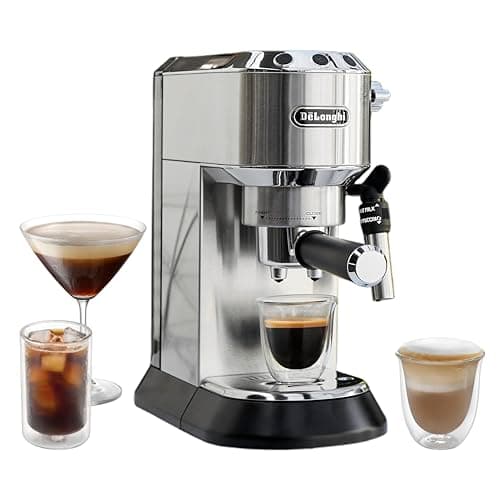
De'Longhi Dedica DeLuxe (EC685)Top pickThe slim one. De'Longhi states a 15 cm width and calls it the slimmest pump coffee maker they make, which is the whole reason to choose it.
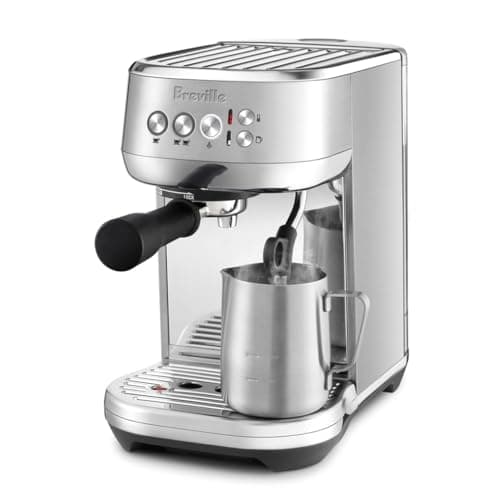
Breville Bambino Plus (BES500)The standard answer to “which first machine” — full 54 mm portafilter and an 18 g dose, with the milk step automated so a flat white is possible on day one.
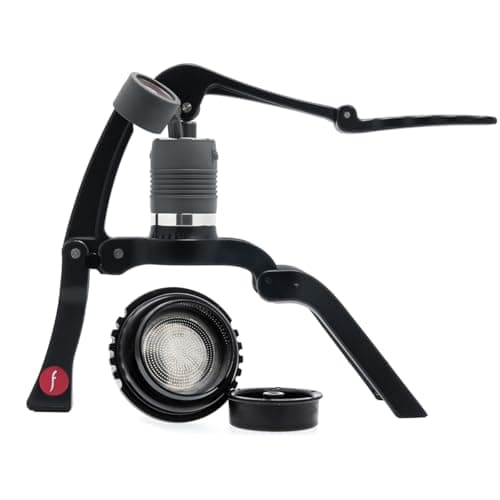
Flair 2GOA manual lever press that collapses into a bag. You supply the pressure and the hot water; it supplies a genuine espresso-style extraction and stores in a drawer.
Real espresso with no electricity and no counter space
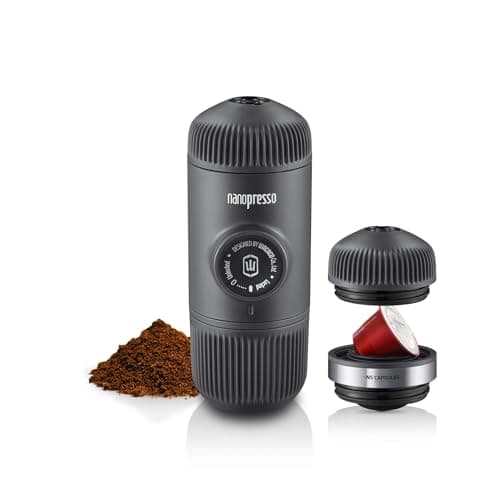
Wacaco NanopressoA hand-pumped pocket espresso maker. You supply the pressure and the hot water; it fits in a jacket pocket and needs no electricity at all.
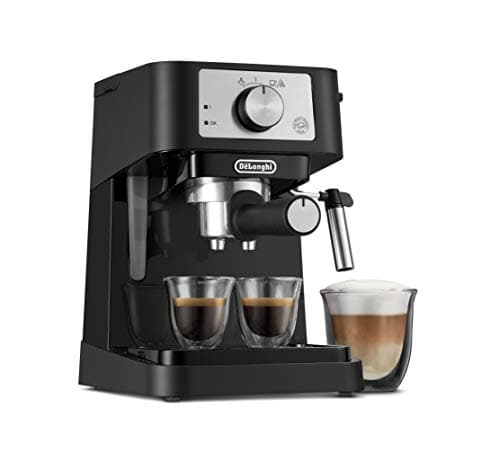
De'Longhi StilosaThe cheapest way to own a pump machine from a brand that will still be there in five years. It is a starting point, not a destination.
We have not handled these units. Everything above comes from published manufacturer documentation, cited inline, plus arithmetic you can redo yourself. Everyone in this category says they tested twenty machines; we have not tested any, and we say so. Here is what we do instead.
01
De'Longhi Dedica DeLuxe (EC685)
A narrow counter
The slim one. De'Longhi states a 15 cm width and calls it the slimmest pump coffee maker they make, which is the whole reason to choose it.
Published specifications for the De'Longhi Dedica DeLuxe (EC685), with sources
Width
15 cm — stated as the slimmest pump coffee maker De'Longhi makes [source]
Takes ground coffee (1 or 2 cups) and E.S.E. pods [source]
Milk
Adjustable frothing wand / cappuccino system [source]
Fifteen centimeters of width is genuinely unusual and it is why this machine keeps selling. If your counter run is already full, that number decides the purchase before any other spec does.
The E.S.E. pod compatibility is a fair hedge: it means the machine still makes a coffee on the day you have not restocked beans, without committing you to a pod ecosystem.
It uses a smaller basket than the 54 mm standard, so accessories and recipes written for 54 mm machines will not transfer directly.
What it does well
Fits where nothing else fits
Takes ground coffee or E.S.E. pods
Adjustable frothing wand rather than a fixed panarello
What you give up
Non-standard basket size limits accessory choice
Narrow body means a small water tank and frequent refills
Skip it if counter width is not actually your constraint — you are paying for the one thing it is best at and giving up basket standardization to get it.
Manual. Breville positions the Plus as the model to choose for an automatic wand [source]
Breville's own page frames the difference in one line: choose the Plus if you want the automatic steam wand. Everything about the shot itself is the same.
If you drink espresso black, or mostly americanos, the automatic wand is a feature you would pay for and never use.
If you drink lattes every morning and have never steamed milk, this is the model that will frustrate you first.
What it does well
The same 54 mm, 18 g, fast-heating shot as the Plus
Cheaper, which frees money for the grinder — the better place to spend it
Manual wand teaches you the skill rather than hiding it
What you give up
Milk texturing is a real skill with a real learning period
No grinder
Skip it if milk drinks are the whole reason you are buying a machine and you would rather not practice — the Plus exists exactly for that.
The standard answer to “which first machine” — full 54 mm portafilter and an 18 g dose, with the milk step automated so a flat white is possible on day one.
Published specifications for the Breville Bambino Plus (BES500), with sources
54 mm tamper, Razor dosing tool, 16 fl oz milk jug, single- and dual-wall baskets, cleaning tool and disc [source]
The 54 mm portafilter and 18 g dose matter more than they sound: they put the machine on the same dose a cafe uses, so any recipe you read applies to it directly and every 54 mm accessory fits.
The three-second heat-up is the difference between espresso being a weekday habit and a weekend project. A machine that takes fifteen minutes to be ready is a machine you use on Sundays.
The automatic steam wand is the single biggest reason this suits a first setup. Milk texturing is the skill that takes longest to learn; handing it to the machine removes the part most likely to make you give up.
What it does well
Standard 54 mm basket, so recipes and accessories from anywhere fit
Ready in seconds, which is what makes it a habit rather than a project
Automatic milk means a drinkable cappuccino before you can texture by hand
The manual wand is still there when you want to learn
What you give up
No grinder — budget for one separately, and that is the right trade
Small water tank compared with a bean-to-cup machine; refills are frequent
Nothing here helps if your grinder cannot go fine enough
Skip it if you want one box that does everything with no learning curve — a bean-to-cup machine is the honest answer for that, and it is a different product.
Real espresso with no electricity and no counter space
A manual lever press that collapses into a bag. You supply the pressure and the hot water; it supplies a genuine espresso-style extraction and stores in a drawer.
Published specifications for the Flair 2GO, with sources
A hand pump is a genuine pressure system rather than a steam trick, which is why these produce something much closer to espresso than a travel moka pot does.
The whole workflow is manual: boil water separately, load the basket, pump. That is fine for one cup and tedious for a household round.
The realistic use is travel, an office desk, a camper or a dorm — anywhere a mains machine is not going to happen.
What it does well
No power, no plumbing, no counter space
Genuine pressure rather than a stovetop workaround
Rinses clean in a sink in under a minute
What you give up
One small shot at a time, and you need a kettle
Pumping is real physical effort at espresso fineness
No steam wand, so milk needs a separate frother
Skip it if this is meant to be your main machine at home. It is a travel and desk solution, and using it as a daily driver gets old inside a fortnight.
The cheapest way to own a pump machine from a brand that will still be there in five years. It is a starting point, not a destination.
We have not compiled a cited spec sheet for this pick yet, so there is no spec table here. What follows is about fit — who it is for and who it is not — not about numbers we cannot source. See how we pick.
Machines at this price ship with pressurized baskets, which force crema regardless of grind. That is a feature if you are grinding with something inadequate and a ceiling once you are not.
The honest way to buy at this level is to treat the machine as the cheap half of the setup and put the money into the grinder, because the grinder is what you will keep.
What it does well
The lowest-risk way to find out if you want a machine at all
Forgiving of a mediocre grind while you are still learning
What you give up
A pressurized basket hides what your grind is actually doing
You will feel the ceiling within months if you enjoy it
Skip it if you already know you want this — the money is better spent once, on a machine with a standard basket, than twice.
This is the useful finding from putting the page together, and it is the reason the ranking above looks the way it does. Here is exactly what each maker publishes on its own product page, retrieved for this page and cited at the bottom.
Published dimensions, by manufacturer, as of this page's publication
Machine
What the maker publishes
Enough to buy on?
De'Longhi Dedica DeLuxe
Width only — 15 cm, described as the slimmest pump coffee maker De'Longhi makes
Yes, if width is your constraint. No, if height under a cabinet is.
Breville Bambino
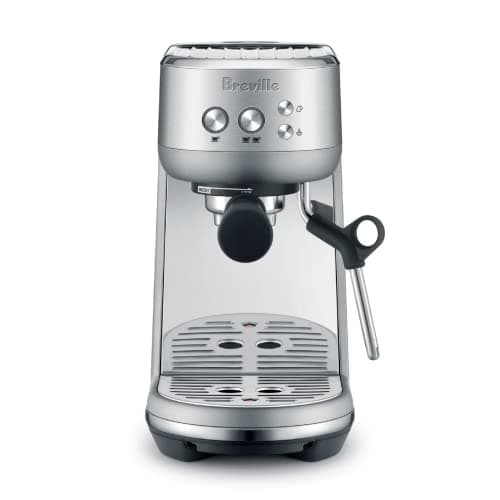
A full 11.9 × 6.1 × 13.5 in, labeled W × D × H
Yes.
Breville Bambino Plus
A full 11.9 × 7.4 × 14.3 in, labeled W × D × H
Yes.
Flair 2GO
Assembled, folded AND case dimensions, plus weight
Yes — the most complete disclosure in this roundup.
Wacaco Nanopresso
Dimensions in both mm and inches, plus weight and capacities
Yes.
De'Longhi Stilosa
Nothing. The US product page publishes no dimensions at all.
No. Measure at a store, or buy where returns are easy.
Two things follow from that table. The first is that the two cheapest, most portable products here are the ones documented most thoroughly — Flair and Wacaco both publish folded dimensions and weight, because they are selling portability and know it is the number people need. The second is that a mains machine can be an extremely popular seller and still leave its buyer guessing. If a maker will not tell you how big the thing is, buy it somewhere with a free return window.
The second box nobody counts
A compact espresso machine plus a grinder is not a compact setup. This is the mistake that ruins the plan more often than any machine dimension does, because the machine is the thing people shop for and the grinder is the thing that shows up later and has nowhere to live.
Espresso needs a grinder that reaches espresso fineness, and pre-ground coffee from a supermarket will not do it — that is not a preference, it is why the shot runs through in eight seconds and tastes of nothing. So when you plan the counter, plan for two objects, not one. There are three honest ways out of that:
**A hand grinder.** It lives in a drawer and takes no counter at all, at the cost of real effort every morning. See hand grinders.
**A machine with the grinder inside it.** One footprint, one plug, and a genuine compromise in grind adjustment — machines with a built-in grinder covers exactly what that compromise is.
**Accept two boxes and shrink the machine.** Which is what this page's top picks are for, and usually the best outcome if you can find the space.
If you are weighing which of the two to buy first, machine or grinder first works through it properly.
Do not trade away the basket to save an inch
There is one specification worth protecting even when space is tight, and it is the portafilter size. A 54 mm or 58 mm basket is a standard: every tamper, every distribution tool, every bottomless portafilter and every recipe written by anyone else applies to it. A non-standard size means a much smaller accessory market and a machine you cannot easily improve.
This is the real trade in the top half of this page. The slimmest machine here buys its width by using a smaller, non-standard basket. The Breville pair keep the 54 mm standard and are wider for it. Neither is wrong — but if you expect to still be doing this in two years, the standard basket is worth an extra couple of inches. Portafilter sizes explained covers how to check what yours takes before you buy an accessory that will not fit.
What a small machine actually costs you
Being honest about the compromises, because every compact machine makes at least one:
The compromises, and whether they matter
What shrinks
The consequence
Does it matter?
Water tank
More refills — a slim machine holds noticeably less
Only mildly, unless you make several drinks in a row
Basket size
Fewer accessories fit, and upgrades are limited
Yes, if you stick with the hobby
Boiler or thermoblock mass
Less thermal stability shot to shot
Less than people claim at this level; grind consistency dominates
Drip tray
Empties more often, and cup clearance is usually tighter
Yes, if you drink from tall mugs
Steam power
Milk texturing takes longer, and large pitchers struggle
What does not shrink is the quality of the shot. A small machine with a standard basket, fed by a capable grinder, makes the same espresso a larger one does. The size penalty in this category is about convenience and headroom, not about what ends up in the cup — which is why a compact machine plus a good grinder beats a large machine plus a bad one every time.
The no-footprint option, taken seriously
Manual presses get filed under travel gear, and for a genuinely small kitchen that is a mistake. A lever press or a hand pump is a real espresso extraction — you are the pump, which is why the pressure is under your control rather than a factory setting. It needs a kettle, it makes one drink at a time, and when it is done it goes back in a cupboard and your counter is empty again.
The two here publish their folded sizes, so you can check against a drawer rather than a counter. The honest limit is throughput: if two people want milk drinks before work, this is the wrong category and no technique fixes it. For one person who drinks one or two espressos a day in a kitchen with no spare surface, it is the best answer on this page. Manual and portable espresso makers goes through the wider category.
How we ranked these
Space first, then whether the machine remains worth owning once it has fit. Concretely: a published footprint counts for more than an unpublished one, a standard basket outranks a slimmer body, and a machine that solves the counter problem by not living on the counter is ranked on its throughput rather than pretending it has none. The full method, including what we do not do, is on how we pick.
We have not handled any of these machines. Every number on this page comes from the manufacturer's own published page and is linked at the bottom, and every price is pulled live from the listing we link to rather than typed in by us.
Questions people actually ask
What is the smallest espresso machine that plugs in?+−
Of the mains machines here, the De'Longhi Dedica DeLuxe is the narrowest — De'Longhi publishes a 15 cm width and describes it as the slimmest pump coffee maker it makes. Note that De'Longhi publishes width only, so if your constraint is height under a cabinet rather than width, that figure does not answer your question.
How much counter space does an espresso machine need?+−
Plan for more than the machine's stated depth. You need room for the portafilter handle to swing, clearance above if the water tank fills from the top, and space behind if the tank slides out rearward. A machine listed at 12 inches deep commonly needs 15 to 16 inches of usable counter in practice.
Do I still need a separate grinder with a compact machine?+−
Yes, unless the machine has one built in. Espresso needs a grind finer and more adjustable than pre-ground supermarket coffee provides. If counter space is the constraint, a hand grinder lives in a drawer — see hand grinders — or consider a machine with a built-in grinder.
Is a compact espresso machine worse than a full-size one?+−
Not at the shot. What shrinks is the water tank, the drip tray, the steam power and often the basket size. A small machine with a standard basket and a capable grinder makes the same espresso as a larger one; the difference is convenience and how far you can upgrade later.
Can I use an espresso machine in a dorm room or an RV?+−
A hand-pumped or lever press is the realistic option — no electricity, no plumbing and no permanent footprint, and both the ones here publish folded dimensions so you can check them against the space you actually have. A mains machine also needs somewhere to sit permanently and a drain-friendly spot to empty the drip tray.
Why do so few makers publish machine dimensions?+−
We do not know, and we will not guess at a motive. What we can report is the state of it: of the six machines on this page, the two portable ones publish complete dimensions, Breville publishes a full W x D x H for both of its machines, De'Longhi publishes width only for the Dedica and nothing at all for the Stilosa. If a footprint decides your purchase, buy from a retailer with a free return window.