Heads up: we earn a commission if you buy through the links on this page, at no extra cost to you. It never changes the order of the list. Full disclosure · how we pick.
Thin walls, a sleeping baby, a partner who works nights, an open-plan apartment where the kitchen is the bedroom. It is a common constraint and the category is almost useless at answering it, because **hardly any maker publishes a noise figure at all.**
So this page does two things: it explains which part of your setup is actually making the noise, which is usually not the part people expect, and it collects the few machines and grinders whose makers say anything measurable about it. It also sets out, plainly, the limits of what anyone can honestly tell you here — because this is a topic where invented decibel figures are common.
What is actually loud
The noise sources in a home espresso setup, loudest first
Source
What it sounds like
How long it lasts
The grinder
The loudest thing in the setup by a distance — a burr grinder under load
10-30 seconds per shot
The steam wand
A sustained hiss, loudest at the start before the wand is submerged
20-40 seconds per milk drink
The vibratory pump
A buzz or rattle, the sound people mean by “loud espresso machine”
25-35 seconds per shot
Knocking the puck out
A single sharp bang — genuinely the thing that wakes people
One second, at the worst possible moment
Beans into the hopper
A rattle nobody thinks about until 6am
A few seconds
Read that in order and the conclusion follows: **buying a quieter machine while keeping a loud grinder solves almost nothing.** The grinder runs first, runs loudest and is the reason the household knows you are awake.
How we judged these
**Does the maker publish a noise claim at all?** Most do not. The ones that do get credit for it, and we quote exactly what they state rather than converting it into a decibel figure nobody published.
**Does it remove a noise source entirely?** A hand grinder has no motor. A lever press has no pump. Removing a source beats damping one.
**Is it still a machine worth owning?** Quiet is a constraint, not a reason to buy something that makes bad coffee.
**Does it help with the sharp noises?** The bang of a knock box and the rattle of beans are fixable habits, and we cover them below.
Quick picks — Quiet espresso setups
#
Pick
Best for
Type
Price
1
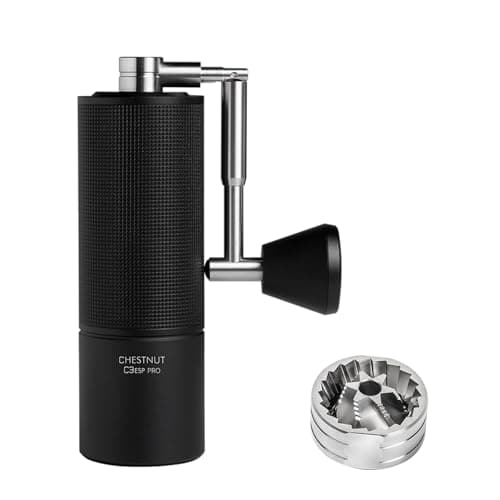
Timemore Chestnut C3 ESP ProTop pickThe usual answer to “what is the least I can spend on a grinder that actually works for espresso” — an espresso-tuned version of a very common entry hand grinder.
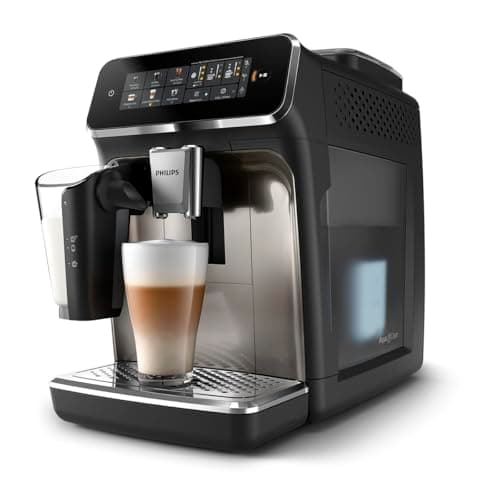
Philips 3300 Series LatteGo (EP3347/90)The 2300 plus the two presets people most often miss — cappuccino and iced coffee — and SilentBrew, on the same grinder and milk system.
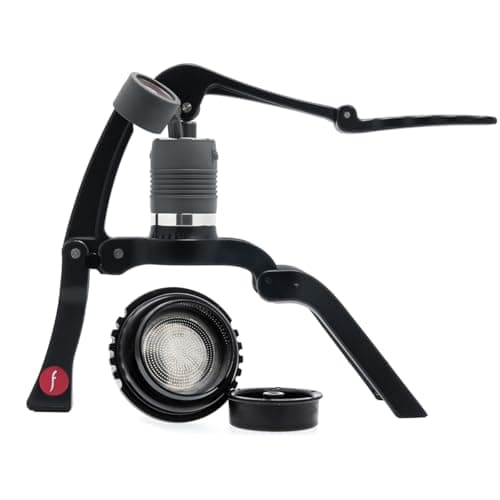
Flair 2GOA manual lever press that collapses into a bag. You supply the pressure and the hot water; it supplies a genuine espresso-style extraction and stores in a drawer.
Real espresso with no electricity and no counter space
We have not handled these units. Everything above comes from published manufacturer documentation, cited inline, plus arithmetic you can redo yourself. Everyone in this category says they tested twenty machines; we have not tested any, and we say so. Here is what we do instead.
01
Timemore Chestnut C3 ESP Pro
The cheapest hand grinder that reaches espresso
The usual answer to “what is the least I can spend on a grinder that actually works for espresso” — an espresso-tuned version of a very common entry hand grinder.
We have not compiled a cited spec sheet for this pick yet, so there is no spec table here. What follows is about fit — who it is for and who it is not — not about numbers we cannot source. See how we pick.
The ESP suffix on a hand grinder means the adjustment has been rescaled so the espresso range occupies more of the dial, not that the burrs are different in kind.
This is the floor of the honest answer. Below it, you are buying a grinder that cannot reach espresso fineness with any consistency, whatever the listing claims.
What it does well
The lowest price that still gives usable espresso adjustment
Small, quiet, nothing to plug in
What you give up
Small capacity
Manual effort daily
Skip it if you drink more than a couple of doubles a day, or if the grinding step is the part you were hoping to avoid.
Twenty fine clicks inside the espresso range is the specification that matters. Grinders that give you five usable espresso settings cannot be dialed in; this one can.
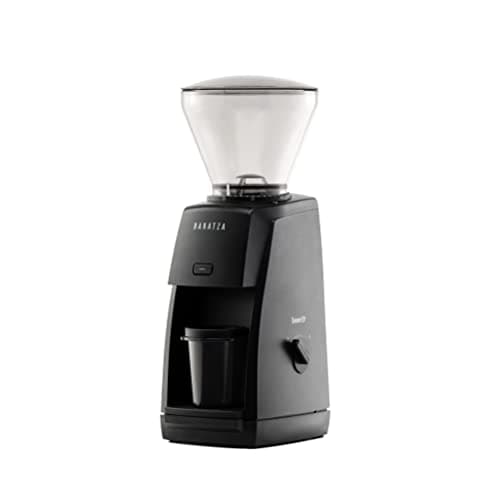
550 RPM is deliberately slow. Slower burrs mean less heat and less static, which in practice means less ground coffee stuck to the inside of the chute and thrown around your counter.
It ships with both 54 mm and 58 mm dosing, which covers a Breville and a Gaggia without buying anything else.
What it does well
Genuine fine adjustment across the espresso range
Covers filter grinding too, so it is not a single-purpose purchase
Quick-release burr makes cleaning a two-minute job
Fits both common portafilter sizes out of the box
What you give up
Retains some grounds between doses, like most hoppered grinders
Louder than a hand grinder, obviously
Skip it if you already have a capable hand grinder and only make one or two drinks a day — you would be buying convenience, not better coffee.
Philips publishes the dose behind the strength setting, and it tells you the button physically changes the amount of coffee rather than being a label.
SilentBrew's 40% is measured against Philips's own earlier machines, not against other brands. Read it as quieter than the model it replaced, not as quiet.
What it does well
Cappuccino and iced coffee listed as presets
SilentBrew, stated 40% quieter than Philips's previous models
Same two-part LatteGo milk system and 12-setting grinder
What you give up
Strength tops out at a stated 9 g of coffee per drink
Philips does not publish water tank or bean hopper capacity
You do not control dose or yield beyond three strength steps
Skip it if you only drink espresso and black coffee — the 2300 makes both with the same grinder, and the extra presets are what you would be paying for.
Real espresso with no electricity and no counter space
A manual lever press that collapses into a bag. You supply the pressure and the hot water; it supplies a genuine espresso-style extraction and stores in a drawer.
Published specifications for the Flair 2GO, with sources
Two makers in this category state something useful, and both statements are relative rather than absolute.
**Philips states SilentBrew on its 3300 and 5500 LatteGo machines, at “40% quieter” than its own previous models.** That is a comparison against Philips, not against the market, so read it as quieter than the machine it replaced. It is still the most specific claim anyone in this category makes.
**Baratza states 550 RPM on the Encore ESP, “reduced to limit heat, noise and static”.** A slower burr is a quieter burr, and this is unusually honest for a spec sheet: it names noise as one of three reasons for the design choice.
That is genuinely the extent of it. If a page tells you a specific machine runs at 58 decibels, ask where that number came from — it is almost never the manufacturer.
The quietest setup is not electric
If quiet is the binding constraint rather than a preference, the honest answer is to remove the motors.
**A hand grinder has no motor at all.** It makes a soft crunching sound and nothing else, and at espresso fineness it takes real effort for 30 to 90 seconds — effort being the trade for silence. It is also the cheapest route to a genuinely espresso-capable grind, because you are not paying for a motor. See hand grinders and manual vs electric.
**A lever press has no pump.** You supply the pressure, so the only sound is the kettle. Pair a lever press with a hand grinder and the entire process is quieter than the kettle that feeds it — the quietest real espresso setup available, at the cost of throughput and effort. Manual and portable espresso makers covers the category.
Four habits that fix more than a purchase
**Stop knocking the puck out.** The bang of a portafilter against a knock box is the sharpest noise in the whole process. Push the puck out with your thumb into a bin, or knock into a folded towel.
**Fill the grinder the night before,** or pour beans in slowly. The rattle of beans hitting a hopper is short, sharp and completely avoidable.
**Put the machine on something soft.** A vibratory pump transmits into the counter, and the counter radiates it. A silicone mat under the machine takes a surprising amount out of the buzz.
**Purge and steam with the wand already submerged.** The loudest part of steaming is the screech before the tip is in the milk. Get it under the surface, then open the valve.
None of that costs anything, and together it does more for a sleeping household than choosing between two machines whose makers publish no noise figures.
Milk drinks are the loud ones
Worth separating, because an espresso and a latte are not the same amount of noise. A black shot is a grind and a pump — maybe 45 seconds of sound. A milk drink adds 20 to 40 seconds of steam, which is a sustained hiss rather than a short burst, and it comes after the quiet part is over.
If milk drinks are what you make and quiet is the constraint, two things help. Submerge the wand before opening the valve, because the screech everyone recognizes is steam hitting air rather than milk. And consider a machine with an automatic wand: it stops at a set temperature instead of running while you judge it, which is a shorter noise as well as a better-textured one.
The alternative is to leave the steam out entirely. A standalone frother whisks rather than hisses, and it is quieter than any steam wand — milk frother for lattes and cappuccinos covers which device makes which drink.
Timing beats equipment
The cheapest fix is not a purchase at all: move the noise to when it does not matter.
**Grind the night before.** It costs you some freshness — ground coffee stales far faster than whole beans — and it moves the single loudest event out of the quiet hours entirely. For a 5am shift this is the trade worth making.
**Warm the machine up silently.** A thermoblock machine heating is near-silent, and a boiler machine is too. Switch it on first, then decide whether to grind now or later.
**Batch the noisy part.** If two people are up at different times, grinding both doses at once halves the number of loud events.
What we could not verify
Being explicit, because this is a page where fake precision is easy. We publish no decibel figures because no manufacturer in this category published one to us, and a measured number without a stated method, distance and load is not information.
We also cannot tell you that one specific machine is quieter than another specific machine, because that comparison requires measurement we have not done and nobody has published. What is on this page instead: which component makes the noise, which makers state anything at all, and which setups remove a noise source rather than damping one. That is the honest limit of what can be said here.
What to buy, by constraint
Matching the setup to how quiet you actually need to be
Your situation
Buy
Why
Thin walls, nobody asleep
Any machine, a slower-burr electric grinder
The grinder is the only part worth optimizing
Someone asleep in the next room
A hand grinder with whatever machine you like
Removes the loudest source completely
Studio apartment, sleeping partner
A hand grinder and a lever press
No motor and no pump — the kettle is the loudest thing
Open-plan office or shared kitchen
A bean-to-cup automatic
One short burst, enclosed, with nothing to knock out
We have not measured any of this equipment and we do not publish decibel figures. Where a maker states something about noise, it is quoted above and cited below; everything else here is about which part of the process makes the sound and what removes it.
Questions people actually ask
What is the quietest espresso machine?+−
Almost no maker publishes a noise figure, so there is no honest ranking. The quietest real setup removes the motors entirely — a lever press has no pump and a hand grinder has no motor. Among electric machines, Philips states SilentBrew on its 3300 and 5500 at 40% quieter than its own previous models, which is the most specific claim in the category.
Is the grinder or the machine louder?+−
The grinder, by a clear margin. It also runs first. Buying a quieter machine while keeping a loud grinder solves very little, which is why this page ranks grinders alongside machines.
Are hand grinders quiet?+−
Yes — there is no motor, so the only sound is beans crushing. The trade is real physical effort at espresso fineness, roughly 30 to 90 seconds per double.
How do I make my espresso machine quieter?+−
Four free habits do more than most purchases: push the puck out rather than knocking it, load beans slowly or the night before, put a silicone mat under the machine to stop the pump vibrating into the counter, and submerge the steam wand before opening the valve.
Is a bean-to-cup machine quieter than a separate grinder and machine?+−
Usually, because the grinder is enclosed in the machine's body rather than sitting open on the counter, and there is no puck to knock out. The trade is that it grinds, brews and froths in one unattended burst you cannot pause or time around, so a hand grinder you can work slowly may still suit a sleeping household better.
Do any manufacturers publish decibel ratings for espresso machines?+−
Essentially none in the home category. Philips states a relative claim — SilentBrew, 40% quieter than its previous models — and Baratza states 550 RPM on the Encore ESP as a design choice that limits heat, noise and static. Specific decibel numbers you see elsewhere are usually not from the manufacturer.