The machine we recommend more than any other on this site, assessed on what Breville publishes — including the two things it deliberately does not give you.
Heads up: we earn a commission if you buy through the links on this page, at no extra cost to you. It never changes the order of the list. Full disclosure · how we pick.
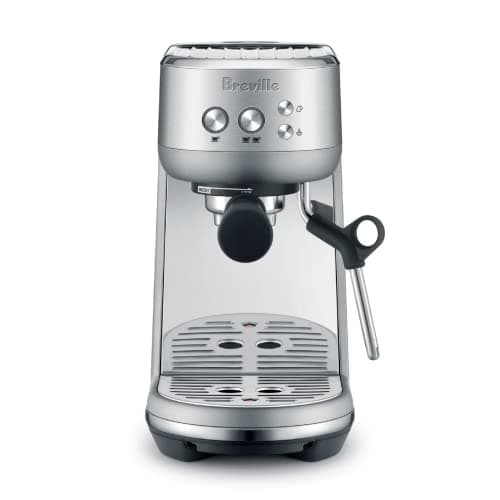
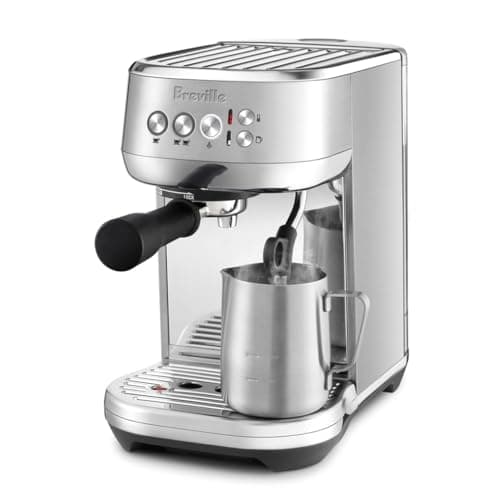
The Bambino Plus is the machine this site recommends most often, so it deserves a page that argues the case properly — including the parts that count against it.
The short version: it makes the same shot as machines costing twice as much, it removes the hardest beginner skill, it heats up in seconds, and it deliberately leaves out two things you may care about. Whether those omissions matter is the whole decision. If you are weighing it against something else entirely, Breville Bambino alternatives covers the four reasons people look past it.
What Breville publishes
Everything in this section is from Breville's own product page, cited at the bottom. We have not handled the machine.
Bambino Plus (BES500), as specified by Breville
Portafilter
54 mm stainless steel
Stated dose
18 g
Pump and extraction
15 bar Italian pump, 9 bar extraction after low-pressure pre-infusion
Heating
ThermoJet, stated to reach extraction temperature in 3 seconds
Steam wand
Automatic and manual, 3 milk temperatures and 3 texture levels, 266°F steam
Dimensions (W×D×H)
11.9 × 7.4 × 14.3 in
The three-second heat-up is not a gimmick
ThermoJet heats a small volume of water on demand rather than bringing a boiler up to temperature. Breville states three seconds to extraction temperature, and the practical effect is the one that decides whether a machine gets used on a weekday: there is no waiting.
Machines with a boiler take several minutes from cold, and the group head needs longer than that to stabilize. In practice that means people with boiler machines either plan ahead or pull a first shot that is colder than the rest. A machine that is ready when you are removes an obstacle that quietly kills a lot of new espresso habits.
The automatic wand removes the skill that makes people quit
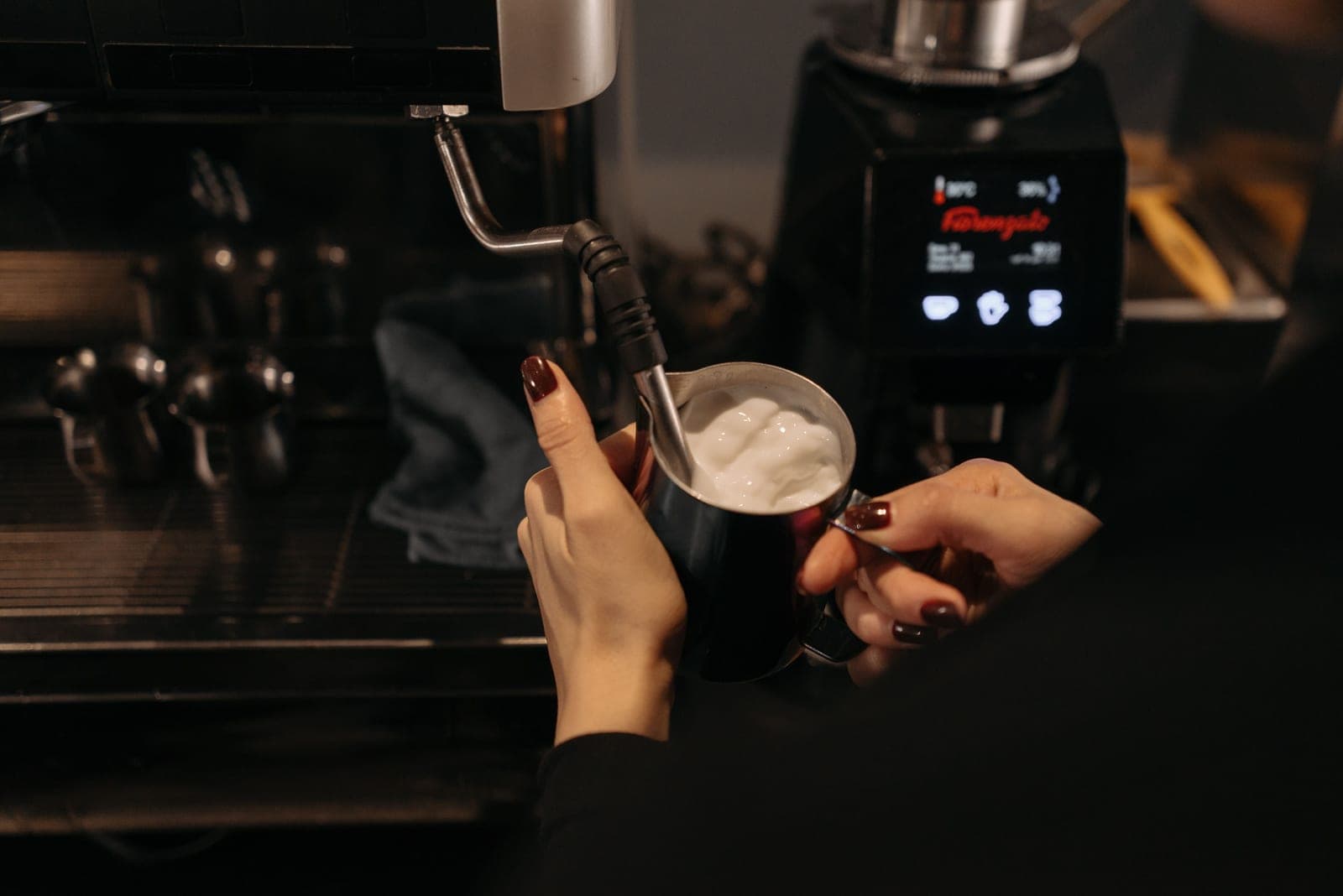
Breville states three milk temperatures and three texture levels, with 266°F steam. You put the wand in the jug, press a button, and it stops on its own.
Texturing milk by hand is the part of espresso that takes longest to learn and is most obvious when it goes wrong — a latte with bubbly, over-hot milk is unpleasant in a way a slightly under-extracted shot is not. Handing that to the machine on day one is the single biggest reason this model, rather than the cheaper Bambino, is the one we point beginners at. How to steam milk covers what the machine is doing for you, because it is still worth understanding.
The wand also works manually, so it does not stop you learning. That combination — automatic when you want a drink, manual when you want to practice — is unusual.
The two things it leaves out
1. There is no grinder
This is the one that catches people. The Bambino Plus is an excellent machine that will make bad coffee with pre-ground supermarket beans, because espresso needs a grind finer and more adjustable than pre-ground provides. Budget for a grinder in the same purchase, not later — a Bambino Plus with a capable grinder beats a more expensive all-in-one with a compromised one.
Breville does include useful kit: a 54 mm tamper, the Razor dosing tool, a 16 fl oz stainless milk jug, single- and dual-wall baskets, and a cleaning tool and disc. That covers most of the starter kit except the grinder and a scale.
2. There is no temperature control you can see
Breville does not publish a PID or an adjustable brew temperature for this model — the Barista Express states PID control at 200°F, and the Bambino Plus states ThermoJet without a settable target. For most people this is irrelevant: the machine holds a sensible temperature and you will not be chasing a two-degree difference in your first year. For someone who expects to be adjusting brew temperature by bean, it is a real ceiling.
The three machines to weigh against it
**The plain Bambino** is the same shot without the automatic wand — same 54 mm basket, same 18 g dose, same ThermoJet. If you drink espresso or americanos and would never use an automatic milk wand, it is the better buy and the money moves to the grinder.
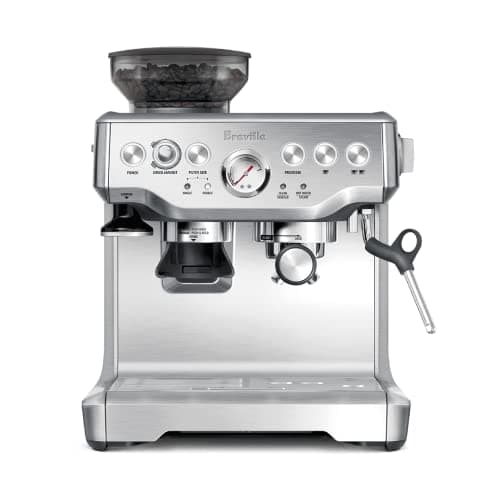
**The Barista Express** adds an integrated grinder with 16 settings and PID temperature control at a stated 200°F, but its wand is manual. So it is not an upgraded Bambino Plus — it is a different trade: a grinder and held temperature in exchange for texturing milk yourself. Our Barista Express review works through the grind-resolution ceiling in detail.
**A bean-to-cup automatic** is the honest alternative if what you actually want is the drink rather than the making of it. No portafilter, no technique, no skill — see bean-to-cup machines.
Who should not buy it
**Anyone who has not budgeted for a grinder.** The machine is only as good as what feeds it, and this is not a small line item.
**Anyone who wants one box.** Machine plus grinder is two appliances and roughly twice the counter — all-in-one machines exist for that reason.
**Anyone who wants to adjust brew temperature.** Breville does not publish a settable target for this model.
**Anyone making four milk drinks back to back.** Small machines with small tanks are not built for a queue.
What the first week actually looks like
Worth setting expectations, because this is where machines get returned. The Bambino Plus will not make a good shot on day one unless your grind is already right, and it will not tell you what is wrong — Breville puts no guided prompts on this model.
What that means in practice: expect the first few shots to run too fast and taste sour, then adjust the grinder finer a little at a time until a double takes roughly 25 to 30 seconds. That is normal, it is not a fault, and it is the same process on any machine without guidance. Your first week with an espresso machine walks through it day by day, and how to dial in espresso is the method itself.
The milk side is the opposite experience. Because the wand stops itself, a drinkable flat white is available on the first morning — which is exactly why this is the model we point people at rather than the cheaper one.
Living with it: upkeep and running cost
A ThermoJet machine has a small water path and no boiler to sit full, but it still scales, and scale is what kills small machines. The maintenance is light and non-negotiable: wipe the wand after every milk drink, backflush with the supplied disc on the schedule in the manual, and descale on the interval your water hardness dictates rather than when the machine complains. Descaling and the maintenance schedule cover both.
On running cost, the machine is the small number. Beans dominate the cost of a home espresso habit, and the arithmetic — with the electricity price sourced from the U.S. Energy Information Administration and every input shown — is on what home espresso costs to run.
The verdict
It remains the default recommendation on this site because it gets the two things right that decide whether a beginner keeps going: it is ready immediately, and it will not let you ruin the milk. Everything it omits — the grinder, the adjustable temperature — is either a separate purchase that makes the setup better anyway, or a control you are unlikely to need before you would want a different machine entirely.
We have not used this machine. Every figure above is published by Breville and linked below; the price comes live from the listing we link to, and if it is not showing, the buy link says so rather than quoting a number we cannot verify today.
Quick picks — Breville Bambino Plus review
#
Pick
Best for
Type
Price
1
Breville Bambino Plus (BES500)Top pickThe standard answer to “which first machine” — full 54 mm portafilter and an 18 g dose, with the milk step automated so a flat white is possible on day one.
Breville Barista Express (BES870)The default all-in-one: a conical burr grinder with 16 settings built into a machine with a 54 mm basket and PID-controlled temperature.
One box, one counter footprint, machine and grinder together
We have not handled these units. Everything above comes from published manufacturer documentation, cited inline, plus arithmetic you can redo yourself. Everyone in this category says they tested twenty machines; we have not tested any, and we say so. Here is what we do instead.
01
Breville Bambino Plus (BES500)
A first machine you will not outgrow in a year
The standard answer to “which first machine” — full 54 mm portafilter and an 18 g dose, with the milk step automated so a flat white is possible on day one.
Published specifications for the Breville Bambino Plus (BES500), with sources
54 mm tamper, Razor dosing tool, 16 fl oz milk jug, single- and dual-wall baskets, cleaning tool and disc [source]
The 54 mm portafilter and 18 g dose matter more than they sound: they put the machine on the same dose a cafe uses, so any recipe you read applies to it directly and every 54 mm accessory fits.
The three-second heat-up is the difference between espresso being a weekday habit and a weekend project. A machine that takes fifteen minutes to be ready is a machine you use on Sundays.
The automatic steam wand is the single biggest reason this suits a first setup. Milk texturing is the skill that takes longest to learn; handing it to the machine removes the part most likely to make you give up.
What it does well
Standard 54 mm basket, so recipes and accessories from anywhere fit
Ready in seconds, which is what makes it a habit rather than a project
Automatic milk means a drinkable cappuccino before you can texture by hand
The manual wand is still there when you want to learn
What you give up
No grinder — budget for one separately, and that is the right trade
Small water tank compared with a bean-to-cup machine; refills are frequent
Nothing here helps if your grinder cannot go fine enough
Skip it if you want one box that does everything with no learning curve — a bean-to-cup machine is the honest answer for that, and it is a different product.
Manual. Breville positions the Plus as the model to choose for an automatic wand [source]
Breville's own page frames the difference in one line: choose the Plus if you want the automatic steam wand. Everything about the shot itself is the same.
If you drink espresso black, or mostly americanos, the automatic wand is a feature you would pay for and never use.
If you drink lattes every morning and have never steamed milk, this is the model that will frustrate you first.
What it does well
The same 54 mm, 18 g, fast-heating shot as the Plus
Cheaper, which frees money for the grinder — the better place to spend it
Manual wand teaches you the skill rather than hiding it
What you give up
Milk texturing is a real skill with a real learning period
No grinder
Skip it if milk drinks are the whole reason you are buying a machine and you would rather not practice — the Plus exists exactly for that.
Sixteen grind settings is the number to weigh. It is enough to find an espresso grind, and it is not enough to make small corrections once you are close — which is exactly the trade-off you accept for the convenience of one box.
PID temperature control at a stated 200°F is a genuine feature and not a marketing word: it means the water temperature is held rather than allowed to drift between shots.
The footprint argument is the strongest one here. A separate machine and grinder need roughly twice the counter, and on a small kitchen counter that decides it.
What it does well
Machine and grinder in one footprint, which is often the real constraint
Grinds straight into the portafilter — no transfer, no mess step
PID-held brew temperature
Manual wand, so milk skill is learnable on it
What you give up
Sixteen settings is coarse resolution once you are dialing in
The grinder cannot be upgraded independently of the machine
Bigger and heavier than a standalone machine
Skip it if you already own a decent burr grinder — you would be paying twice for the same job, and a separate machine plus your existing grinder will beat it.
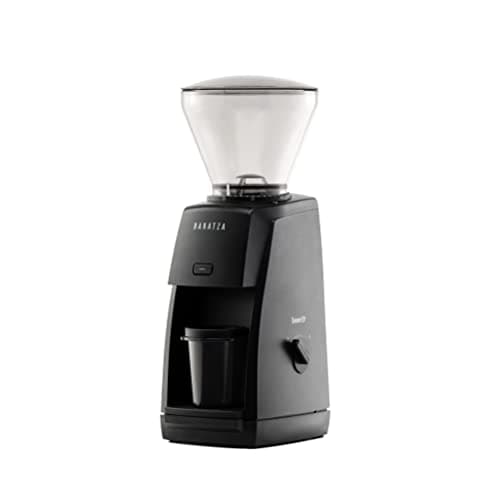
Twenty fine clicks inside the espresso range is the specification that matters. Grinders that give you five usable espresso settings cannot be dialed in; this one can.
550 RPM is deliberately slow. Slower burrs mean less heat and less static, which in practice means less ground coffee stuck to the inside of the chute and thrown around your counter.
It ships with both 54 mm and 58 mm dosing, which covers a Breville and a Gaggia without buying anything else.
What it does well
Genuine fine adjustment across the espresso range
Covers filter grinding too, so it is not a single-purpose purchase
Quick-release burr makes cleaning a two-minute job
Fits both common portafilter sizes out of the box
What you give up
Retains some grounds between doses, like most hoppered grinders
Louder than a hand grinder, obviously
Skip it if you already have a capable hand grinder and only make one or two drinks a day — you would be buying convenience, not better coffee.
For a beginner who drinks milk drinks, yes — it pairs the same 54 mm, 18 g, 9-bar shot as pricier Brevilles with an automatic milk wand and a stated 3-second heat-up. It is not worth it if you drink espresso black and would never use the automatic wand; the plain Bambino makes the same shot for less.
Does the Bambino Plus come with a grinder?+−
No. It ships with a 54 mm tamper, the Razor dosing tool, a milk jug, both basket types and cleaning tools, but no grinder. Budget for one in the same purchase — espresso needs a grind that pre-ground coffee cannot provide.
What is the difference between the Bambino and the Bambino Plus?+−
The steam wand. Breville states the Plus has an automatic wand with three milk temperatures and three texture levels; the plain Bambino's wand is manual. The shot itself — 54 mm basket, 18 g dose, 9 bar after pre-infusion, ThermoJet heating — is the same on both.
Does the Bambino Plus have PID temperature control?+−
Breville does not publish a PID or an adjustable brew temperature for the Bambino Plus. It states PID control at 200°F for the Barista Express, so if settable temperature matters to you, that is the model that publishes it.
How long does the Bambino Plus take to heat up?+−
Breville states its ThermoJet system reaches extraction temperature in 3 seconds, which is the practical advantage over boiler machines that need several minutes plus time for the group to stabilize.
Is the Bambino Plus good for lattes?+−
It is one of the better beginner choices for milk drinks specifically, because the automatic wand removes the hardest skill. Breville states three milk temperatures and three texture levels at 266°F steam, and the wand can also be used manually once you want to learn.