The most-bought all-in-one in the US, assessed on what Breville actually publishes — and on the one specification that decides whether you will outgrow it.
Heads up: we earn a commission if you buy through the links on this page, at no extra cost to you. It never changes the order of the list. Full disclosure · how we pick.
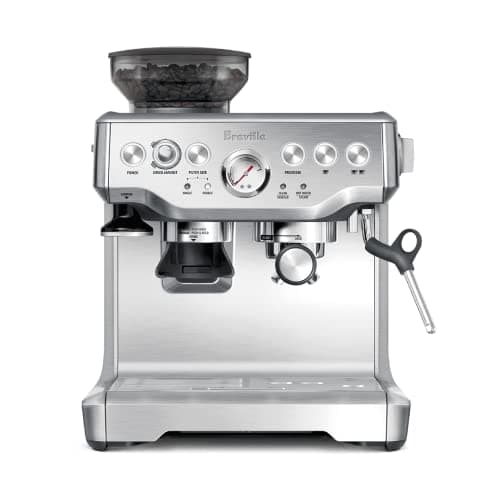
The Barista Express is the machine most people mean when they say they are thinking about getting into espresso. It is a grinder and a machine in one box, it has been sold essentially unchanged for years, and it is on almost every shortlist including ours.
**We have not used one.** What follows is built from what Breville publishes about it, from the arithmetic that follows from those numbers, and from a clear statement of who it is wrong for. If you want a review built on months of hands-on use, this is not that, and we explain why we do not write those.
What Breville actually states
Published specifications, from Breville's own product page
Specification
Stated figure
Grinder
Integrated conical burr, 16 grind settings, grinds to the portafilter on demand
Portafilter
54 mm stainless steel
Dose
18 g
Pump / extraction
15 bar Italian pump, 9 bar extraction after low-pressure pre-infusion
Heating
Thermocoil with PID temperature control, stated at 200°F
Steam wand
Manual
Two of those rows are genuinely strong and one is the ceiling. Take them in order.
What it does well
PID temperature control is a real feature, not a word on a box
Breville states Thermocoil heating with PID control delivering water at 200°F. PID means the temperature is actively held rather than allowed to drift, and drift is one of the reasons two shots pulled from the same beans on a cheaper machine taste different. It is the most under-appreciated thing on this spec sheet, because it is what makes a dial-in stick from one morning to the next.
It grinds straight into the portafilter
The transfer step — grinding into a cup, tipping it into a basket, losing some on the counter — is where most of the mess and most of the static in a home setup happens. Removing it is a bigger daily quality-of-life gain than it sounds.
The basket is standard
54 mm and an 18 g dose means every recipe anybody has written for a 54 mm machine applies to it directly, and every 54 mm tamper, distribution tool and bottomless portafilter fits. That is not true of every machine at this price — see portafilter sizes for why it matters more than it sounds.
The ceiling: 16 grind settings
This is the number to weigh, and the one the marketing does not dwell on. Sixteen settings covers the whole range the grinder can produce — not sixteen settings inside the espresso zone.
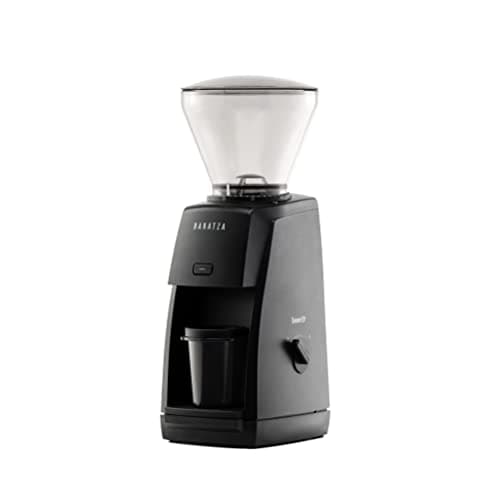
Compare that with a dedicated espresso grinder. Baratza states the Encore ESP puts **20 fine clicks inside the espresso range alone**, with 20 more for filter. So where the Encore ESP gives you twenty places to stand while dialing in, the Barista Express gives you a handful, and each step is a bigger jump.
Who should buy it
**Counter space is your binding constraint.** A machine plus a separate grinder needs roughly twice the run. If the second one does not fit, this decision is already made — or see compact espresso machines for the smaller-machine route to the same problem.
**You want one purchase, not two.** One box, one plug, one thing to learn.
**You drink espresso or americanos more than lattes.** The wand is manual, so milk is a skill you will be learning — see how to steam milk.
**You want held brew temperature at this price.** Not every machine in the bracket offers it.
Who should not
**You already own a capable grinder.** You would be paying for a second one and getting the weaker of the two. Pair what you have with a Bambino or Bambino Plus instead.
**Lattes are the whole reason you are buying.** The manual wand is the part most likely to frustrate you. The Bambino Plus automates it, and Breville positions the Plus on exactly that difference.
**You expect to chase the last few percent.** The grinder is married to the machine and cannot be upgraded on its own.
**You want the machine to make the drink for you.** That is a bean-to-cup machine, and it is a different product.
Quick picks — Breville Barista Express review
#
Pick
Best for
Type
Price
1
Breville Barista Express (BES870)Top pickThe default all-in-one: a conical burr grinder with 16 settings built into a machine with a 54 mm basket and PID-controlled temperature.
One box, one counter footprint, machine and grinder together
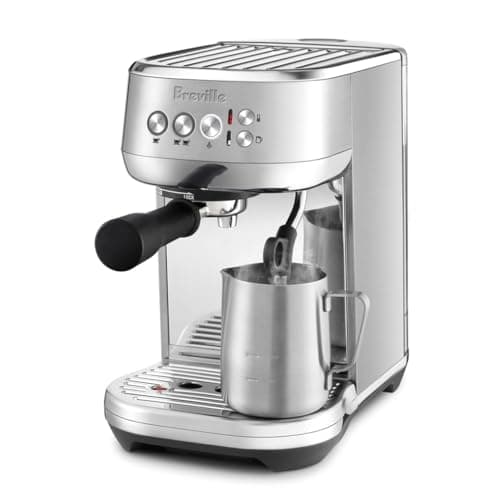
Breville Bambino Plus (BES500)The standard answer to “which first machine” — full 54 mm portafilter and an 18 g dose, with the milk step automated so a flat white is possible on day one.
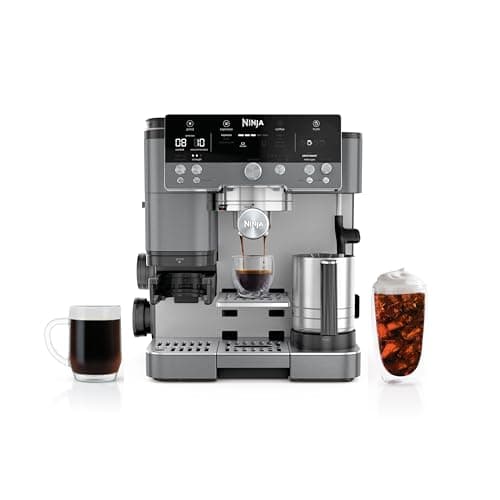
Ninja Luxe Café Premier (ES601)A three-in-one with a built-in conical burr grinder, a built-in scale and guided grind-size prompts — unusually beginner-shaped for the price.
A household that wants espresso, drip and cold brew from one machine
We have not handled these units. Everything above comes from published manufacturer documentation, cited inline, plus arithmetic you can redo yourself. Everyone in this category says they tested twenty machines; we have not tested any, and we say so. Here is what we do instead.
01
Breville Barista Express (BES870)
One box, one counter footprint, machine and grinder together
The default all-in-one: a conical burr grinder with 16 settings built into a machine with a 54 mm basket and PID-controlled temperature.
Published specifications for the Breville Barista Express (BES870), with sources
Grinder
Integrated conical burr, 16 grind settings, grinds to the portafilter on demand [source]
Sixteen grind settings is the number to weigh. It is enough to find an espresso grind, and it is not enough to make small corrections once you are close — which is exactly the trade-off you accept for the convenience of one box.
PID temperature control at a stated 200°F is a genuine feature and not a marketing word: it means the water temperature is held rather than allowed to drift between shots.
The footprint argument is the strongest one here. A separate machine and grinder need roughly twice the counter, and on a small kitchen counter that decides it.
What it does well
Machine and grinder in one footprint, which is often the real constraint
Grinds straight into the portafilter — no transfer, no mess step
PID-held brew temperature
Manual wand, so milk skill is learnable on it
What you give up
Sixteen settings is coarse resolution once you are dialing in
The grinder cannot be upgraded independently of the machine
Bigger and heavier than a standalone machine
Skip it if you already own a decent burr grinder — you would be paying twice for the same job, and a separate machine plus your existing grinder will beat it.
The standard answer to “which first machine” — full 54 mm portafilter and an 18 g dose, with the milk step automated so a flat white is possible on day one.
Published specifications for the Breville Bambino Plus (BES500), with sources
54 mm tamper, Razor dosing tool, 16 fl oz milk jug, single- and dual-wall baskets, cleaning tool and disc [source]
The 54 mm portafilter and 18 g dose matter more than they sound: they put the machine on the same dose a cafe uses, so any recipe you read applies to it directly and every 54 mm accessory fits.
The three-second heat-up is the difference between espresso being a weekday habit and a weekend project. A machine that takes fifteen minutes to be ready is a machine you use on Sundays.
The automatic steam wand is the single biggest reason this suits a first setup. Milk texturing is the skill that takes longest to learn; handing it to the machine removes the part most likely to make you give up.
What it does well
Standard 54 mm basket, so recipes and accessories from anywhere fit
Ready in seconds, which is what makes it a habit rather than a project
Automatic milk means a drinkable cappuccino before you can texture by hand
The manual wand is still there when you want to learn
What you give up
No grinder — budget for one separately, and that is the right trade
Small water tank compared with a bean-to-cup machine; refills are frequent
Nothing here helps if your grinder cannot go fine enough
Skip it if you want one box that does everything with no learning curve — a bean-to-cup machine is the honest answer for that, and it is a different product.
A household that wants espresso, drip and cold brew from one machine
A three-in-one with a built-in conical burr grinder, a built-in scale and guided grind-size prompts — unusually beginner-shaped for the price.
Published specifications for the Ninja Luxe Café Premier (ES601), with sources
Grinder
Conical burr with 25 grind settings, covering espresso through drip [source]
Dosing
Built-in scale, dosing by weight per drink [source]
Modes
Espresso, drip coffee and rapid cold brew, with guided grind-size recommendations [source]
A built-in scale is rare at this price and it matters more than it sounds: weighing the dose is the single change that makes shots repeatable, and a machine that does it removes the most-skipped step.
Twenty-five grind settings is more resolution than the Barista Express offers, which is a genuine point in its favor.
The three-in-one framing is the risk. Machines that do three jobs are harder to service and harder to replace one part of.
What it does well
Built-in scale, so the dose is weighed without you owning a scale
25 grind settings — real resolution for the money
Covers drip and cold brew for the rest of the household
What you give up
More to go wrong than a single-purpose machine
The guided prompts are a floor, not a ceiling — control is limited
Skip it if espresso is the only thing you want. A dedicated machine plus a real grinder gives you more headroom for the same money.
Twenty fine clicks inside the espresso range is the specification that matters. Grinders that give you five usable espresso settings cannot be dialed in; this one can.
550 RPM is deliberately slow. Slower burrs mean less heat and less static, which in practice means less ground coffee stuck to the inside of the chute and thrown around your counter.
It ships with both 54 mm and 58 mm dosing, which covers a Breville and a Gaggia without buying anything else.
What it does well
Genuine fine adjustment across the espresso range
Covers filter grinding too, so it is not a single-purpose purchase
Quick-release burr makes cleaning a two-minute job
Fits both common portafilter sizes out of the box
What you give up
Retains some grounds between doses, like most hoppered grinders
Louder than a hand grinder, obviously
Skip it if you already have a capable hand grinder and only make one or two drinks a day — you would be buying convenience, not better coffee.
The honest one is not a better machine. It is a separate grinder sitting next to it, used instead of the built-in one, with the machine kept for its PID-held brew group. That sounds wasteful and it is the sequence a lot of people actually follow, because grind resolution is what runs out first — see grinders and why the grinder comes first.
What it costs to run
Roughly the same as any other machine in this class, because the running cost is overwhelmingly beans. At the 18 g dose Breville states, a 454 g bag is about 25 double shots. The full arithmetic — beans, electricity at the current US residential average, descaler and cleaning tablets — is on what home espresso costs to run.
Questions people actually ask
Is the Breville Barista Express worth it?+−
It is if counter space is your constraint and you want machine and grinder in one purchase. It is not if you already own a capable grinder, or if milk drinks are the whole point — the wand is manual and the built-in grinder's 16 settings are coarse resolution for dialing in.
How many grind settings does the Barista Express have?+−
Breville states 16, and that covers the grinder's whole range rather than 16 positions inside the espresso zone. For comparison, Baratza states 20 fine clicks inside the espresso range alone on the Encore ESP.
Does the Barista Express have PID temperature control?+−
Yes. Breville states Thermocoil heating with PID temperature control delivering water at 200°F, which means the brew temperature is held rather than allowed to drift between shots.
What portafilter size is the Barista Express?+−
Breville states a 54 mm stainless steel portafilter with an 18 g dose, the same as the Bambino and Bambino Plus. One tamper covers all three.
Barista Express or Bambino Plus?+−
Different trades rather than better and worse. The Barista Express adds a built-in grinder and PID-held temperature; the Bambino Plus adds an automatic steam wand and needs a separate grinder. The full comparison is here.