The answer is yes, and the reason is not snobbery — it is that espresso is the one brew method where the grind has to be adjustable. Here is the exception, and what to buy.
Heads up: we earn a commission if you buy through the links on this page, at no extra cost to you. It never changes the order of the list. Full disclosure · how we pick.
**Yes — if you want espresso, a grinder is the one thing you cannot skip, and it is a more important purchase than the machine.** The reason is specific to espresso: it is the only common brew method where the correct grind is not a setting you can buy, but a target you have to move toward over several shots.
**The one real exception:** if your machine has a pressurized (dual-wall) basket and you intend to keep using it, pre-ground espresso coffee will make you a hot, crema-topped drink tomorrow morning. It will also be the best that setup ever does. Everything below is the detail behind those two sentences.
Why pre-ground works for filter and fails for espresso
You have probably made perfectly good coffee from a bag of pre-ground. That is not a contradiction — it is a different brew method with a much wider tolerance.
A drip machine or a French press gives the water minutes with the coffee, so a grind that is slightly off produces a cup that is slightly off. Espresso gives the water about half a minute, under roughly 9 bar of pressure, through a compacted puck. Within that window, a small change in grind is the difference between a shot that runs in 12 seconds and tastes of water and one that will not run at all.
The National Coffee Association puts espresso at the fine end of the grind range for exactly this reason. A bag of pre-ground sits at one fixed point in that range, chosen by the roaster for an average machine, and you cannot move it.
The three things a bag of pre-ground cannot do
**It cannot be adjusted.** Your shot is running too fast. The fix is a finer grind. There is no finer setting in a sealed bag — your only remaining levers are dose and tamp, and neither has nearly enough range.
**It cannot match your beans.** Every bean, roast level and bag age wants a slightly different grind. A single factory grind is correct for none of them in particular.
**It cannot stay fresh.** Ground coffee has vastly more surface area than whole beans, so it stales in days rather than weeks, and the CO2 that makes crema goes with it. Storing coffee beans covers the timeline, which is shorter than most people expect.
The exception, stated properly
A pressurized basket — also called dual-wall — has a second wall behind the first with one small hole in it. That hole, rather than your coffee, creates most of the resistance the pump pushes against.
That changes the answer honestly. With a pressurized basket, almost any grind produces a shot with crema on top, which is exactly why budget machines ship with them. If you own such a machine, intend to keep using the basket it came with, and want coffee rather than a hobby, you can buy pre-ground espresso and be content.
What you are accepting is a ceiling: the basket does the work, so a better grinder would change very little. Pressurized vs non-pressurized baskets is the full comparison, and it is the page to read before you spend anything.
How we judged the grinders below
**Can it reach espresso fineness at all?** The disqualifier for most kitchen grinders, and the first thing to check.
**How small are its steps near that setting?** The figure that decides whether you can make a correction or only overshoot it. This is the real difference between a filter grinder and an espresso grinder.
**Burr type.** Burrs crush to a size; blades chop to a distribution of sizes. Burr vs blade is the thirty-second version.
**What it costs against the machine.** A grinder that eats the machine budget is the wrong grinder, and pairing a grinder with your machine works through the split.
**What the maker publishes.** We compare stated figures, and where nothing is published, we say so.
Quick picks — Do I need a grinder for espresso?
#
Pick
Best for
Type
Price
1
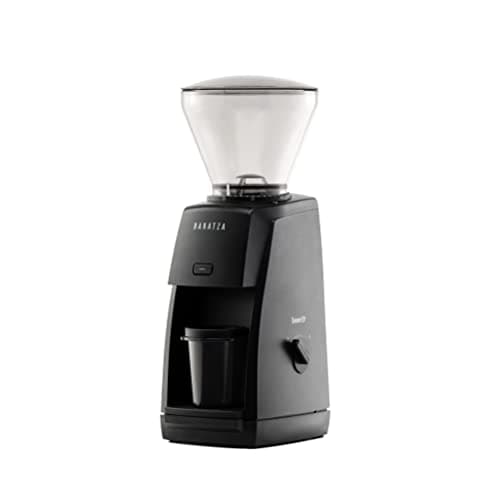
Baratza Encore ESPTop pickAn Encore reworked for espresso: the first 20 clicks are a fine, high-resolution espresso range, and the remaining 20 cover filter.
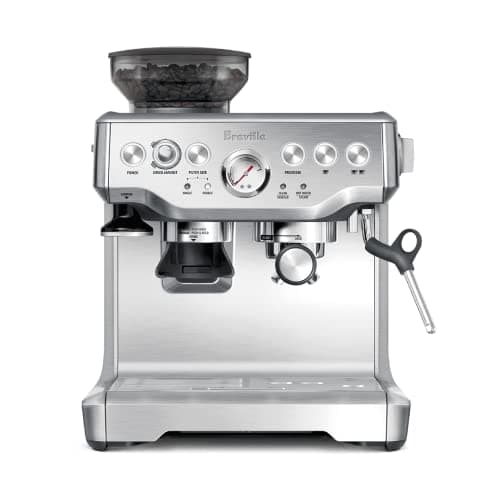
Breville Barista Express (BES870)The default all-in-one: a conical burr grinder with 16 settings built into a machine with a 54 mm basket and PID-controlled temperature.
One box, one counter footprint, machine and grinder together
Baratza EncoreThe long-standing filter-grinder recommendation. It is listed here so you do not buy it by mistake: the ESP is the espresso version for a reason.
We have not handled these units. Everything above comes from published manufacturer documentation, cited inline, plus arithmetic you can redo yourself. Everyone in this category says they tested twenty machines; we have not tested any, and we say so. Here is what we do instead.
01
Baratza Encore ESP
The default first electric grinder
An Encore reworked for espresso: the first 20 clicks are a fine, high-resolution espresso range, and the remaining 20 cover filter.
Published specifications for the Baratza Encore ESP, with sources
Burr
40 mm M2 conical, quick-release for cleaning [source]
Grind range
#1-20 optimized for espresso in fine steps; #21-40 for filter [source]
Burr speed
550 RPM, reduced to limit heat, noise and static [source]
Twenty fine clicks inside the espresso range is the specification that matters. Grinders that give you five usable espresso settings cannot be dialed in; this one can.
550 RPM is deliberately slow. Slower burrs mean less heat and less static, which in practice means less ground coffee stuck to the inside of the chute and thrown around your counter.
It ships with both 54 mm and 58 mm dosing, which covers a Breville and a Gaggia without buying anything else.
What it does well
Genuine fine adjustment across the espresso range
Covers filter grinding too, so it is not a single-purpose purchase
Quick-release burr makes cleaning a two-minute job
Fits both common portafilter sizes out of the box
What you give up
Retains some grounds between doses, like most hoppered grinders
Louder than a hand grinder, obviously
Skip it if you already have a capable hand grinder and only make one or two drinks a day — you would be buying convenience, not better coffee.
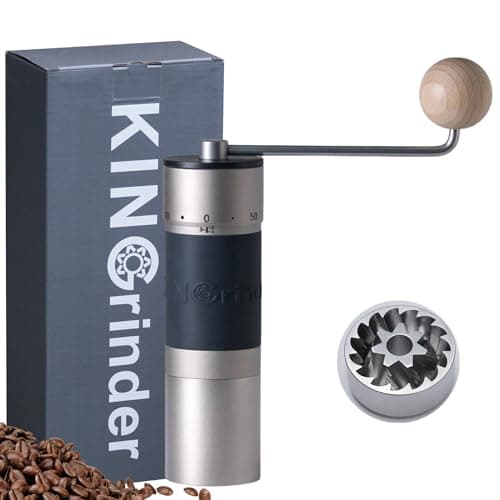
An external-adjustment hand grinder aimed squarely at espresso, from the value end of the market.
We have not compiled a cited spec sheet for this pick yet, so there is no spec table here. What follows is about fit — who it is for and who it is not — not about numbers we cannot source. See how we pick.
External adjustment means you change the grind without taking the grinder apart or losing your setting, which is the difference between dialing in and guessing.
This category exists because espresso needs adjustment steps small enough that a five-position dial is useless.
What it does well
External adjustment you can count and return to
Espresso-focused rather than filter-first
What you give up
Manual effort
Less established support than the bigger names
Skip it if you want the shortest path to a working setup with no research — a well-known electric grinder is the lower-effort answer.
Sixteen grind settings is the number to weigh. It is enough to find an espresso grind, and it is not enough to make small corrections once you are close — which is exactly the trade-off you accept for the convenience of one box.
PID temperature control at a stated 200°F is a genuine feature and not a marketing word: it means the water temperature is held rather than allowed to drift between shots.
The footprint argument is the strongest one here. A separate machine and grinder need roughly twice the counter, and on a small kitchen counter that decides it.
What it does well
Machine and grinder in one footprint, which is often the real constraint
Grinds straight into the portafilter — no transfer, no mess step
PID-held brew temperature
Manual wand, so milk skill is learnable on it
What you give up
Sixteen settings is coarse resolution once you are dialing in
The grinder cannot be upgraded independently of the machine
Bigger and heavier than a standalone machine
Skip it if you already own a decent burr grinder — you would be paying twice for the same job, and a separate machine plus your existing grinder will beat it.
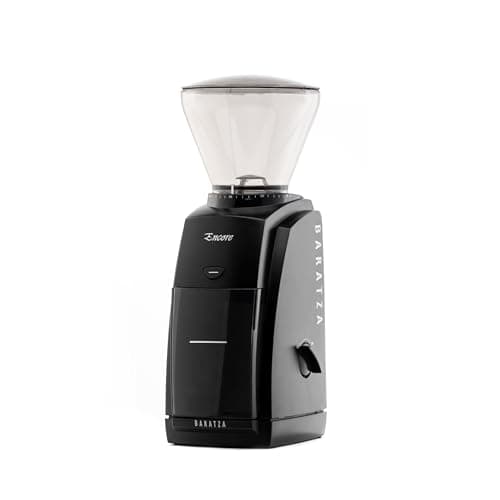
The long-standing filter-grinder recommendation. It is listed here so you do not buy it by mistake: the ESP is the espresso version for a reason.
We have not compiled a cited spec sheet for this pick yet, so there is no spec table here. What follows is about fit — who it is for and who it is not — not about numbers we cannot source. See how we pick.
The standard Encore and the Encore ESP look alike and cost differently. The ESP exists because the standard model's adjustment range was not built to sit in the espresso zone.
If you also brew pour-over or French press, the standard model is excellent at that job and the wrong tool for this one.
What it does well
Well-supported, repairable, widely stocked
Excellent for filter brewing
What you give up
Not built for the espresso grind range — that is what the ESP is for
Skip it if espresso is the reason you are buying a grinder. Buy the ESP instead; this is the same family aimed at a different brew method.
**Electric:** Baratza's Encore ESP is the default, and Baratza publishes why — a 40 mm M2 conical burr set and 40 grind settings, with clicks 1 to 20 optimized for espresso in fine steps and 21 to 40 for filter. That last detail is the whole point: twenty usable steps inside the range you care about is what makes dialing in a process rather than a lottery.
**Manual:** a hand grinder gets you better burrs for the money, because you are not paying for a motor. The trade is honest — a couple of minutes of effort per double shot, every time, forever. Hand grinders for espresso covers the category and manual vs electric covers the decision.
What about a machine with the grinder built in?
A legitimate answer to this question, and the one most people arrive at when the two-purchase arithmetic sinks in. Breville's Barista Express is the standard choice: an integrated conical burr grinder with 16 settings that grinds straight into the portafilter, in the same box as a 54 mm machine with thermocoil and PID at a stated 200°F.
Sixteen settings is the number to weigh. It is enough to find an espresso grind and it is not many steps once you are close, so corrections are coarser than on a dedicated grinder. You are also buying one appliance instead of two, which means the grinder cannot be upgraded on its own. Machines with a built-in grinder covers that trade properly.
What if I already own a coffee grinder?
Then this is not quite your question, and there is a better page for it: can you use a regular coffee grinder for espresso? has a one-shot test that tells you in a single attempt whether the grinder on your counter can do the job.
The short form: a blade grinder cannot, because it chops rather than sizes. A burr grinder built for filter coffee usually can reach a fine enough setting but cannot make small enough adjustments near it, which is a subtler failure and the one that wastes most people's first month.
If you are buying everything at once
Buy the grinder first, or at least buy it at the same time. This is the most common and most expensive mistake in a first setup: a $500 machine fed by a $40 grinder makes worse coffee than a $250 machine fed by a $200 one, because the grinder sets the ceiling and the machine only decides how close you get to it.
**You want espresso you can improve** — you need a grinder, and it should be the part of the budget you protect.
**You have a pressurized basket and want coffee, not a hobby** — pre-ground is a defensible choice, and the basket is your ceiling either way.
**You own a blade grinder** — it cannot do this. That is a hardware limit, not a technique one.
**You own a filter burr grinder** — test it before you buy anything, using the one-shot test.
**You do not want to own two appliances** — a machine with a built-in grinder is the honest compromise, with coarser adjustment as the cost.
We have not used any of this equipment. Every figure here is published by the manufacturer or by the named source linked below, and prices come live from the listings we link to.
Questions people actually ask
Do I need a grinder for espresso?+−
Yes, if you want espresso you can adjust and improve. Espresso is the one common brew method where the correct grind is a moving target rather than a fixed setting, and a bag of pre-ground sits at one point you cannot change. The exception is a machine with a pressurized dual-wall basket, which creates its own resistance and will make a crema-topped shot from pre-ground coffee.
Can I use pre-ground coffee in an espresso machine?+−
Yes, and it works best in a pressurized basket. In a single-wall basket, pre-ground is a lottery — if the factory grind happens to suit your machine the shot is fine, and if it does not, you have no way to correct it, because dose and tamp cannot make up the difference.
Is a grinder or the espresso machine more important?+−
The grinder. It sets the ceiling on what any machine can produce, and the machine determines how close you get to that ceiling. A modest machine with a capable grinder consistently beats an expensive machine with a poor one, which is why we recommend protecting the grinder budget first.
What is the cheapest grinder that works for espresso?+−
Two routes cost about the same. Electrically, Baratza's Encore ESP publishes a 40 mm M2 conical burr set and 40 settings, with clicks 1 to 20 optimized for espresso in fine steps, which is enough resolution to dial a shot in. Manually, a hand grinder buys better burrs for the money at the cost of a couple of minutes of grinding per double shot.
Will a better grinder improve my shots if I use a pressurized basket?+−
Barely. The pressurized basket creates most of the resistance itself, so it flattens the difference between a good grind and a poor one. That is the point of the design and also its limit. If you want a grinder to make a visible difference, you need a single-wall basket to put the coffee in.
Can I grind espresso in a blade grinder?+−
No. A blade grinder chops coffee into a wide mix of particle sizes rather than cutting it to one size. Under espresso pressure, the water finds a path through the large particles and over-extracts the dust, which tastes bitter and sour at the same time. This is a hardware limit and no technique works around it.
What the second wall actually does, when to switch, and the three purchases that make a single-wall basket work rather than just making it frustrating.