Your machine almost certainly came with both and said very little about either. One of them is training wheels, and knowing which you are using explains most of what your shots are doing.
Heads up: we earn a commission if you buy through the links on this page, at no extra cost to you. It never changes the order of the list. Full disclosure · how we pick.
**Start on the pressurized basket your machine came with. Switch to the single-wall basket once you own a grinder that can go fine enough and adjust in small steps — and not before.** The pressurized basket makes a decent shot from almost any coffee; the single-wall basket makes a better shot only if everything upstream of it is right.
If you plan to keep using pre-ground coffee indefinitely, stay pressurized. That is not a compromise so much as a correct match between the hardware and the coffee going into it.
What the second wall actually does
A **single-wall** basket (also called non-pressurized, standard or precision) is a cup with many fine holes in the bottom. The only thing resisting the water is your coffee puck. Grind too coarse and the shot gushes; grind too fine and it chokes. The puck is the valve.
A **pressurized** basket (also called dual-wall) has a second wall behind the first with a single small hole in it. The coffee strains through the top layer into a chamber, and that one hole becomes the restriction. The machine now builds its pressure against a fixed, manufactured aperture instead of against your coffee.
That one design difference explains everything else on this page — including why a pressurized basket produces crema from stale supermarket coffee, and why it will not reward you for buying a better grinder.
What changes when you switch
Pressurized (dual-wall)
Single-wall (non-pressurized)
What resists the water
A manufactured hole in the second wall
Your coffee puck, and nothing else
Works with pre-ground
Yes, reliably
Rarely, and never adjustably
Needs an adjustable grinder
No
Yes — this is the requirement
Crema
Produced by the basket, from almost any coffee
Produced by the coffee, if the shot is right
Responds to a better grinder
Barely
Directly — it is the whole point
Puck prep matters
Very little
A lot; channeling becomes visible and tastable
Tolerance for error
Wide
Narrow at first, then normal
Where it leads
A consistent, fixed result
A shot you can dial in and improve
How to tell which one you are using
**Take the basket out of the portafilter and turn it over.** A single-wall basket shows you a field of tiny holes across the whole base. A pressurized one shows a solid back with one hole, or a plastic insert with one hole.
**Look at the shot.** A pressurized basket tends to produce a foamy, pale, fast-dissipating crema that looks like soap bubbles. Single-wall crema is finer, darker and sits longer.
**Check the box.** Breville ships both single-wall and dual-wall baskets with the Bambino Plus, alongside the 54 mm tamper, Razor dosing tool, milk jug, cleaning tool and disc. Many machines do the same and never mention it.
When to switch
There is one precondition and it is not negotiable: a grinder that reaches espresso fineness **and** adjusts in small steps near that setting. Without it, the single-wall basket gives you a choice between a shot that gushes and a shot that chokes, with nothing usable in between.
If that test passes, switch. The first three or four shots will be worse than what the pressurized basket was giving you. That is normal and it is information — for the first time, the shot is telling you about your coffee rather than about a hole in a piece of steel.
Quick picks — Pressurized vs non-pressurized baskets
#
Pick
Best for
Type
Price
1
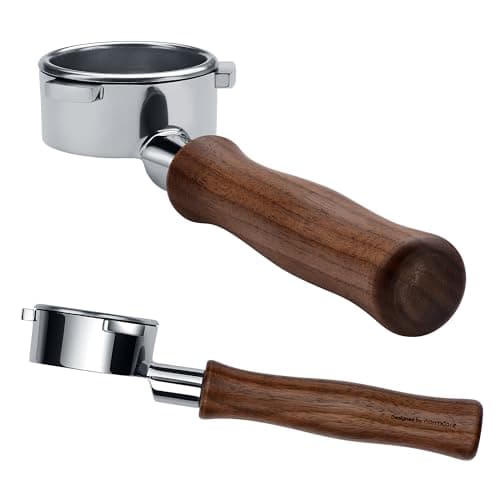
Normcore Bottomless PortafilterTop pickA portafilter with no spout, so you watch the underside of the puck pour. It is a diagnostic tool that happens to look good.
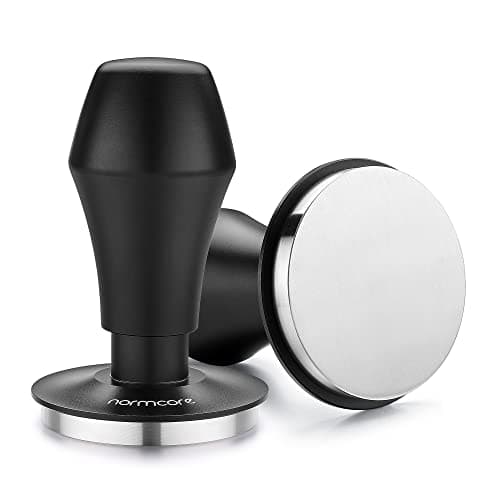
Normcore Spring-Loaded Tamper V4A calibrated tamper that clicks at a fixed pressure, so the tamp stops being a variable while you are learning everything else.
Taking tamping pressure off the list of things to worry about
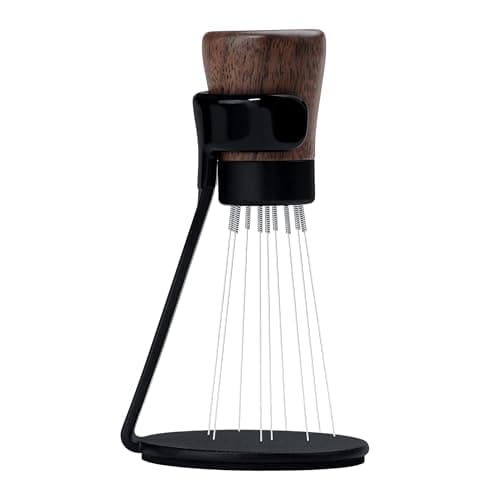
Normcore WDT Distribution ToolA handful of fine needles you stir through the dry grounds to break up clumps. It looks silly and it is the highest-value accessory on this page.
We have not handled these units. Everything above comes from published manufacturer documentation, cited inline, plus arithmetic you can redo yourself. Everyone in this category says they tested twenty machines; we have not tested any, and we say so. Here is what we do instead.
01
Normcore Bottomless Portafilter
Seeing what is actually wrong with your shot
A portafilter with no spout, so you watch the underside of the puck pour. It is a diagnostic tool that happens to look good.
We have not compiled a cited spec sheet for this pick yet, so there is no spec table here. What follows is about fit — who it is for and who it is not — not about numbers we cannot source. See how we pick.
With a spouted portafilter you see the output. With a bottomless one you see where the water came through — a jet from one side is channeling, and it is visible in the first three seconds.
It also sprays coffee across your counter until your puck prep is decent, which is a fair description of the learning curve.
What it does well
Shows channeling directly instead of leaving you to guess
Makes every other puck-prep improvement measurable
What you give up
Messy until your prep is consistent
Cannot split a shot into two cups
Must match your basket diameter
Skip it if your shots taste fine and you have no interest in diagnosing them. It solves a problem you do not have.
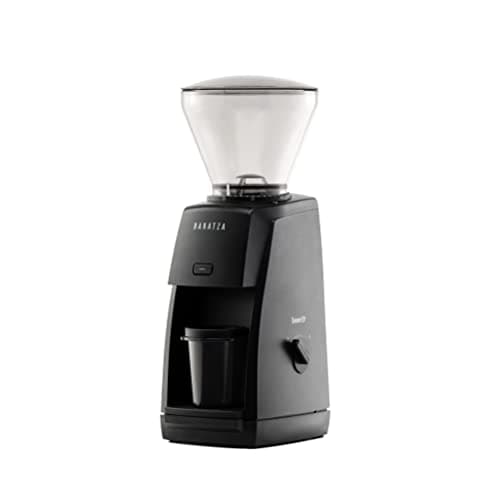
Twenty fine clicks inside the espresso range is the specification that matters. Grinders that give you five usable espresso settings cannot be dialed in; this one can.
550 RPM is deliberately slow. Slower burrs mean less heat and less static, which in practice means less ground coffee stuck to the inside of the chute and thrown around your counter.
It ships with both 54 mm and 58 mm dosing, which covers a Breville and a Gaggia without buying anything else.
What it does well
Genuine fine adjustment across the espresso range
Covers filter grinding too, so it is not a single-purpose purchase
Quick-release burr makes cleaning a two-minute job
Fits both common portafilter sizes out of the box
What you give up
Retains some grounds between doses, like most hoppered grinders
Louder than a hand grinder, obviously
Skip it if you already have a capable hand grinder and only make one or two drinks a day — you would be buying convenience, not better coffee.
Taking tamping pressure off the list of things to worry about
A calibrated tamper that clicks at a fixed pressure, so the tamp stops being a variable while you are learning everything else.
We have not compiled a cited spec sheet for this pick yet, so there is no spec table here. What follows is about fit — who it is for and who it is not — not about numbers we cannot source. See how we pick.
Tamping pressure matters less than people think and consistency matters more. A spring tamper gives you the same pressure every time without you thinking about it.
Size must match your basket: 54 mm for most Breville machines, 58 mm for Gaggia and commercial-standard machines. A tamper a millimeter too small leaves an untamped rim, which is where the water escapes.
What it does well
Removes one variable entirely while you learn the others
Available in both 54 mm and 58 mm
What you give up
Costs several times what a plain flat tamper costs
You must buy the right diameter — this is the most common accessory mistake
Skip it if the tamper that came in the box is the right diameter and you are willing to be deliberate. A calibrated tamper is a convenience, not a requirement.
A handful of fine needles you stir through the dry grounds to break up clumps. It looks silly and it is the highest-value accessory on this page.
We have not compiled a cited spec sheet for this pick yet, so there is no spec table here. What follows is about fit — who it is for and who it is not — not about numbers we cannot source. See how we pick.
Ground coffee clumps as it leaves the grinder. Clumps mean the water finds a channel through the soft spots and runs past the rest — which tastes sour and thin no matter how well you tamped.
Stirring the dry grounds for five seconds before tamping removes that. It is the cheapest fix for the most common bad-shot cause after grind size.
What it does well
Solves channeling, which is the second most common cause of a bad shot
Costs less than a bag of beans
Works with any machine and any basket
What you give up
Adds five seconds to every shot
Needles bend if you are careless
Skip it if your shots already taste even and pour steadily — do not add steps to a process that is working.
**The grinder.** Non-negotiable, and covered above. Everything else is optional.
**A way to distribute the grounds evenly.** With no manufactured restriction, water will find any weak path through the puck and run straight down it. A WDT tool — a set of fine needles stirred through the grounds — fixes the clumps that cause it. Puck prep and channeling is the method.
**A tamper that fits.** An undersized tamper leaves a rim of loose coffee around the edge, which is a channel waiting to happen. Portafilter sizes explains how to measure yours — 51, 54 and 58 mm are not interchangeable.
A bottomless portafilter is the fourth item and it is a diagnostic rather than an improvement. It removes the spouts so you can watch the underside of the basket: an even shot draws down into a single stream, and a channeling shot sprays sideways in a way nothing else on earth will show you. Bottomless portafilters covers what to look for.
What about a precision basket?
The next question people ask, and the honest answer is: later, if at all.
A precision basket is a single-wall basket whose holes are drilled to tighter tolerances and laid out more evenly than a stock one. The claim is that water passes through the whole bed at the same rate instead of favoring whichever part of the base has the most open area.
It is a real refinement and it is at the wrong end of the list for a first setup. The gap between a pressurized basket and a stock single-wall basket is enormous; the gap between a stock single-wall and a precision one is a detail you will not detect until your grind, dose and distribution are already consistent. Make the first switch, live with it for a few months, and revisit this then.
Basket capacity is the specification to get right instead, and it is not the same number as diameter: baskets are sold by dose, commonly 14 g, 18 g or 20 g. Breville states an 18 g dose for its 54 mm baskets. Running an 18 g recipe in a 14 g basket overfills it, the puck presses against the shower screen, and you get a shot that fails for a reason that looks like everything else.
The case for staying pressurized
It is a better case than enthusiasts usually admit, and it rests on one question: what do you want from this?
If you want a reliable milk drink in the morning and have no intention of weighing coffee or adjusting a grinder, the pressurized basket is doing exactly the job it was engineered for. It is forgiving of stale beans, forgiving of an imprecise dose, and nearly immune to bad tamping. A cappuccino built on a pressurized-basket shot is a perfectly good cappuccino.
What it will not do is get better. If that is fine, you are finished, and you have saved the cost of a grinder — see espresso accessories you can skip for the rest of the things you do not need.
Machines where the choice is made for you
Some budget machines publish only pressurized baskets and offer no single-wall option. CASABREWS, for instance, lists two dual-wall baskets for the CM5418 and nothing else, on a 51 mm portafilter — the size with the thinnest aftermarket. That machine has no upgrade path inside it, which is the main thing our CM5418 review is about.
Bean-to-cup machines sidestep the question entirely: there is no portafilter and no basket, and the machine manages the puck internally. Manual, semi-automatic or bean-to-cup covers that fork.
The short version
**No grinder yet** — pressurized basket, and you will be fine.
**Just bought a real grinder** — switch to single-wall. It is the single change that makes the grinder worth owning.
**Shots suddenly terrible after switching** — expected for a few attempts. Grind finer, distribute better, and read how to dial in espresso.
**You cannot find a single-wall basket for your machine** — check the portafilter size first; at 51 mm the answer is often that one does not exist.
**You only ever want milk drinks** — stay pressurized and spend the money on beans.
We have not used any of this equipment. Every manufacturer figure here is published by the maker and linked below, and prices come live from the listings we link to.
Questions people actually ask
What is the difference between a pressurized and non-pressurized basket?+−
A non-pressurized (single-wall) basket has many fine holes and lets your coffee puck create all the resistance. A pressurized (dual-wall) basket adds a second wall with one small hole, so the machine builds pressure against that manufactured aperture instead. The pressurized basket produces crema from almost any coffee; the single-wall one produces it only when the grind, dose and puck are right.
Should a beginner use a pressurized basket?+−
Yes, at the start. It works with pre-ground coffee and forgives an imprecise dose and uneven tamping, so you get a drinkable shot while you learn the machine. Switch to the single-wall basket when you own a grinder that reaches espresso fineness and adjusts in small steps.
Is a non-pressurized basket better?+−
Better only if everything feeding it is right. It is the basket that lets a good grinder, fresh beans and careful puck prep show up in the cup — and the basket that makes all three mandatory. With pre-ground coffee or a grinder that cannot adjust finely, it is worse than the pressurized basket, not better.
Why did my espresso get worse when I switched baskets?+−
Because the single-wall basket stopped hiding things. Without the manufactured restriction, the shot now reflects your grind, your dose and how evenly the coffee is distributed. Grind finer than you think, stir the grounds to break up clumps, and expect three or four attempts before it settles.
Can I use pre-ground coffee in a non-pressurized basket?+−
Usually not well. If the factory grind happens to suit your machine you will get a reasonable shot, and if it does not, you have no way to correct it — dose and tamp do not have enough range to make up the difference. Pre-ground belongs in the pressurized basket.
How do I know which basket my machine came with?+−
Turn it upside down. A single-wall basket shows a field of tiny holes across the base; a pressurized one shows a solid back or plastic insert with a single hole. Many machines ship with both — Breville includes single-wall and dual-wall baskets with the Bambino Plus — so check the box before buying anything.
Why pre-ground coffee fails at espresso and not at anything else, the one setup where it works anyway, and the cheapest grinder that can actually do the job.