Heads up: we earn a commission if you buy through the links on this page, at no extra cost to you. It never changes the order of the list. Full disclosure · how we pick.
The Encore ESP is the grinder this site points at more than any other, for a specific reason: Baratza states that settings #1-20 are dedicated to espresso in fine steps, with #21-40 for filter. That is purpose-built adjustment resolution written down, and it is what separates an espresso grinder from a good filter grinder.
It is still the wrong buy for plenty of people. There are four honest reasons to look elsewhere, and they lead to four different grinders — so work out which is yours first, because the right answer to "too expensive" has almost nothing in common with the right answer to "I brew filter coffee too".
Four reasons, four answers
Why people look past the default, and where it leads
Your reason
What you need
What it costs you
“It is more than I want to spend”
A hand grinder — no motor to pay for
Real effort every morning, and a slower workflow
“I need it to be quiet”
A hand grinder, for the same reason
The same effort, in exchange for near silence
“I make filter coffee too”
One grinder with genuine range at both ends
Usually some espresso-end resolution, and more retention
“I want to single dose”
A grinder designed to be fed bean by bean
Convenience — hoppers exist because they are easy
One reason is missing on purpose: **“it does not grind fine enough” is not a real reason to replace it.** Baratza publishes twenty espresso settings; if your shots are running fast, the grind is usually not the variable that is stuck. How to dial in espresso covers the order to change things in.
How we judged these
**Does it actually reach espresso, in small steps?** Fine enough is the floor; adjustable in small increments is the requirement. A grinder that jumps past the window is not an alternative to anything.
**Does it solve the reason you are here?** A cheaper grinder that is still loud has not solved a noise problem.
**What does the maker publish?** We compare on stated figures, and we say so where a maker states nothing.
**Will it survive the upgrade?** Grinders outlive machines. A grinder you keep through two machines is better value than one you replace with the next machine.
Quick picks — Baratza Encore ESP alternatives
#
Pick
Best for
Type
Price
1
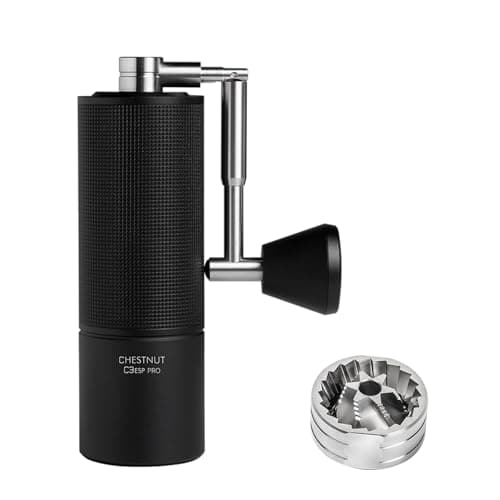
Timemore Chestnut C3 ESP ProTop pickThe usual answer to “what is the least I can spend on a grinder that actually works for espresso” — an espresso-tuned version of a very common entry hand grinder.
Baratza EncoreThe long-standing filter-grinder recommendation. It is listed here so you do not buy it by mistake: the ESP is the espresso version for a reason.
We have not handled these units. Everything above comes from published manufacturer documentation, cited inline, plus arithmetic you can redo yourself. Everyone in this category says they tested twenty machines; we have not tested any, and we say so. Here is what we do instead.
01
Timemore Chestnut C3 ESP Pro
The cheapest hand grinder that reaches espresso
The usual answer to “what is the least I can spend on a grinder that actually works for espresso” — an espresso-tuned version of a very common entry hand grinder.
We have not compiled a cited spec sheet for this pick yet, so there is no spec table here. What follows is about fit — who it is for and who it is not — not about numbers we cannot source. See how we pick.
The ESP suffix on a hand grinder means the adjustment has been rescaled so the espresso range occupies more of the dial, not that the burrs are different in kind.
This is the floor of the honest answer. Below it, you are buying a grinder that cannot reach espresso fineness with any consistency, whatever the listing claims.
What it does well
The lowest price that still gives usable espresso adjustment
Small, quiet, nothing to plug in
What you give up
Small capacity
Manual effort daily
Skip it if you drink more than a couple of doubles a day, or if the grinding step is the part you were hoping to avoid.
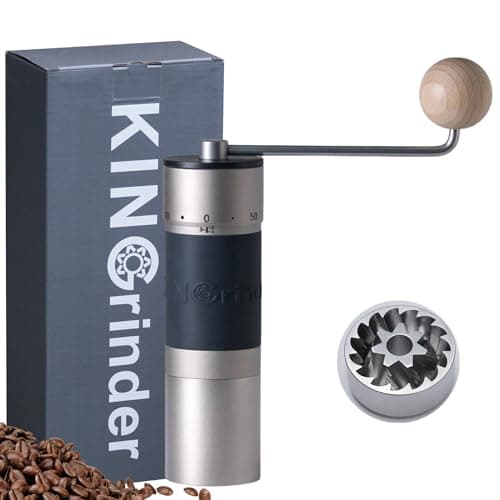
An external-adjustment hand grinder aimed squarely at espresso, from the value end of the market.
We have not compiled a cited spec sheet for this pick yet, so there is no spec table here. What follows is about fit — who it is for and who it is not — not about numbers we cannot source. See how we pick.
External adjustment means you change the grind without taking the grinder apart or losing your setting, which is the difference between dialing in and guessing.
This category exists because espresso needs adjustment steps small enough that a five-position dial is useless.
What it does well
External adjustment you can count and return to
Espresso-focused rather than filter-first
What you give up
Manual effort
Less established support than the bigger names
Skip it if you want the shortest path to a working setup with no research — a well-known electric grinder is the lower-effort answer.
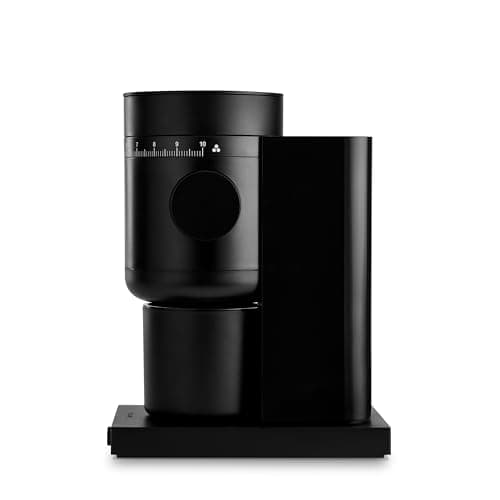
An all-brew-method electric grinder with an espresso range, aimed at people who also make pour-over and cold brew.
We have not compiled a cited spec sheet for this pick yet, so there is no spec table here. What follows is about fit — who it is for and who it is not — not about numbers we cannot source. See how we pick.
The pitch is range: one grinder that goes from espresso fine to cold brew coarse without a compromise setting.
Grinders that cover everything trade some espresso-range resolution for that breadth. If espresso is the only thing you brew, an espresso-first grinder gives you more usable clicks where you need them.
What it does well
Covers every brew method in one machine
Single-dose friendly
What you give up
Espresso resolution is thinner than an espresso-first grinder's
Skip it if you only make espresso. You are paying for a range you will never leave.
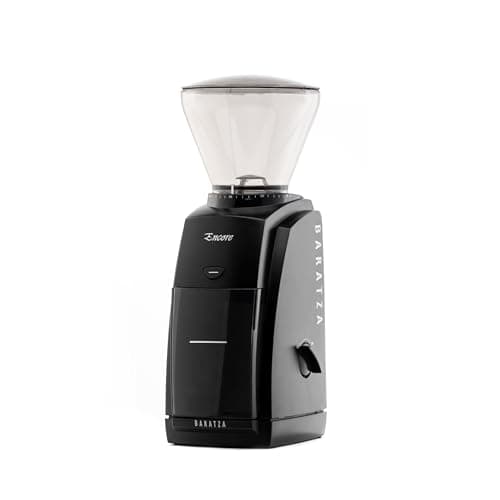
The long-standing filter-grinder recommendation. It is listed here so you do not buy it by mistake: the ESP is the espresso version for a reason.
We have not compiled a cited spec sheet for this pick yet, so there is no spec table here. What follows is about fit — who it is for and who it is not — not about numbers we cannot source. See how we pick.
The standard Encore and the Encore ESP look alike and cost differently. The ESP exists because the standard model's adjustment range was not built to sit in the espresso zone.
If you also brew pour-over or French press, the standard model is excellent at that job and the wrong tool for this one.
What it does well
Well-supported, repairable, widely stocked
Excellent for filter brewing
What you give up
Not built for the espresso grind range — that is what the ESP is for
Skip it if espresso is the reason you are buying a grinder. Buy the ESP instead; this is the same family aimed at a different brew method.
Both roads lead to the same place: a hand grinder. You are not paying for a motor, so more of the money goes into burrs and the adjustment mechanism — which is why a hand grinder at half the price can out-grind an entry electric.
It is also silent in a way no electric is. Baratza is unusually candid that the Encore ESP runs at 550 RPM specifically to limit heat, noise and static — a slower burr is a quieter burr, and a hand grinder has no motor to make noise in the first place. If someone is asleep twenty feet away, that is the whole argument. We cover the trade properly on manual vs electric grinders and the wider constraint on quiet espresso setups.
The cost is not subtle: 30 to 90 seconds of real cranking per double, every single morning, and a setup where the grinder is the slowest step. Pair a hand grinder with a machine bought for a three-second heat-up and you have undone the reason you bought the machine.
If the reason is range
The Encore ESP's design decision — most of the dial in the espresso range — is exactly what makes it a compromise if you also brew filter, French press or pour-over. Baratza gives it #21-40 for filter, which works, but a household that brews both regularly is asking one grinder to be two.
An all-purpose grinder spreads its settings across the whole span instead. What you give up is the thing that matters most for espresso: step size. The gap between clicks gets wider, and the espresso window is narrow. Can you use a regular coffee grinder for espresso has a one-shot test for whether a wider-range grinder still lands inside it.
If the reason is single dosing
Single dosing means weighing the beans for one shot and grinding all of them, rather than keeping a hopper full. It solves stale retention and beans sitting in light and air, and it costs you the convenience a hopper exists to provide.
Grinders built for it have low-retention paths and are designed to be fed bean by bean; grinders that are not will hold back a gram or two of the previous dose, which is the residue that makes an adjustment seem to do nothing. Single dosing a coffee grinder covers whether it is worth solving for your setup, and the honest answer for most first setups is: not yet.
Three checks before you buy any alternative
Whatever the reason took you off the default, the replacement has to clear the same bar. Three questions, in order:
**Does it reach espresso fineness at all?** The test is blunt: at its finest setting, does a double run in roughly 25 to 30 seconds, or does it gush through in twelve? A grinder that cannot get there is not a candidate at any price.
**How many usable settings sit inside the espresso range?** This is the question that separates grinders, and it is the one makers rarely answer. Baratza states twenty for the Encore ESP. A grinder that covers French press to espresso in forty clicks total has perhaps four in the window you need.
**How much does it hold back?** Every grinder keeps grounds in the chute, so the first grams after an adjustment are the previous setting. On a grinder with high retention that residue is enough to convince you a change did nothing.
Worth being clear about the ceiling, because “better grinder” is sold as though it improves everything equally.
Moving from a grinder that cannot reach espresso to one that can is transformative — it is the difference between a shot that works and one that never will. Moving from a competent espresso grinder to a more expensive competent espresso grinder is not: it buys you finer adjustment, faster grinding, less retention and less mess, which are real quality-of-life gains and not a different drink.
That is why this site keeps pushing budget toward the first jump and not the second. If you are choosing between a better grinder and better beans, at this level the beans usually win — see choosing coffee beans for espresso and storage and freshness, because a stale bag defeats any grinder on this page.
What none of these change
**You still need a scale.** Dosing by time drifts as beans age and as burrs season. Weighing is what makes yesterday's shot repeatable — see scales with a timer.
**You still need to purge after adjusting.** Every grinder holds some coffee in the chute, so the first few grams after a change are the old setting.
**The machine still matters less than this.** Whichever of these you buy, the grinder is the component that sets the ceiling on what the machine can do.
**Retention is universal.** Every grinder keeps some grounds inside. The difference is how much, and whether the design lets you get them out.
So when should you just buy the Encore ESP?
When none of the four reasons is yours — which, for a first electric espresso setup, is most of the time. It is the default recommendation here because it does the one thing an espresso grinder must do, publishes that it does it, and is serviceable enough to survive the machine you will buy after this one.
We have not used any of this equipment. Where a figure appears above it is published by the manufacturer and linked below, and prices come live from the listings we link to.
Questions people actually ask
What is a good alternative to the Baratza Encore ESP?+−
It depends on the reason. For a lower price or for near-silence, a capable hand grinder. For one grinder that also does filter coffee well, an all-purpose electric — accepting wider steps in the espresso range. For single dosing, a grinder designed with a low-retention path.
Is a hand grinder as good as the Encore ESP for espresso?+−
For grind quality per dollar, often better — there is no motor to pay for, so more of the money is in the burrs and the adjustment. The trade is 30 to 90 seconds of real effort per double and a slower morning.
Can I use the standard Baratza Encore for espresso instead?+−
It is not a substitute. Baratza distributes the Encore ESP's settings with twenty steps inside the espresso range specifically because the standard Encore's range is laid out for filter coffee. Buying the cheaper sibling for an espresso setup is a common and expensive mistake.
Do I need a single-dose grinder?+−
Not on a first setup. Single dosing solves stale retention and beans sitting in air and light, and costs you the convenience of a hopper. It is worth solving once the rest of your setup is settled.
How many espresso settings should a grinder have?+−
Enough to move a shot by a couple of seconds with one click. Baratza states twenty settings inside the espresso range on the Encore ESP, with twenty more for filter. A grinder that spreads forty total clicks from French press to espresso has perhaps four in the window you actually use, which is why step size matters more than the headline number.
Will a cheaper grinder ruin my espresso?+−
Only if it cannot reach espresso fineness or cannot be adjusted in small enough steps. Those are the two requirements — price is a proxy for them, not the requirement itself, which is why a good hand grinder beats a cheap electric.