Heads up: we earn a commission if you buy through the links on this page, at no extra cost to you. It never changes the order of the list. Full disclosure · how we pick.
**The Philips 3300 LatteGo is the easiest espresso machine to keep clean that we recommend.** Philips states a milk system of just two parts with no tubes, rinsed in under ten seconds, and an AquaClean filter rated for up to 5,000 cups before the machine asks to be descaled — the two chores that make people give up, both substantially removed.
If you want a portafilter machine rather than a bean-to-cup, the Breville Bambino Plus is the low-effort answer: a 54 mm basket, a wand that purges itself, and a cleaning tool and disc in the box.
The four jobs, and which one actually defeats people
Cleaning an espresso machine is not one task. It is four, on four different clocks, and they are not equally annoying.
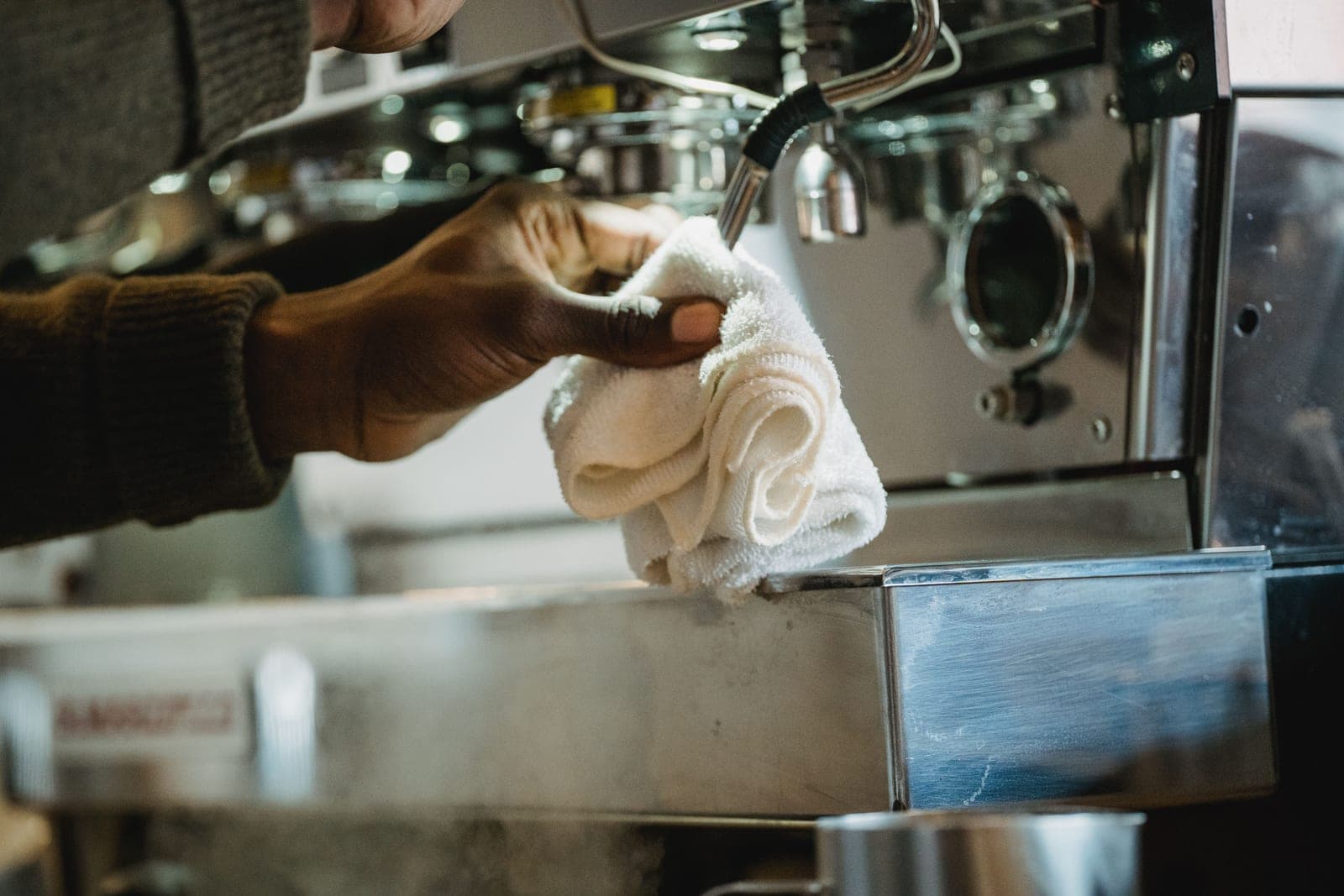
- **After every milk drink.** Purge and wipe the wand, or rinse the milk carafe. This is the one people quit over, because it is immediate and it is every single time.
- **After every shot.** Knock out the puck, rinse the basket, wipe the group. Thirty seconds, and genuinely unavoidable on any portafilter machine.
- **Weekly-ish.** Backflush, if the machine has a three-way valve, and wash the drip tray and baskets. See how to backflush.
- **Every few months.** Descale. The job with the longest gap and the worst consequences for skipping — how to descale covers it.
A machine is easy to clean when it shortens job one and stretches job four. Everything below is judged on exactly that.
How we judged them
- **How many parts touch milk, and where they go.** Two parts that go in a dishwasher beat a wand plus a tube plus a carafe lid every morning of the week.
- **Whether the maker publishes a descaling interval.** A stated figure is a commitment; silence means assume the normal schedule.
- **Whether the wand purges itself.** Milk dries inside an un-purged wand, and that is the hardest deposit on the machine to remove.
- **How much of it comes apart without tools.** Removable drip trays and baskets are the difference between a wipe and a project.
- **What is in the box.** A cleaning tool and a blind disc included means the maker expects you to maintain it.
What the daily and periodic jobs look like on each| Machine | Milk cleanup | Descaling | Type |
|---|
| Philips 3300 LatteGo | Two parts, no tubes, stated under 10 seconds | AquaClean filter stated for up to 5,000 cups before descaling | Bean-to-cup |
| Breville Bambino Plus | Automatic wand, purges itself; one wipe | Not published — descale on the normal schedule | Portafilter, auto milk |
| De'Longhi Dedica | Manual wand to purge and wipe | Not published — descale on the normal schedule | Portafilter, manual milk |
| Philips 2300 LatteGo | Same two-part system as the 3300 | Same AquaClean filter, stated up to 5,000 cups | Bean-to-cup |
Quick picks — Easiest espresso machines to clean| # | Pick | Best for | Type | Price |
|---|
| 1 | 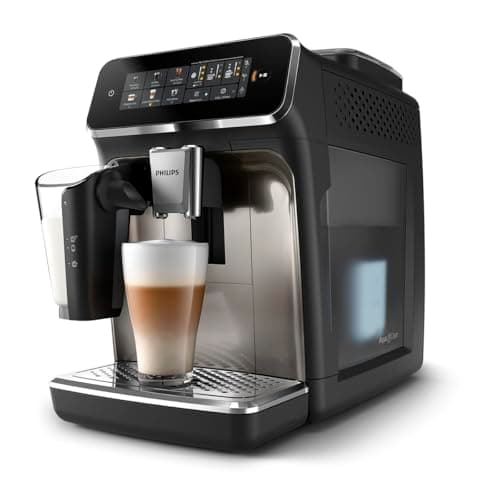 Philips 3300 Series LatteGo (EP3347/90)Top pickThe 2300 plus the two presets people most often miss — cappuccino and iced coffee — and SilentBrew, on the same grinder and milk system. | Cappuccinos and iced coffee with no technique | Bean-to-cup, mid LatteGo | |
| 2 | 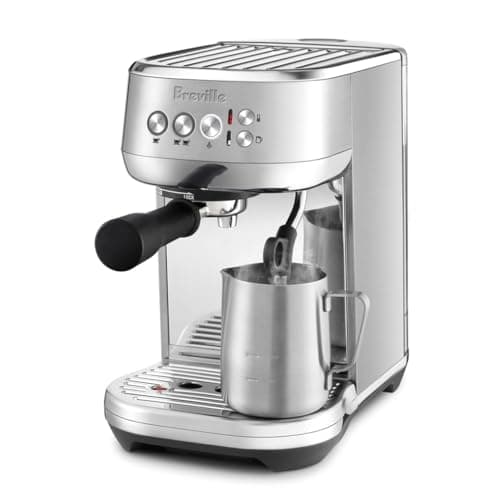 Breville Bambino Plus (BES500)The standard answer to “which first machine” — full 54 mm portafilter and an 18 g dose, with the milk step automated so a flat white is possible on day one. | A first machine you will not outgrow in a year | Semi-automatic, auto milk | |
| 3 | 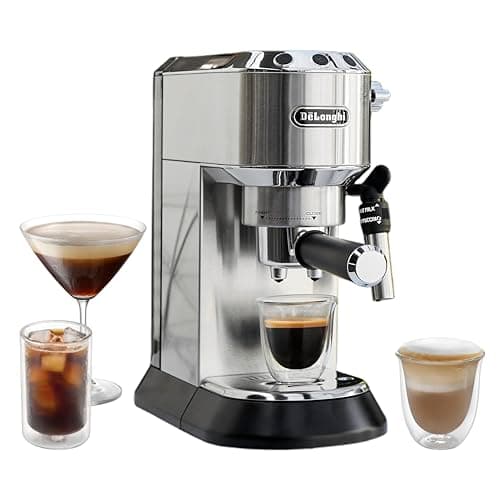 De'Longhi Dedica DeLuxe (EC685)The slim one. De'Longhi states a 15 cm width and calls it the slimmest pump coffee maker they make, which is the whole reason to choose it. | A narrow counter | Compact pump machine | |
| 4 | 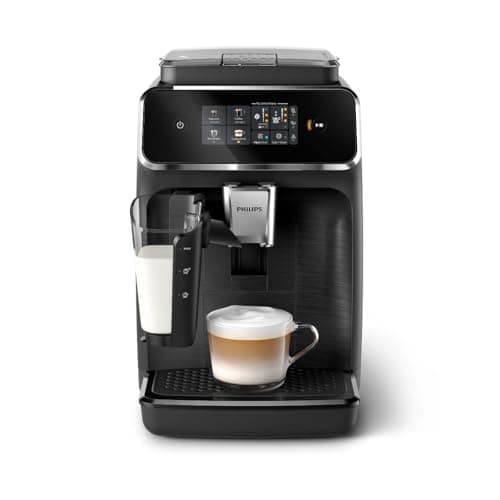 Philips 2300 Series LatteGo (EP2330/10)The entry point to Philips's current LatteGo range: the same 12-setting ceramic grinder and two-part milk system as the pricier models, with four presets instead of six or twenty. | A first bean-to-cup machine that also makes milk drinks | Bean-to-cup, entry LatteGo | |
We have not handled these units. Everything above comes from published manufacturer documentation, cited inline, plus arithmetic you can redo yourself. Everyone in this category says they tested twenty machines; we have not tested any, and we say so. Here is what we do instead.
01Philips 3300 Series LatteGo (EP3347/90)
Cappuccinos and iced coffee with no technique
The 2300 plus the two presets people most often miss — cappuccino and iced coffee — and SilentBrew, on the same grinder and milk system.
Published specifications for the Philips 3300 Series LatteGo (EP3347/90), with sources| Model | EP3347/90 [source] |
|---|
| Presets | 6 — espresso, black coffee, iced coffee, cappuccino, latte macchiato, hot water [source] |
|---|
| Grinder | 100% ceramic, 12 settings from fine to coarse [source] |
|---|
| Dose | 6 g to 9 g of ground coffee, lowest to highest strength setting [source] |
|---|
| Milk system | LatteGo, two parts, stated to clean in less than 10 seconds [source] |
|---|
| Noise | SilentBrew, stated 40% quieter than Philips's previous models [source] |
|---|
| Water filter | AquaClean, stated for up to 5,000 cups without descaling [source] |
|---|
| Dimensions | 9.6 × 14.6 × 17.0 in (Philips does not label the axes) [source] |
|---|
| Weight | 17.6 lbs [source] |
|---|
Philips publishes the dose behind the strength setting, and it tells you the button physically changes the amount of coffee rather than being a label.
SilentBrew's 40% is measured against Philips's own earlier machines, not against other brands. Read it as quieter than the model it replaced, not as quiet.
What it does well
- Cappuccino and iced coffee listed as presets
- SilentBrew, stated 40% quieter than Philips's previous models
- Same two-part LatteGo milk system and 12-setting grinder
What you give up
- Strength tops out at a stated 9 g of coffee per drink
- Philips does not publish water tank or bean hopper capacity
- You do not control dose or yield beyond three strength steps
Skip it if you only drink espresso and black coffee — the 2300 makes both with the same grinder, and the extra presets are what you would be paying for.
02Breville Bambino Plus (BES500)
A first machine you will not outgrow in a year
The standard answer to “which first machine” — full 54 mm portafilter and an 18 g dose, with the milk step automated so a flat white is possible on day one.
Published specifications for the Breville Bambino Plus (BES500), with sources| Portafilter | 54 mm stainless steel [source] |
|---|
| Stated dose | 18 g [source] |
|---|
| Pump / extraction | 15 bar Italian pump, 9 bar extraction after low-pressure pre-infusion [source] |
|---|
| Heating | ThermoJet, stated to reach extraction temperature in 3 seconds [source] |
|---|
| Steam wand | Automatic and manual, 3 milk temperatures and 3 texture levels, 266°F steam [source] |
|---|
| Dimensions (W×D×H) | 11.9 × 7.4 × 14.3 in [source] |
|---|
| In the box | 54 mm tamper, Razor dosing tool, 16 fl oz milk jug, single- and dual-wall baskets, cleaning tool and disc [source] |
|---|
The 54 mm portafilter and 18 g dose matter more than they sound: they put the machine on the same dose a cafe uses, so any recipe you read applies to it directly and every 54 mm accessory fits.
The three-second heat-up is the difference between espresso being a weekday habit and a weekend project. A machine that takes fifteen minutes to be ready is a machine you use on Sundays.
The automatic steam wand is the single biggest reason this suits a first setup. Milk texturing is the skill that takes longest to learn; handing it to the machine removes the part most likely to make you give up.
What it does well
- Standard 54 mm basket, so recipes and accessories from anywhere fit
- Ready in seconds, which is what makes it a habit rather than a project
- Automatic milk means a drinkable cappuccino before you can texture by hand
- The manual wand is still there when you want to learn
What you give up
- No grinder — budget for one separately, and that is the right trade
- Small water tank compared with a bean-to-cup machine; refills are frequent
- Nothing here helps if your grinder cannot go fine enough
Skip it if you want one box that does everything with no learning curve — a bean-to-cup machine is the honest answer for that, and it is a different product.
03De'Longhi Dedica DeLuxe (EC685)
A narrow counter
The slim one. De'Longhi states a 15 cm width and calls it the slimmest pump coffee maker they make, which is the whole reason to choose it.
Published specifications for the De'Longhi Dedica DeLuxe (EC685), with sources| Width | 15 cm — stated as the slimmest pump coffee maker De'Longhi makes [source] |
|---|
| Pump | 15 bar [source] |
|---|
| Heating | Thermoblock [source] |
|---|
| Filter holder | Takes ground coffee (1 or 2 cups) and E.S.E. pods [source] |
|---|
| Milk | Adjustable frothing wand / cappuccino system [source] |
|---|
Fifteen centimeters of width is genuinely unusual and it is why this machine keeps selling. If your counter run is already full, that number decides the purchase before any other spec does.
The E.S.E. pod compatibility is a fair hedge: it means the machine still makes a coffee on the day you have not restocked beans, without committing you to a pod ecosystem.
It uses a smaller basket than the 54 mm standard, so accessories and recipes written for 54 mm machines will not transfer directly.
What it does well
- Fits where nothing else fits
- Takes ground coffee or E.S.E. pods
- Adjustable frothing wand rather than a fixed panarello
What you give up
- Non-standard basket size limits accessory choice
- Narrow body means a small water tank and frequent refills
Skip it if counter width is not actually your constraint — you are paying for the one thing it is best at and giving up basket standardization to get it.
04Philips 2300 Series LatteGo (EP2330/10)
A first bean-to-cup machine that also makes milk drinks
The entry point to Philips's current LatteGo range: the same 12-setting ceramic grinder and two-part milk system as the pricier models, with four presets instead of six or twenty.
Published specifications for the Philips 2300 Series LatteGo (EP2330/10), with sources| Model | EP2330/10 [source] |
|---|
| Presets | 4 — espresso, black coffee, latte macchiato, hot water [source] |
|---|
| Grinder | 100% ceramic, 12 settings from fine to coarse [source] |
|---|
| Milk system | LatteGo, two parts, stated to clean in less than 10 seconds [source] |
|---|
| Water filter | AquaClean, stated for up to 5,000 cups without descaling [source] |
|---|
| Dose | 6 g to 9 g of ground coffee, lowest to highest strength setting [source] |
|---|
| Dimensions | 14 H × 17 D × 9 W in, as published [source] |
|---|
The grinder and the milk system are the two parts that decide daily life with an automatic machine, and Philips specifies both identically on the 2300, the 3300 and the 5500. Moving down to the 2300 costs you presets, not hardware.
The four presets Philips lists are espresso, black coffee, latte macchiato and hot water. Philips's EP2330/14 page elsewhere calls them "hot and iced drinks", so if iced coffee is the reason you are buying, confirm it first — the 3300 lists iced coffee unambiguously.
Philips sells this series under two US part numbers, EP2330/10 and EP2330/14, and publishes the same four drinks and the same LatteGo system for both. The /10 is the one stocked new, so it is what the buy link above goes to. Its page is the thinner of the two, so the grinder, filter, dose and dimension figures here are from the EP2330/14 page — each row says which page it came from.
What it does well
- Same 12-setting ceramic grinder as the pricier LatteGo models
- Two-part milk system Philips states cleans in under 10 seconds
- AquaClean filter stated to remove the need to descale for up to 5,000 cups
What you give up
- No cappuccino preset among the four Philips lists
- Philips's page is inconsistent about whether it makes iced drinks
- Philips does not publish water tank or bean hopper capacity
Skip it if you want to learn to pull shots. Nothing about this machine asks you to, and nothing about it lets you.
Why a bean-to-cup wins this particular contest
Because it deletes job two. There is no portafilter, so there is no puck to knock out, no basket to rinse and no group head to wipe — the machine ejects a used puck into an internal bin that you empty every few days.
What it adds instead is a brew group and a milk circuit, and this is where the LatteGo design earns its place. Most automatic machines route milk through a tube into the carafe and back out through a frothing head; that tube is the part nobody cleans properly. Philips's system is two plastic parts that snap together, with no tube at all, which is why the company can state a ten-second rinse.
The honest trade is control, not cleanliness: Philips publishes a dose range of 6 g to 9 g across its three strength settings, where a 54 mm portafilter machine doses 18 g and lets you change it. Bean-to-cup automatic machines and manual, semi-automatic or bean-to-cup work that trade through properly.
The easiest portafilter machine to clean
The Bambino Plus, and the reason is the wand rather than anything else. Breville's automatic steam wand runs its own purge cycle after texturing, so the milk that would otherwise dry inside the tip is cleared before you have put the jug down. You wipe the outside and you are finished.
Breville also puts a cleaning tool and a cleaning disc in the box alongside the 54 mm tamper, Razor dosing tool, milk jug and both basket types — which is to say it expects the machine to be backflushed and gives you the disc to do it with.
What you still do every time: knock out the puck, rinse the basket, wipe the group. There is no portafilter machine where you do not, and anyone telling you otherwise is selling something.
The fewest parts of all
The Dedica is on this list for a reason that sounds like a weakness: it has a manual wand and very little else. De'Longhi states 15 cm of width, which it calls the slimmest pump coffee maker it makes, and a narrow machine is a machine with fewer surfaces, fewer trays and fewer places for milk to hide.
You purge and wipe the wand yourself, every time, and if you do not, it is the one failure on this page that gets genuinely unpleasant. Steam wand and milk system care is the two-minute version of why.
What we did not pick, and why
- **Machines with a built-in grinder.** A grinder chute adds a job nobody warns you about: stale grounds and coffee oils, in a part you cannot put under a tap. Machines with a built-in grinder is the category page if the convenience is worth it to you.
- **58 mm boiler machines.** The Gaggia Classic Pro is a fine machine and is not an easy-cleaning machine — bigger group, heavier portafilter, more to wipe, and no automatic anything.
- **“Self-cleaning” claims with no published interval.** If a maker will not state what the cycle does or how often you still have to descale, we treat the claim as marketing.
- **Capsule machines.** Genuinely the least cleaning of anything here, and a different product — espresso machine vs Nespresso makes that case honestly rather than dismissing it.
If you already own a machine
Three changes cut the work more than replacing the machine would, and all three cost less than any of these picks.
- **Purge the wand before and after, every time, with no exceptions.** Milk that never dries inside the tip never has to be dug out of it. This single habit is the difference between a wand you wipe and a wand you fight — steam wand and milk system care is the method.
- **Filter your water.** Scale is the slow failure that eventually becomes a repair, and softer water pushes every descale further out. Water for espresso covers what is actually worth buying.
- **Put the descale on a calendar rather than waiting for a symptom.** By the time flow has visibly dropped you are descaling a restriction rather than preventing one. The maintenance schedule has the intervals.
The upkeep you cannot buy your way out of
No machine on this page removes descaling; the 3300 just pushes it further out, and only while the AquaClean filter is current. Water is the variable underneath all of it — hard water scales any machine faster than the maker's schedule assumes, and water for espresso is the cheapest fix on this entire site.
Budget for consumables too: filters, descaler and a milk-system cleaner are a running cost, not a one-off. Cleaning and maintenance supplies lists the five that cover every job, and the maintenance schedule says when each one is due.
We have not used any of these machines. Every figure here is published by the manufacturer and linked below, and prices come live from the listings we link to.
Questions people actually ask
What is the easiest espresso machine to clean?+−
Among the machines we recommend, the Philips 3300 LatteGo. Its milk system is two parts with no tubes and Philips states it rinses in under ten seconds, and the AquaClean filter is stated for up to 5,000 cups before the machine asks to be descaled. For a portafilter machine rather than a bean-to-cup, the Breville Bambino Plus, whose steam wand purges itself.
Are bean-to-cup machines easier to clean than espresso machines?+−
For the daily jobs, yes — there is no portafilter, so no puck to knock out and no basket to rinse. They add a brew group and a milk circuit instead. Whether that is a fair trade depends mostly on the milk system: a two-part design with no tube is far less work than a carafe plumbed with one.
Is a machine with a built-in grinder harder to clean?+−
It adds a job. Coffee oils and stale grounds build up in the chute and the burr chamber, and that is not a part you can rinse under a tap. It is not a reason to avoid an all-in-one, but it belongs in the comparison when you are buying one specifically to save effort.
How often do you have to descale an espresso machine?+−
Every few months for most machines, sooner with hard water, and you follow whatever the maker states for yours. Philips is the exception in this group: it states that the AquaClean filter lets the machine run up to 5,000 cups before descaling, as long as the filter is replaced when prompted.
Do automatic steam wands clean themselves?+−
They purge themselves, which is the important part — Breville's automatic wand clears the milk out of the tip after texturing, so nothing dries inside it. You still wipe the outside of the wand after every drink. Nothing cleans the outside for you.
Can you put espresso machine parts in the dishwasher?+−
Some parts, and you have to check per machine rather than assume. Philips states that its two-part LatteGo milk system is dishwasher safe, which is a large part of why it is the easiest to live with. Portafilters, baskets and steam wand tips generally are not — dishwasher detergent is harsh on aluminum and on the seals, and a portafilter that comes out dull has usually been etched rather than cleaned.
What is the lowest-maintenance way to make espresso at home?+−
In descending order of effort: a portafilter machine with a manual wand, a portafilter machine with an automatic wand, a bean-to-cup with a two-part milk system, and a capsule machine. Each step down the list removes work and removes control over the shot, which is the trade the whole category is built on.