Heads up: we earn a commission if you buy through the links on this page, at no extra cost to you. It never changes the order of the list. Full disclosure · how we pick.
Backflushing pushes water backward through the group head to flush coffee oils out of the parts you cannot reach with a cloth. You do it with a blind basket — a basket with no holes — so the water has nowhere to go except back through the machine's release valve.
First: can your machine do it?
Only machines with a **three-way solenoid valve** can be backflushed. That valve is what releases pressure back through the drip tray at the end of a shot — which is also why those machines leave a drier puck. Without it, the water has nowhere to go, and forcing the issue puts the pump under strain.
**Check the manual.** If backflushing is described, the machine supports it. If the manual is silent or says not to, do not.
**Listen at the end of a shot.** A brief hiss into the drip tray as the shot stops usually indicates a three-way valve.
**When in doubt, soak instead.** Soaking the portafilter, baskets and shower screen in detergent achieves most of the same result. Cleaning.
Quick picks — How to backflush
#
Pick
Best for
Type
Price
1
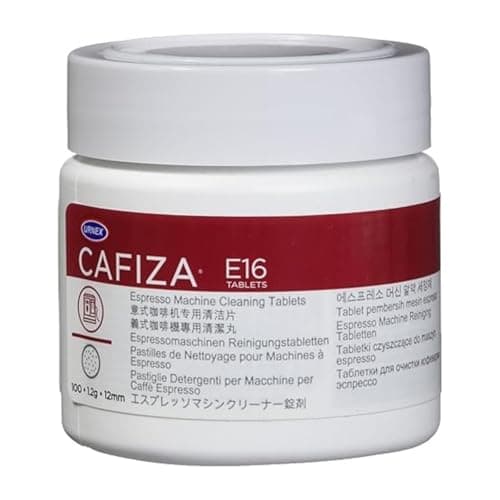
Urnex Cafiza Espresso Machine Cleaning TabletsTop pickThe standard espresso-machine detergent tablet. It removes coffee oil residue, which is a different job from descaling.
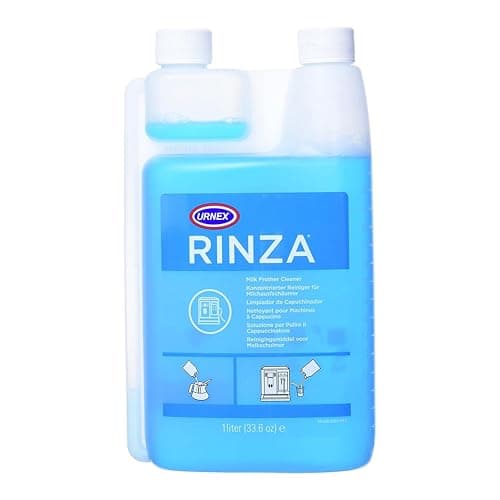
Urnex Rinza Milk Frother CleanerAn alkaline cleaner for milk residue. Necessary for automatic milk systems, useful for a manual wand you have not been perfect with.
A steam wand or milk system that has had milk in it
We have not handled these units. Everything above comes from published manufacturer documentation, cited inline, plus arithmetic you can redo yourself. Everyone in this category says they tested twenty machines; we have not tested any, and we say so. Here is what we do instead.
01
Urnex Cafiza Espresso Machine Cleaning Tablets
Backflushing coffee oils out of the group
The standard espresso-machine detergent tablet. It removes coffee oil residue, which is a different job from descaling.
We have not compiled a cited spec sheet for this pick yet, so there is no spec table here. What follows is about fit — who it is for and who it is not — not about numbers we cannot source. See how we pick.
Cleaning and descaling are two different tasks with two different products. Cleaner removes coffee oils from the group head and baskets; descaler removes mineral scale from the boiler.
Using descaler where cleaner is needed leaves the oils, and the shots keep tasting stale and bitter no matter how new the beans are.
What it does well
Does the job the machine manual asks for
Tablets are pre-dosed, so there is nothing to measure
What you give up
Only backflushable machines can use the full procedure
Not a descaler — you need both
Skip it only if your machine's manual specifically forbids backflushing — some entry machines do. Wipe and soak instead.
A steam wand or milk system that has had milk in it
An alkaline cleaner for milk residue. Necessary for automatic milk systems, useful for a manual wand you have not been perfect with.
We have not compiled a cited spec sheet for this pick yet, so there is no spec table here. What follows is about fit — who it is for and who it is not — not about numbers we cannot source. See how we pick.
Milk protein bakes onto a hot wand within seconds. Purging and wiping the wand immediately after every use prevents almost all of it, for free.
Where a cleaner earns its place is automatic milk systems with tubes you cannot reach with a cloth.
What it does well
Reaches the parts of a milk system a cloth cannot
Cheap per use
What you give up
Unnecessary if you wipe and purge a manual wand every time
Skip it if you have a manual wand and you already purge and wipe it after every drink. That habit does the same job for nothing.
Put the blind basket in the portafilter and lock it into the group.
Start the pump for about 10 seconds, then stop.
Wait 5 seconds for the pressure to release into the drip tray.
Repeat five times.
Remove the portafilter, wipe the shower screen and run a short flush.
Detergent backflush — monthly
Put a cleaning tablet, or the manufacturer's stated dose of powder, into the blind basket.
Lock in and run the same cycle: 10 seconds on, 5 seconds off, five times. You should see brown water in the drip tray.
Remove the portafilter, rinse it and the blind basket thoroughly.
**Rinse cycle — do not skip this.** Repeat the water-only cycle at least five more times to clear all detergent.
Pull one shot and throw it away.
How you know it needed doing
The water in the drip tray on the first detergent cycle. On a machine that has not been backflushed in months it comes out dark brown. That is coffee oil that was previously in the path of every shot you pulled.
If your machine cannot backflush
That covers most entry-level machines, and it is not a problem — it just means the weekly clean is a soak rather than a flush. Dissolve a tablet in hot water, soak the portafilter, both baskets and the shower screen for twenty minutes, brush, rinse thoroughly, and run a tank of clean water through the group. The full routine is on cleaning.
Questions people actually ask
What does backflushing do?+−
It pushes water backward through the group head to flush out coffee oils from parts a cloth cannot reach. Done with detergent, it also cleans the three-way valve and the release path.
Can all espresso machines be backflushed?+−
No — only machines with a three-way solenoid valve. Check your manual. If it does not mention backflushing, or advises against it, soak the parts in detergent instead.
How often should I backflush?+−
With water weekly, and with detergent monthly, for a typical home machine. Heavier use justifies more frequent detergent cycles.
What is a blind basket?+−
A basket with no holes in it. It blocks the water so it has to go back through the machine's release valve, which is what makes the flush work.