The biggest number on the box is the one that tells you least. Here is what it measures, why 9 is the number that matters, and what to look at instead.
Heads up: we earn a commission if you buy through the links on this page, at no extra cost to you. It never changes the order of the list. Full disclosure · how we pick.
**No — a 20 bar espresso machine is not better than a 15 bar one, and 15 bar is more than enough.** Espresso is brewed at around 9 bar. The number printed on the box is the pump's maximum, not the pressure at the coffee, and every machine worth buying throttles it down before the water reaches the puck.
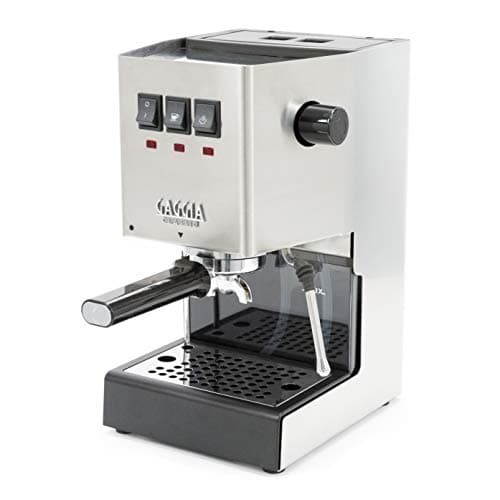
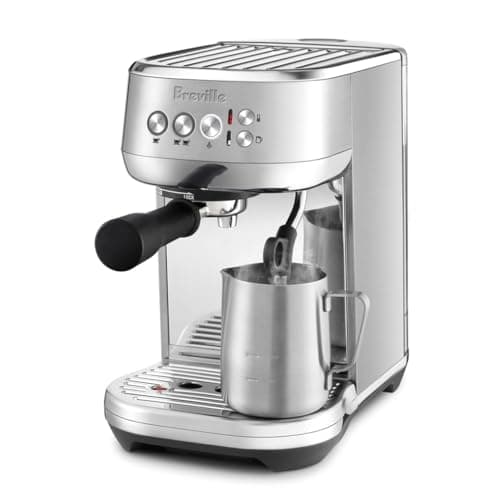
Breville says this on its own product pages: the Bambino Plus has a 15 bar Italian pump and a 9 bar extraction after low-pressure pre-infusion. Gaggia says it twice over for the Classic Pro — a 15 bar Ulka pump, with the OPV calibrated to 9 bar. Two different makers, two different price brackets, same real brew pressure.
Where the number comes from
Vibratory pumps — the kind in essentially every home machine under a thousand dollars — are rated by the maximum pressure they can generate against a closed outlet. That is a property of the pump, like the top number on a car's speedometer. It is not a description of how the machine is driven in normal use.
Between the pump and the coffee sits an over-pressure valve, the OPV, which bleeds the excess back to the tank. Its setting is the brew pressure. Gaggia publishes that setting. Most makers in the budget brackets publish only the pump rating, which is why the box says 20 and the cup never sees it.
What each machine on this page actually publishes
Pump rating against stated brew pressure
Machine
Pump rating
Stated brew pressure
What that tells you
Breville Bambino Plus
15 bar Italian
9 bar, after low-pressure pre-infusion
Both numbers published — the best case
Gaggia Classic Pro E24
15 bar Ulka
9 bar, OPV calibrated to 9 bar
Publishes the valve setting, which is the real figure
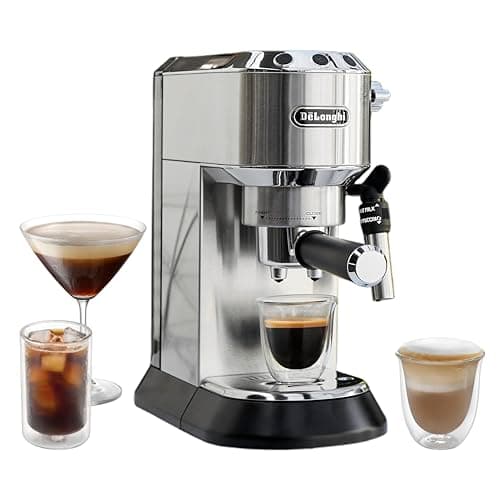
De'Longhi Dedica
15 bar
Not published
Normal for the bracket; the pump rating is all you get
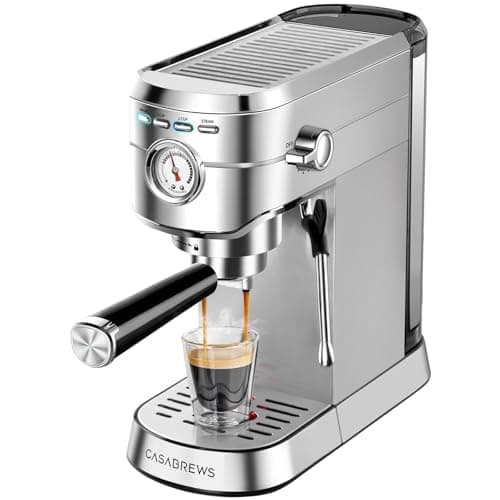
CASABREWS CM5418
20 bar Italian
Not published
The biggest number on this page and the least information
Read that table from right to left. The machine with the largest pump number is the one that tells you the least about what happens at the coffee, and the two machines that publish a brew pressure both publish the same one.
Quick picks — 15 bar, 20 bar: what pump pressure actually means
#
Pick
Best for
Type
Price
1
Breville Bambino Plus (BES500)Top pickThe standard answer to “which first machine” — full 54 mm portafilter and an 18 g dose, with the milk step automated so a flat white is possible on day one.
Gaggia Classic Pro E24The current Gaggia Classic: the same commercial-size 58 mm portafilter the line is known for, now with a lead-free brass boiler and a fully published spec sheet.
De'Longhi Dedica DeLuxe (EC685)The slim one. De'Longhi states a 15 cm width and calls it the slimmest pump coffee maker they make, which is the whole reason to choose it.
We have not handled these units. Everything above comes from published manufacturer documentation, cited inline, plus arithmetic you can redo yourself. Everyone in this category says they tested twenty machines; we have not tested any, and we say so. Here is what we do instead.
01
Breville Bambino Plus (BES500)
A first machine you will not outgrow in a year
The standard answer to “which first machine” — full 54 mm portafilter and an 18 g dose, with the milk step automated so a flat white is possible on day one.
Published specifications for the Breville Bambino Plus (BES500), with sources
54 mm tamper, Razor dosing tool, 16 fl oz milk jug, single- and dual-wall baskets, cleaning tool and disc [source]
The 54 mm portafilter and 18 g dose matter more than they sound: they put the machine on the same dose a cafe uses, so any recipe you read applies to it directly and every 54 mm accessory fits.
The three-second heat-up is the difference between espresso being a weekday habit and a weekend project. A machine that takes fifteen minutes to be ready is a machine you use on Sundays.
The automatic steam wand is the single biggest reason this suits a first setup. Milk texturing is the skill that takes longest to learn; handing it to the machine removes the part most likely to make you give up.
What it does well
Standard 54 mm basket, so recipes and accessories from anywhere fit
Ready in seconds, which is what makes it a habit rather than a project
Automatic milk means a drinkable cappuccino before you can texture by hand
The manual wand is still there when you want to learn
What you give up
No grinder — budget for one separately, and that is the right trade
Small water tank compared with a bean-to-cup machine; refills are frequent
Nothing here helps if your grinder cannot go fine enough
Skip it if you want one box that does everything with no learning curve — a bean-to-cup machine is the honest answer for that, and it is a different product.
The current Gaggia Classic: the same commercial-size 58 mm portafilter the line is known for, now with a lead-free brass boiler and a fully published spec sheet.
Published specifications for the Gaggia Classic Pro E24, with sources
The 9-bar figure is the one that matters and Gaggia states it twice — as the brew pressure and as the OPV calibration. Most machines advertise only the 15-bar pump maximum, which is not the pressure at the coffee. This is the same number a cafe machine brews at.
A 3.5 oz brass boiler is small, so it heats quickly and runs out of steam quickly. It is a single boiler, which means brewing and steaming are separate operations with a wait between them.
Everything here is serviceable. The Classic's internals have been broadly the same for years, parts are sold openly, and the modification community around it is the largest of any home machine — which is the real argument for buying one.
What it does well
58 mm commercial-standard portafilter, so every accessory fits
Gaggia publishes brew pressure, boiler material and OPV calibration
Serviceable, well-documented internals with an unusually large parts supply
What you give up
No PID from the factory — brew temperature is not held or displayed
Single small boiler: brew, then wait, then steam
Nothing is automated, including the milk
Skip it if you want the machine to help you. It does exactly what you tell it, including when what you told it was wrong.
Takes ground coffee (1 or 2 cups) and E.S.E. pods [source]
Milk
Adjustable frothing wand / cappuccino system [source]
Fifteen centimeters of width is genuinely unusual and it is why this machine keeps selling. If your counter run is already full, that number decides the purchase before any other spec does.
The E.S.E. pod compatibility is a fair hedge: it means the machine still makes a coffee on the day you have not restocked beans, without committing you to a pod ecosystem.
It uses a smaller basket than the 54 mm standard, so accessories and recipes written for 54 mm machines will not transfer directly.
What it does well
Fits where nothing else fits
Takes ground coffee or E.S.E. pods
Adjustable frothing wand rather than a fixed panarello
What you give up
Non-standard basket size limits accessory choice
Narrow body means a small water tank and frequent refills
Skip it if counter width is not actually your constraint — you are paying for the one thing it is best at and giving up basket standardization to get it.
Machines in this bracket advertise a high bar number. Bar is pump pressure, not shot quality — espresso is brewed at around 9 bar, and a 20 bar pump is only a bigger pump.
The specification that actually decides what this machine can do is the basket. CASABREWS lists pressurized dual-wall baskets only, which means the machine generates its own back-pressure and will make a crema-topped shot from almost any grind — and will not reward a better grinder if you buy one.
Treat this as the cheapest possible way to learn whether you like the ritual, with the expectation that you will replace it if you do.
What it does well
The smallest amount of money that gets you a wand and a portafilter
A pressure gauge at this price is genuinely unusual
CASABREWS publishes a real specification table, which most budget brands do not
Low regret if the hobby does not stick
What you give up
Pressurized basket masks grind problems rather than solving them
51 mm portafilter — the smallest of the three common sizes, with the thinnest accessory market
No single-wall basket is listed, so there is no upgrade path inside the machine
One-year warranty, and build and support are not comparable to an established brand
Skip it if you have already decided you want espresso. Buying twice costs more than buying once.
There is a category of very cheap appliance — usually sold as an “espresso and cappuccino maker”, often with a glass carafe — that uses steam pressure rather than a pump. Those generate roughly 1 to 3 bar, and that genuinely is not enough: you get strong coffee, not espresso, and no amount of technique changes it.
So the number is a floor test, not a ranking. A machine that advertises 15 bar or more has a pump. Above that floor, a bigger number buys nothing, and espresso machine vs coffee maker covers the category difference if you are weighing one of those appliances.
Pre-infusion: the low number that matters more
Buried in the same Breville specification that gives you the 15 and the 9 is a third figure nobody advertises: the shot starts at *low* pressure, not at 9 bar. Breville states low-pressure pre-infusion before a 9 bar extraction on the Bambino, the Bambino Plus and the Barista Express alike.
What that does is wet the puck gently and let it settle before the pump leans on it. Hit a dry, loosely packed puck with full pressure immediately and the water carves a channel straight through it — after which the rest of the shot follows that channel and most of your coffee is never properly extracted.
So the pressure profile matters and the peak number does not. A machine that ramps up is doing something useful for your shot; a machine with a larger pump and no pre-infusion is not. Pre-infusion, explained covers it properly, including how to fake it on a machine that does not have it.
Steam pressure is a different number again
If you see a pressure figure attached to the steam wand rather than the group head, it is not comparable to either number above. Brew pressure pushes water through coffee; steam pressure is about how fast the wand can texture milk, and it is a function of the heating system rather than the pump.
That is a real difference between machine types, and it is covered on thermoblock vs boiler rather than here — a boiler holds more energy and steams harder and longer than a thermoblock, whatever either machine's pump is rated at.
How to find out what your own machine brews at
**Look for a published OPV figure first.** Gaggia states the Classic Pro's valve is calibrated to 9 bar. If your maker publishes it, you are done.
**If there is a gauge, read it mid-shot** with a single-wall basket and a dialed-in grind. The needle should settle rather than spike — and on a pressurized basket it is reading the basket as much as the coffee.
**If neither, use the shot itself.** The National Coffee Association puts espresso at 20 to 30 seconds. A correctly ground dose landing in that window is doing so against roughly the right pressure, whatever the box says.
**Do not buy a portafilter pressure gauge for this.** It answers a question you can answer from the shot, on a machine whose valve you probably cannot adjust anyway.
It helps more than the bar rating does, because it shows you something that changes shot to shot. A needle that slams to the top means the grind is too fine or the puck is choked; a needle that barely moves means the grind is too coarse and the water is running through.
CASABREWS fits one to the CM5418, which is unusual at that price. The caveat is that a gauge on a machine with pressurized baskets is reading the basket's own restriction as much as the coffee's, so it tells you less than the same gauge would on a single-wall basket. How to dial in espresso covers what to do with the reading.
The short version
**9 bar** is the pressure espresso is brewed at.
**15 bar** is the pump rating on nearly every decent home machine, and it is plenty.
**20 bar** is a bigger pump, not a better shot, and usually appears where the brew pressure is not published at all.
**Under about 5 bar** means a steam appliance rather than a pump machine, and that is a real difference.
We have not used any of these machines. Every figure here is published by the manufacturer and linked below, what espresso actually is covers the brewing physics in plain words, and prices come live from the listings we link to.
Questions people actually ask
Is 15 bar enough for an espresso machine?+−
Yes, comfortably. Espresso is brewed at around 9 bar, and 15 bar is the pump's maximum rather than the pressure at the coffee. Breville publishes a 15 bar pump with a 9 bar extraction on the Bambino Plus, and Gaggia publishes a 15 bar Ulka pump with the over-pressure valve calibrated to 9 bar on the Classic Pro.
Is a 20 bar espresso machine better than a 15 bar one?+−
No. Both are pump ratings, and both are higher than the roughly 9 bar at which espresso is actually brewed. A 20 bar pump is a bigger pump, not a better shot. In practice the machines advertising 20 bar are also the ones that do not publish a brew pressure at all.
What does 15 bar mean on an espresso machine?+−
One bar is roughly atmospheric pressure at sea level, so 15 bar is about fifteen times that. It describes the maximum the pump can generate against a closed outlet. An over-pressure valve between the pump and the group head bleeds off the excess, which is why the coffee sees about 9 bar.
What pressure should espresso be brewed at?+−
Around 9 bar is the convention the category settled on, and it is what the makers who publish a brew figure publish. Higher pressure compacts the puck and encourages water to channel through it rather than extract evenly, so past that point more pressure makes the shot worse.
Do I need a pressure gauge on my espresso machine?+−
You do not need one, and it is more useful than the bar rating on the box because it responds to your grind. It tells you most on a single-wall basket; on a pressurized basket the gauge is partly reading the basket's own restriction rather than the coffee's.
Can you adjust the brew pressure on a home espresso machine?+−
On most of them, not without opening the case. The brew pressure is set by an over-pressure valve inside the machine, and adjusting it is an aftermarket modification rather than a user setting — one commonly done on the Gaggia Classic, which already ships calibrated to 9 bar. For a first setup it is the wrong thing to spend attention on: the grind, the dose and the basket all move the shot far more than a valve tweak would.
Why does my machine say 20 bar when espresso is 9 bar?+−
Because the two numbers measure different things. Twenty bar is what the pump can do; nine bar is what the valve lets through to the coffee. Marketing uses the first because it is bigger. Nothing is wrong with your machine.
Heat-up time against temperature stability, judged for a first setup — with what Breville, Gaggia and De'Longhi each publish, and which machine answers which case.
What the second wall actually does, when to switch, and the three purchases that make a single-wall basket work rather than just making it frustrating.