Heads up: we earn a commission if you buy through the links on this page, at no extra cost to you. It never changes the order of the list. Full disclosure · how we pick.
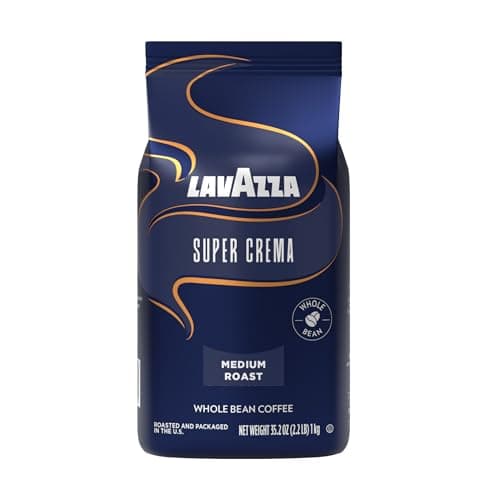
**If you want thick crema, buy the freshest bag you can and use it within about three weeks. That single factor outranks every blend, origin and roast level on the shelf.** Among beans you can buy anywhere, Lavazza Super Crema is the one we would reach for first — a medium espresso blend, widely stocked, and forgiving of a grind that is not perfect yet.
The uncomfortable part: if your machine has a pressurized basket, you already have crema and the beans are not what is making it. More on that below, because it changes the answer completely.
What crema actually is
The National Coffee Association describes a shot of espresso as two layers — the crema, the velvety golden-brown top layer, and the liquid body beneath it. The foam is carbon dioxide absorbed by the beans during roasting, emulsified with coffee oils by the high pressure espresso is brewed at.
Both halves of that sentence are bean properties, and both decay. The CO2 escapes continuously from the day of roasting. The oils go rancid more slowly but they do go. That is the entire reason roast date dominates this question: an old bag has less of both ingredients, and no grind setting puts them back.
How we judged these beans
**Can you get it fresh?** A roaster whose bags carry a roast date, or a brand that moves fast enough that supermarket stock turns over. A great blend that sat in a warehouse for five months is not a great bag.
**Is it roasted for espresso?** The NCA notes that coffee specifically roasted for espresso best brings out its characteristics. Espresso blends are built to be forgiving under pressure, which is what a first setup needs.
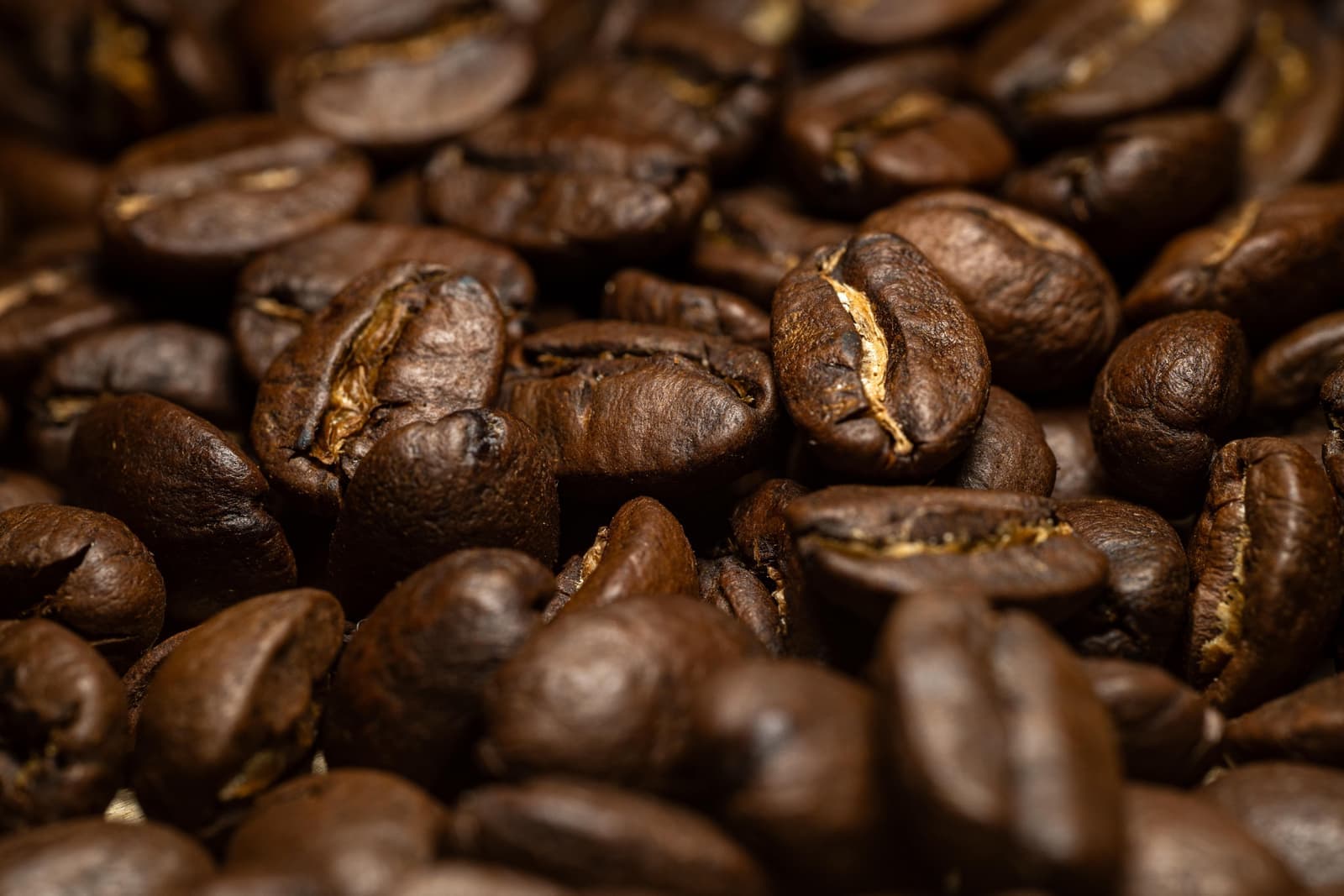
**Roast level.** The NCA groups roasts by color and notes that dark roasts produce shiny, oily beans. Those surface oils are half the emulsion, which is why a medium-dark roast tends to give more visible crema than a light one.
**Is it a bag you can rebuy?** Crema chasing is pointless if you cannot get the same coffee again — you lose the ability to tell what changed.
**Does it still taste good?** Crema is a texture, not a flavor. A bean chosen only for foam is a bad purchase.
What actually changes how much crema you get
Factor
Effect on crema
How much control you have
Days since roast
The largest single factor — CO2 escapes continuously
Total, and it is free
Roast level
Darker roasts bring oils to the surface; oils are half the emulsion
Choose it on the bag
Espresso-specific blend
Built to perform under pressure and be forgiving of grind
Choose it on the bag
Grind and extraction
A choked or gushing shot produces little crema whatever the bean
Yours, with an adjustable grinder
Basket type
A pressurized basket manufactures crema regardless of the coffee
Decided by your machine
The word “crema” on the bag
None by itself
Ignore it, and read the date instead
Quick picks — Best espresso beans for crema
#
Pick
Best for
Roast
Price
1
Lavazza Super CremaTop pickA medium-roast blend built for espresso and sold everywhere. Forgiving of an imperfect grind, which is what a first bag needs to be.
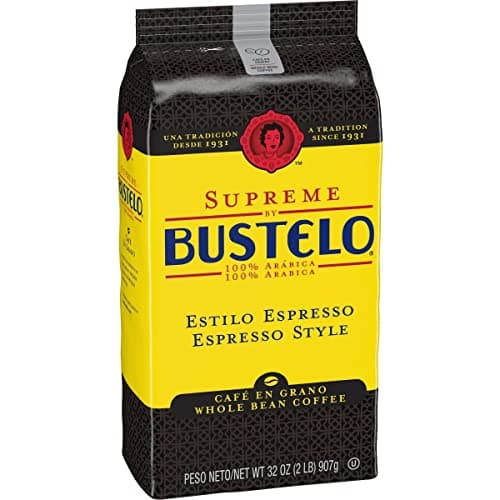
Supreme by Bustelo Espresso Style Whole BeanAn inexpensive dark espresso-style blend. On this site's anti-gatekeeping principle: it works, and nobody should feel bad about buying it.
We have not handled these units. Everything above comes from published manufacturer documentation, cited inline, plus arithmetic you can redo yourself. Everyone in this category says they tested twenty machines; we have not tested any, and we say so. Here is what we do instead.
01
Lavazza Super Crema
A forgiving first bag
A medium-roast blend built for espresso and sold everywhere. Forgiving of an imperfect grind, which is what a first bag needs to be.
We have not compiled a cited spec sheet for this pick yet, so there is no spec table here. What follows is about fit — who it is for and who it is not — not about numbers we cannot source. See how we pick.
Blends built for espresso are easier to dial in than single-origin light roasts, which is why every café starts a new machine on one.
Availability is a real feature at this stage. A bean you can rebuy in any supermarket means you are changing one variable at a time.
What it does well
Very widely stocked
Tolerant of a grind that is not quite right yet
What you give up
Bags often sit on shelves — check the roast date if there is one
Skip it if you already know you like bright, fruity coffee. This is deliberately the opposite of that.
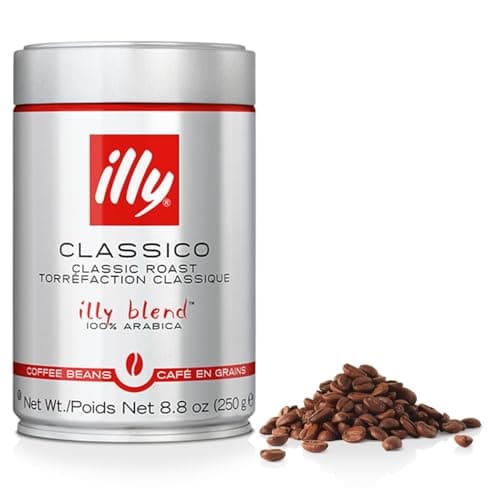
A single blend illy keeps deliberately consistent. That consistency is the reason to buy it while you are still learning.
We have not compiled a cited spec sheet for this pick yet, so there is no spec table here. What follows is about fit — who it is for and who it is not — not about numbers we cannot source. See how we pick.
When you are learning, you want everything except one variable to stay still. A blend that tastes the same in March and in November lets you tell whether the change was your grind or the coffee.
It is pressurized-can packaged, which keeps it stable on a shelf far longer than a paper bag.
What it does well
Unusually consistent bag to bag
Packaging protects it in storage
What you give up
Costs more per pound than supermarket blends
Skip it if you want to explore roasters. Consistency is the feature here, and exploring is the opposite activity.
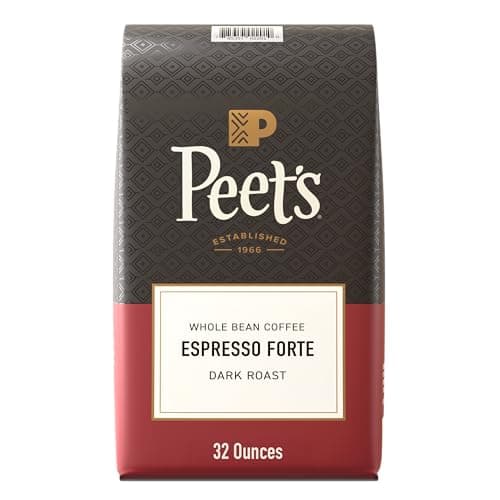
A dark-roast espresso blend. Dark roasts hold their own in a latte, which is what most first setups are making.
We have not compiled a cited spec sheet for this pick yet, so there is no spec table here. What follows is about fit — who it is for and who it is not — not about numbers we cannot source. See how we pick.
The National Coffee Association notes that the lighter the roast, the more acidic the brewed coffee — and that dark roasts give up acidity for that pronounced bitterness people read as “strong”.
In a milk drink, a lighter roast often disappears. A dark blend is the reliable answer for a morning latte.
What it does well
Stands up to milk
Widely available fresh in US supermarkets
What you give up
Oily beans can clog a grinder chute over time
Less interesting black
Skip it if you drink espresso straight and dislike bitterness — go a roast level lighter.
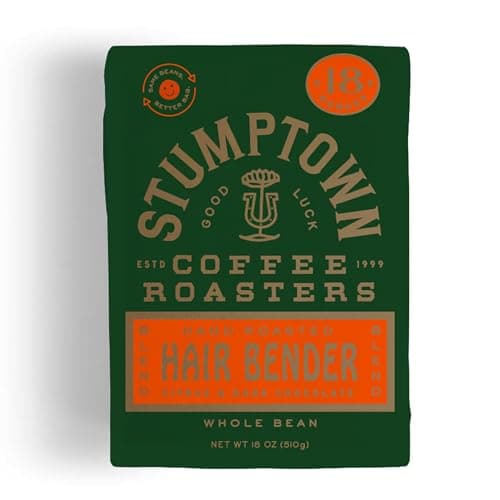
A specialty blend with a printed roast date, which is the actual upgrade — you finally know how old your coffee is.
We have not compiled a cited spec sheet for this pick yet, so there is no spec table here. What follows is about fit — who it is for and who it is not — not about numbers we cannot source. See how we pick.
The roast date is the feature. The National Coffee Association gives whole beans roughly one to three weeks at room temperature before freshness drops off, and you cannot manage that window without knowing the start of it.
Specialty beans are less forgiving. Buy this after the machine is dialed in, not before.
What it does well
Printed roast date
A genuine step up in the cup once you can taste it
What you give up
Costs multiples of a supermarket blend
Less forgiving of a rough grind
Skip it while you are still learning to grind. You will not taste the difference you paid for.
An inexpensive dark espresso-style blend. On this site's anti-gatekeeping principle: it works, and nobody should feel bad about buying it.
We have not compiled a cited spec sheet for this pick yet, so there is no spec table here. What follows is about fit — who it is for and who it is not — not about numbers we cannot source. See how we pick.
Beans are the recurring cost of the hobby, and the gap between a cheap bag and an expensive one is smaller in a milk drink than in a straight shot.
Start here, get the machine dialed in, then spend more on beans once you can taste what changed.
What it does well
Costs a fraction of specialty beans
In every supermarket
What you give up
No roast date to work from
Dark and one-note next to a specialty roaster's blend
Skip it if what you enjoy about coffee is tasting the difference between origins. This is not the bag for that.
The National Coffee Association gives whole beans one to three weeks at room temperature in an airtight, opaque container, and ground coffee one to two. That window is the practical answer to this entire question.
A supermarket bag with no roast date is an unknown — it may be three weeks old or six months. A specialty bag with a printed roast date is a known quantity, which is why how to choose beans for espresso treats the date as the most important thing on the packaging. For crema specifically, that is not a stylistic preference, it is the mechanism.
One wrinkle in the other direction: coffee in its first few days off the roaster can be so gassy that shots sputter and taste unsettled. Roughly five days to three weeks past roasting is the sweet spot, and that is where crema is best too.
Roast level, honestly
The NCA groups roasts into light, medium and dark by color: light roasts are matte because the oils have not broken through the surface, medium roasts are medium brown and non-oily, and dark roasts are shiny and oily with a pronounced bitterness.
Since the oils are half of what crema is made of, a medium-dark espresso roast is the easiest place to get a thick, persistent layer. That is why so many classic Italian-style espresso blends sit there.
It is a trade, not a free win. The NCA also states that the lighter the roast, the more acidic the brewed coffee, and that dark roasts give up that acidity for bitterness. A bright, fruity light roast will give you less crema and more flavor to taste; light vs dark roast for espresso is the full comparison. Very oily dark roasts also clog grinder chutes over time, which is a real cost.
The thing that will mislead you
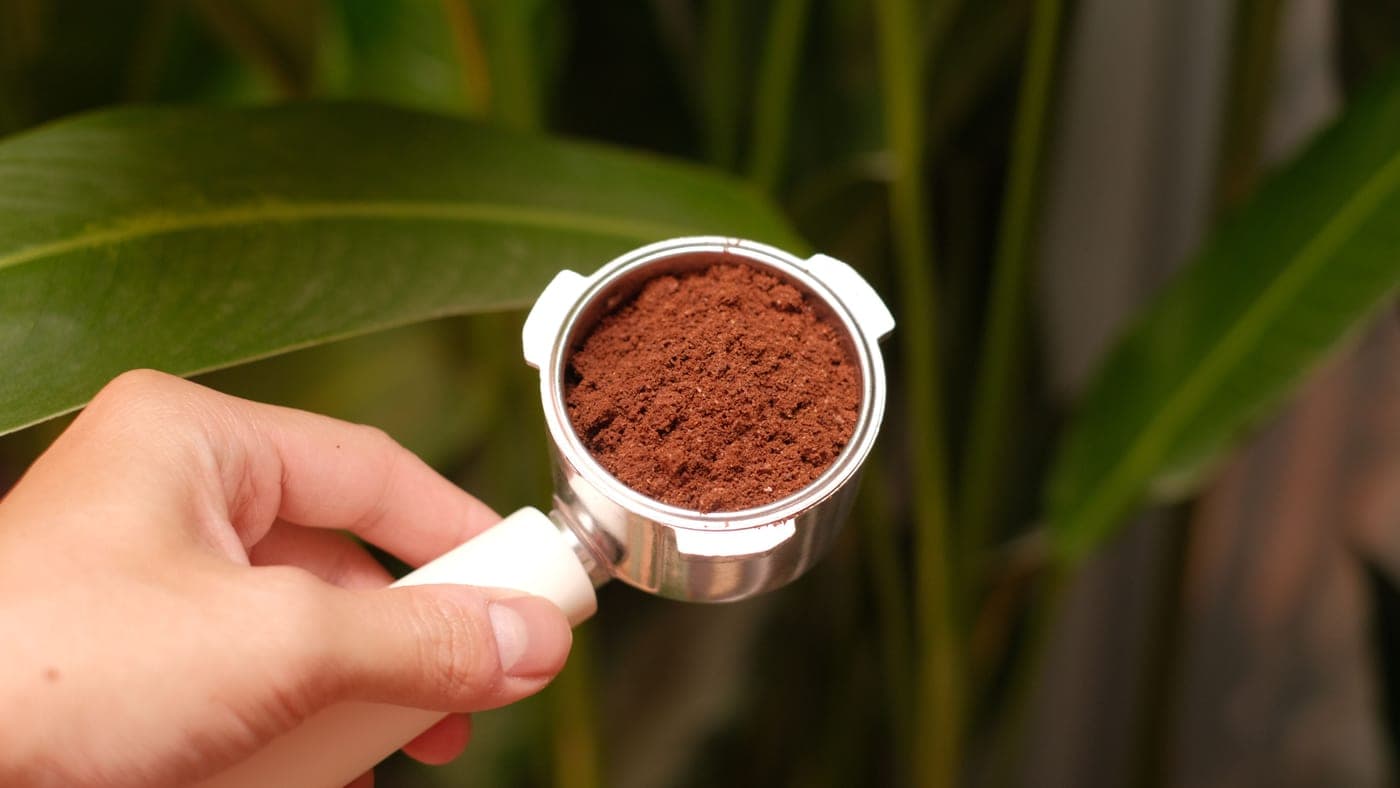
If your machine uses a pressurized (dual-wall) basket, it is manufacturing crema mechanically by forcing the coffee through one small hole. It will do that with four-month-old supermarket pre-ground, and the result will look excellent.
So on a pressurized basket, buying beans for crema is buying something you already have. Buy them for flavor instead, which is the thing the basket cannot fake. Pressurized vs non-pressurized baskets explains how to tell which one you own in about ten seconds.
On a single-wall basket, crema is real information — it tells you the coffee is fresh and the shot ran properly. That is the only setup where this page's question has a meaningful answer.
What to do if you have no crema at all
**Check the bag's age first.** Months-old beans produce almost none, and nothing else you change will fix that.
**Check the shot time.** The NCA puts espresso at 20 to 30 seconds of contact. A shot that pours out in ten seconds has not built pressure against the puck; one that drips for a minute has choked.
**Grind finer, in small steps.** The most common cause of a fast, thin shot — how to dial in espresso is the method.
**Check your dose.** An underfilled basket leaves headroom, and water goes around the puck rather than through it.
**Then look at the beans.** They are fourth on this list for a reason, and why your espresso tastes wrong covers the rest of the symptoms.
Storage, which is the free half of freshness
Buying fresh and then storing badly gets you back where you started. The National Coffee Association names coffee's four adversaries directly — air, moisture, heat and light — and a clear jar on a sunny counter loses on three of them simultaneously.
An opaque, airtight container at room temperature, away from the stove, is the whole method. Not the fridge: the NCA gives refrigerated whole beans two weeks against one to three at room temperature, because coffee is hygroscopic and a fridge is humid and full of odors. Storing coffee beans covers the freezer question, which is the one genuine exception.
Buy smaller bags more often. A two-pound bag at a lower price per pound is a false economy when the last half of it is four weeks past its best and producing visibly less crema than the first half did.
Does the grinder matter for crema?
Indirectly, and a lot. Crema needs the shot to run correctly, and a shot runs correctly when the grind is right — which on a single-wall basket means a grinder that reaches espresso fineness and adjusts in small steps near it.
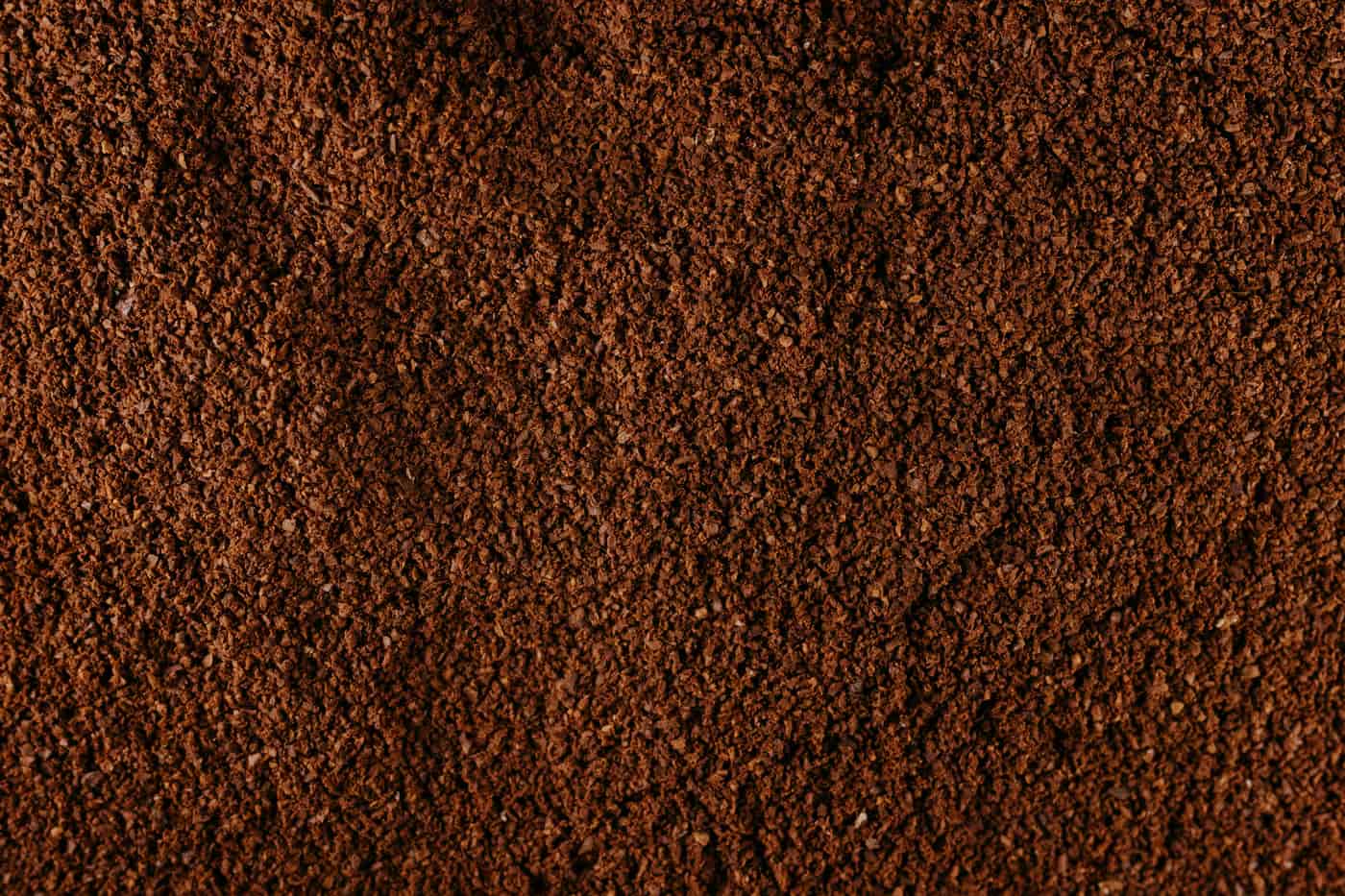
The NCA also notes that grinding immediately before brewing guarantees maximum freshness, which is the same CO2 argument applied one step later: ground coffee stales in one to two weeks against one to three for whole beans. Do I need a grinder for espresso? covers whether you need one at all.
The short version
**Buy fresh, use it within about three weeks.** Everything else is a rounding error next to this.
**Medium to medium-dark espresso blends** give the most visible crema, at some cost in brightness.
**Ignore the word crema on the bag** and read the roast date instead.
**On a pressurized basket**, buy for flavor — the crema is coming from the hardware either way.
**No crema at all?** It is almost always stale beans or a shot that ran too fast.
We have not tested any of these coffees against each other. The brewing and storage figures here come from the National Coffee Association, linked below, and prices come live from the listings we link to.
Questions people actually ask
What coffee beans give the most crema?+−
Fresh ones. Crema is carbon dioxide from roasting emulsified with coffee oils under pressure, and the CO2 escapes continuously from the day the beans are roasted — so a bag used within about three weeks of roasting will out-crema any blend that has been sitting for months. Among widely available beans, medium to medium-dark espresso blends give the most visible crema.
Does the word crema on a bag mean anything?+−
Not by itself. It usually indicates a medium-dark Italian-style espresso blend, which is a reasonable choice for crema, but the name is not a specification. The roast date on the bag tells you far more about how much crema you will get.
Why does my espresso have no crema?+−
In order of likelihood: the beans are old, the shot ran too fast, the grind is too coarse, or the basket was underfilled. The National Coffee Association puts espresso at 20 to 30 seconds of contact between coffee and water — a shot that empties in ten seconds has not built pressure against the puck and will produce almost no crema whatever beans you use.
Do dark roasts make more crema?+−
Generally yes, and it is a trade. The National Coffee Association notes that dark roasts produce shiny, oily beans, and those surface oils are half of what crema is made from. The same page notes that darker roasts give up acidity for a pronounced bitterness, so you gain foam and lose brightness.
Can you get crema from pre-ground coffee?+−
In a pressurized basket, yes — that basket forces crema mechanically regardless of what you put in it. In a single-wall basket, rarely and not repeatably: ground coffee stays fresh one to two weeks against one to three for whole beans, so most pre-ground has lost the carbon dioxide that crema is made of.
Is thick crema a sign of good espresso?+−
Only on a single-wall basket, where it indicates fresh coffee and a shot that ran properly. On a pressurized basket it indicates nothing except that the basket is working as designed. Crema is a texture rather than a flavor, and a shot can look beautiful and taste sour.
What the second wall actually does, when to switch, and the three purchases that make a single-wall basket work rather than just making it frustrating.