Heads up: we earn a commission if you buy through the links on this page, at no extra cost to you. It never changes the order of the list. Full disclosure · how we pick.
There is a specific problem with buying organic coffee for espresso, and it is not finding organic coffee. It is finding organic coffee that was **roasted for espresso**, rather than a filter blend with the word on the bag.
Certified-organic roasters skew light-to-medium and skew filter, because that is where the specialty market is. Espresso wants something that holds up in milk and forgives a grind that is not quite right yet, which usually means medium-dark. The overlap is smaller than the shelf suggests.
What the labels actually mean
The certifications you will see
Label
What it certifies
What it does not
USDA Organic
Growing and processing without prohibited synthetic inputs, audited annually
Nothing about roast quality, freshness or how it tastes
Fair Trade Certified
Minimum prices and standards for producers
Nothing about farming inputs — a separate question from organic
Rainforest Alliance
Environmental and social criteria at farm level
Not the same standard as organic certification
"Natural" / "pure" / "clean"
Nothing. These are unregulated marketing words
Everything
That last row is the one worth internalizing. Organic and fair trade are auditable claims with a body behind them. "Natural" is a word somebody printed on a bag.
Quick picks — Best organic espresso beans
#
Pick
Best for
Roast
Price
1
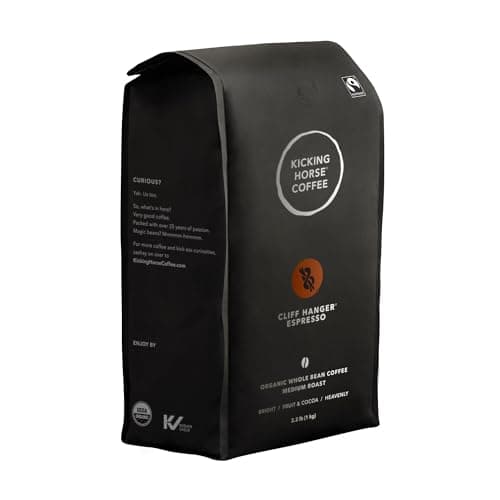
Kicking Horse Cliff Hanger EspressoTop pickOne of the few widely stocked certified-organic bags that is actually an espresso roast rather than a filter blend with espresso on the label.
Certified organic, and roasted for espresso specifically
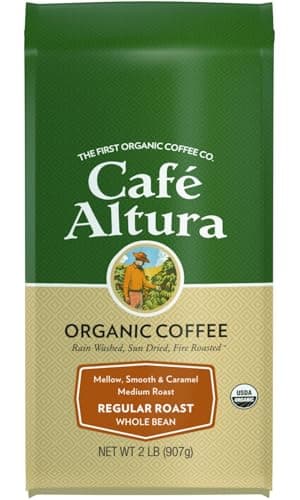
Café Altura Organic Whole BeanA roaster that has sold nothing but certified organic coffee for decades, with a range broad enough to find a roast level that suits espresso.
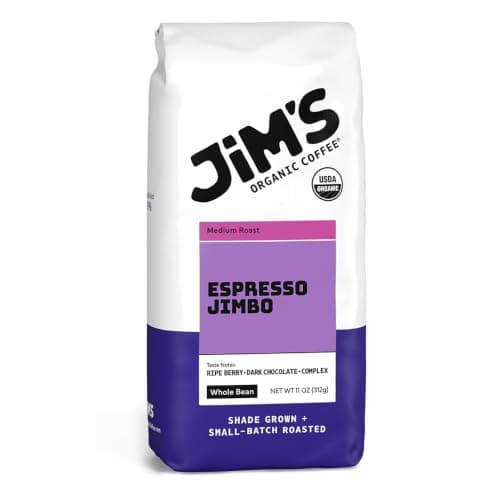
Jim's Organic Coffee Espresso Jimbo (Organic Espresso Blend)A smaller certified-organic roaster with a dedicated espresso blend, which is a combination the big organic labels mostly do not offer.
A small-roaster organic bag with a real espresso blend
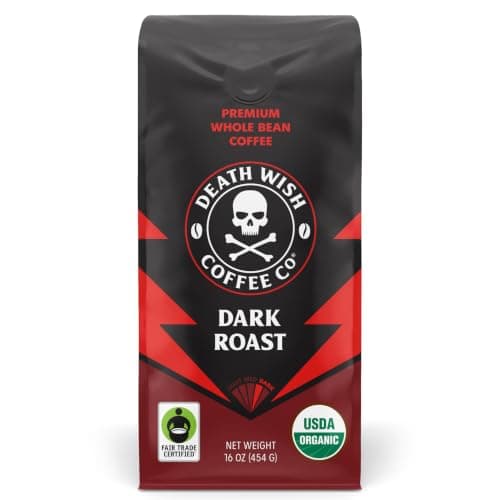
Death Wish Coffee Organic Dark RoastCertified organic and fair trade, roasted dark and marketed on strength. The certification is real; the strength framing is marketing.
We have not handled these units. Everything above comes from published manufacturer documentation, cited inline, plus arithmetic you can redo yourself. Everyone in this category says they tested twenty machines; we have not tested any, and we say so. Here is what we do instead.
01
Kicking Horse Cliff Hanger Espresso
Certified organic, and roasted for espresso specifically
One of the few widely stocked certified-organic bags that is actually an espresso roast rather than a filter blend with espresso on the label.
We have not compiled a cited spec sheet for this pick yet, so there is no spec table here. What follows is about fit — who it is for and who it is not — not about numbers we cannot source. See how we pick.
Kicking Horse certifies organic and fair trade across its range, which removes the usual problem with organic espresso: finding a bag that is both certified and roasted for the method.
It is a medium-dark roast, which is the forgiving end for a first setup and holds up in milk.
Whole bean and widely stocked, so you can rebuy it without changing a variable in your dial-in.
What it does well
Certified organic and fair trade
Roasted for espresso, not repurposed filter coffee
Easy to find again, which matters while you are learning
What you give up
Costs more than a supermarket blend
Roast dates are not always easy to read on retail bags
Skip it if certification is not what you are paying for. An uncertified specialty bag with a printed roast date will usually taste fresher for the money.
A roaster that has sold nothing but certified organic coffee for decades, with a range broad enough to find a roast level that suits espresso.
We have not compiled a cited spec sheet for this pick yet, so there is no spec table here. What follows is about fit — who it is for and who it is not — not about numbers we cannot source. See how we pick.
Buying from a roaster whose entire catalog is certified removes the label-reading problem. There is no conventional line to pick up by accident.
The range spans light to dark, so match the roast to how you drink: darker if it is going into milk, medium if you drink it straight.
What it does well
Whole catalog is certified organic
Enough roast levels to actually choose
Long track record rather than a new label
What you give up
Less widely stocked than supermarket brands
Not every roast in the range is aimed at espresso
Skip it if you want one specific espresso blend to rebuy forever. The breadth here is the feature, and it is not what somebody still dialing in needs.
Jim's Organic Coffee Espresso Jimbo (Organic Espresso Blend)
A small-roaster organic bag with a real espresso blend
A smaller certified-organic roaster with a dedicated espresso blend, which is a combination the big organic labels mostly do not offer.
We have not compiled a cited spec sheet for this pick yet, so there is no spec table here. What follows is about fit — who it is for and who it is not — not about numbers we cannot source. See how we pick.
Smaller roasters generally ship closer to the roast date, and that shows up in crema more than the certification does.
The trade is availability. A bag you cannot reliably rebuy means re-dialing every time you switch, which is genuinely annoying while you are learning.
What it does well
Certified organic with a real espresso blend
Usually fresher than a supermarket organic bag
What you give up
Narrower distribution than the big names
Small-roaster stock goes out and comes back
Skip it if consistency of supply matters more to you than freshness. A widely stocked bag you can always find is worth more early on.
Certified organic and fair trade, roasted dark and marketed on strength. The certification is real; the strength framing is marketing.
We have not compiled a cited spec sheet for this pick yet, so there is no spec table here. What follows is about fit — who it is for and who it is not — not about numbers we cannot source. See how we pick.
Worth separating the two claims. The organic and fair-trade certification is a real, auditable thing. "Strongest coffee" is a brand position, and the National Coffee Association is explicit that a dark roast's strong flavor is not associated with higher caffeine.
As an espresso bean it behaves like any very dark roast: low acidity, oily surface, and it grinds finer at the same setting, so expect to go a click coarser.
The oil is worth planning for. Very dark beans leave residue in a grinder chute that goes rancid if you do not brush it out.
What it does well
Certified organic and fair trade
Very widely stocked
Cuts through milk easily
What you give up
Oily beans need more frequent grinder cleaning
The strength marketing oversells what the roast actually does
Too dark for anyone who wants to taste origin character
Skip it if you drink espresso straight and dislike bitterness. This is deliberately at the far dark end and will not change your mind about that.
**Is the certification real and current?** Every pick here was confirmed on the roaster's own site during this build.
**Is it actually roasted for espresso?** A medium-dark or dark roast, or an explicit espresso blend — not a light filter coffee with a hopeful label.
**Whole bean.** Pre-ground is ground for drip and is far too coarse for a single-wall basket, and the National Coffee Association gives it one to two weeks of freshness against one to three for whole beans.
**Can you buy it again?** Re-buying the same bag means you change one variable at a time while you learn. A bag that vanishes is a re-dial every time.
**Honest downside stated.** Every pick on this page has one, including the ones we like.
What organic does not tell you
The roast date. That is the omission that matters, because freshness affects your cup far more directly than farming inputs do — a certified-organic bag roasted five months ago will make worse espresso than an uncertified bag roasted last week, every time.
The National Coffee Association's window for whole beans is one to three weeks at room temperature. Very few supermarket organic bags print a roast date at all. If you can find one that does, take it over one that does not, certification being equal. Storage and freshness covers what happens after you open it.
The dark-roast trade
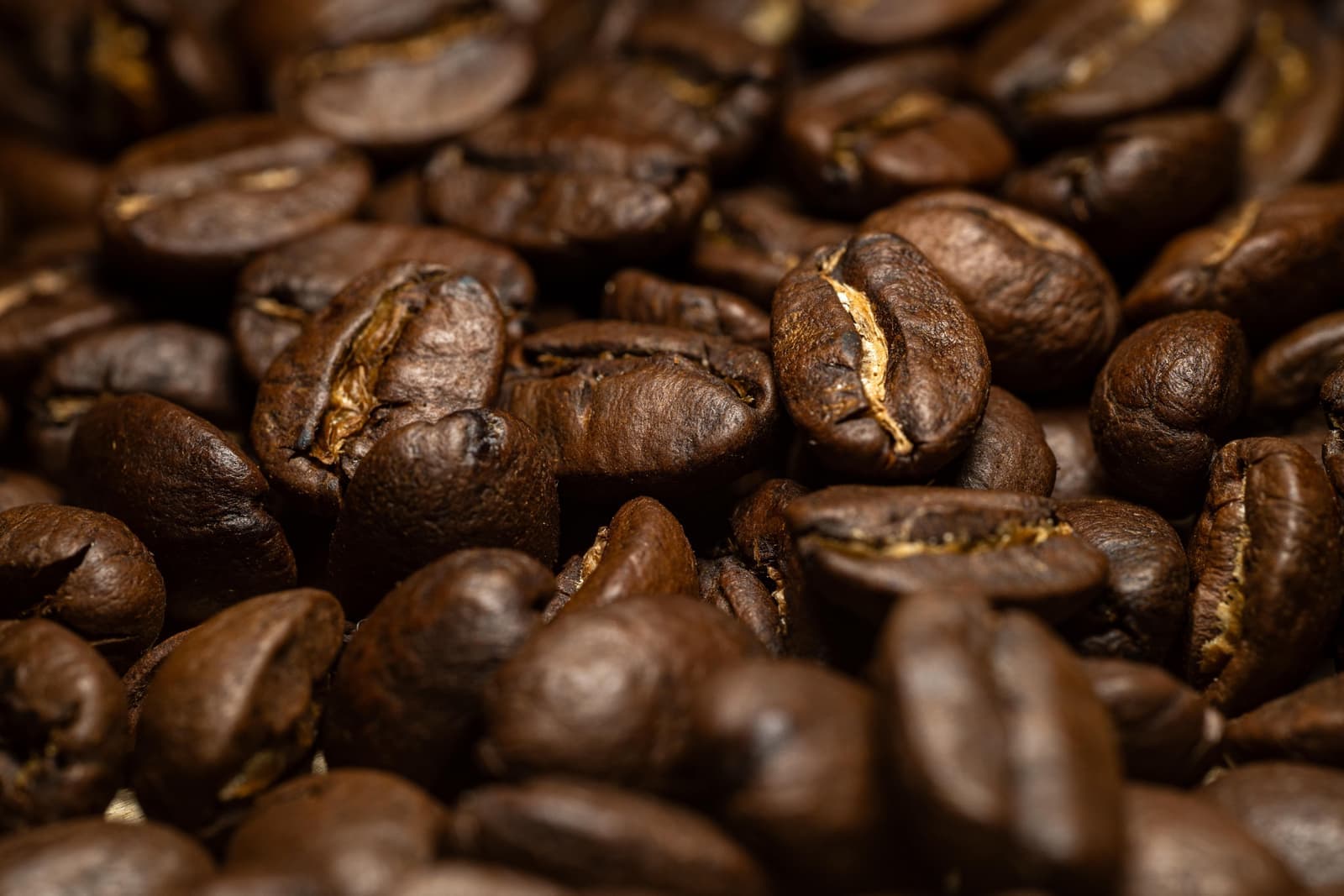
Several of the widely available organic espresso bags sit at the very dark end, and that has practical consequences worth knowing before you buy.
**They grind finer at the same setting.** Roasting drives out moisture and makes beans more brittle, so expect to go a click or two coarser.
**They leave oil in the grinder.** Visibly oily beans deposit residue in the chute that goes rancid. Brush it weekly — see the maintenance schedule.
**They are less acidic.** The National Coffee Association states that the lighter the roast, the more acidic the brewed coffee, and that dark roasts produce even less acidic coffee. If acidity is what you are trying to avoid, that is the useful lever — see low acid coffee for espresso.
**They cut through milk.** Which is why they dominate espresso shelves in the first place.
Questions people actually ask
What are the best organic espresso beans?+−
A certified-organic bag that is genuinely roasted for espresso rather than a light filter blend with the label on it. Kicking Horse's Cliff Hanger is the most widely stocked example — certified organic and fair trade, and an actual espresso roast.
Does organic coffee taste better?+−
Not inherently. Organic certification covers farming inputs, not roast quality or freshness — and freshness affects your cup far more directly. A fresh uncertified bag will usually beat a stale organic one.
What is the difference between organic and fair trade?+−
Organic certifies growing and processing without prohibited synthetic inputs. Fair trade certifies minimum prices and standards for producers. They are separate claims, and a bag can carry either, both or neither.
Is organic coffee lower in acid?+−
No — that is roast level, not farming method. The National Coffee Association states that the lighter the roast, the more acidic the brewed coffee. If acidity is the concern, roast level is the lever that works.
Do I need to change my grind for organic beans?+−
Not because they are organic, but you will re-dial anyway because it is a different bag. Darker roasts in particular grind finer at the same setting, so start a click or two coarser.