Heads up: we earn a commission if you buy through the links on this page, at no extra cost to you. It never changes the order of the list. Full disclosure · how we pick.
Start with what this page is not. **We have not measured the acidity of any coffee**, we have no laboratory, and we are not going to imply otherwise — that is the whole basis of how this site works. Nor are we going to tell you what any coffee will do to your body; that is not our subject and not our expertise.
What we can do is separate the one change you can verify yourself from the claims you are being asked to take on trust.
The lever you can verify: roast level
The National Coffee Association states it plainly: **the lighter the roast, the more acidic your brewed coffee will be**, and dark roasts produce even less acidic coffee than lighter ones. That is a published position from a named body, and it does not require you to trust a brand.
So before buying anything marketed as low acid, the free experiment is to switch to a darker roast of a coffee you can already buy. If that alone fixes it, you have solved the problem for nothing and you can stop reading. If it does not, the rest of this page is the next step.
Roast level and acidity, per the National Coffee Association
Roast
Appearance
Acidity
For espresso
Light
Light brown, matte — oils have not surfaced
Highest
Brightest, and least forgiving of a rough grind
Medium
Medium brown, not oily
Moderate
The usual default
Dark
Shiny black, oily, pronounced bitterness
Lowest
Most forgiving; cuts through milk
Quick picks — Low acid coffee for espresso
#
Pick
Best for
Roast
Price
1
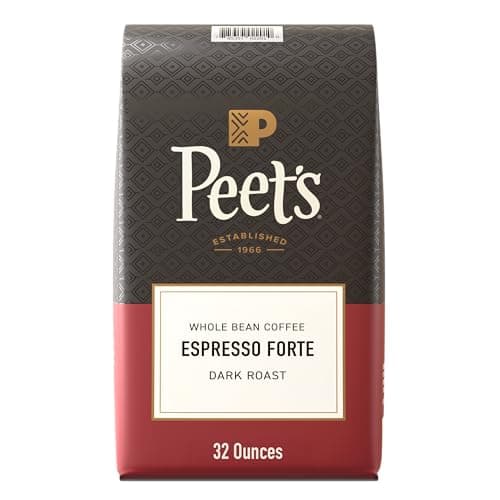
Peet's Coffee Espresso ForteTop pickA dark-roast espresso blend. Dark roasts hold their own in a latte, which is what most first setups are making.
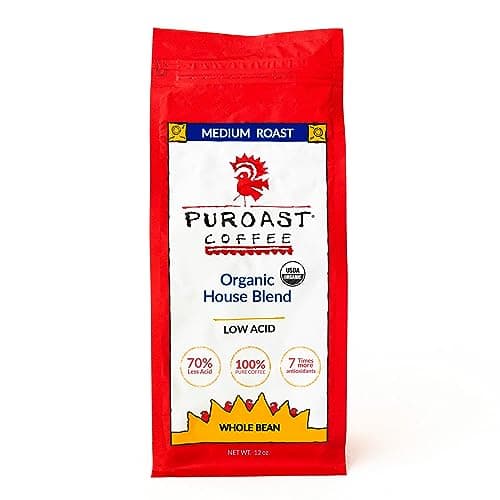
Puroast Low Acid Organic House BlendA roaster whose entire range is sold on a low-acid roasting process. Widely stocked, and the claim is theirs rather than ours.
The brand that built its whole catalog on the claim
Volcanica Coffee Low Acid Coffee RangeA specialty roaster with a dedicated low-acid collection, which means you can pick an origin you like rather than accepting one house blend.
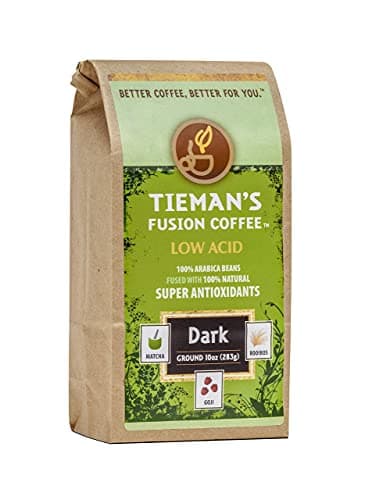
Tieman's Fusion CoffeeA blend that mixes coffee with other botanicals rather than relying on roast level alone. Genuinely different from the rest of this page, and not to everyone's taste.
We have not handled these units. Everything above comes from published manufacturer documentation, cited inline, plus arithmetic you can redo yourself. Everyone in this category says they tested twenty machines; we have not tested any, and we say so. Here is what we do instead.
01
Peet's Coffee Espresso Forte
A darker roast that cuts through milk
A dark-roast espresso blend. Dark roasts hold their own in a latte, which is what most first setups are making.
We have not compiled a cited spec sheet for this pick yet, so there is no spec table here. What follows is about fit — who it is for and who it is not — not about numbers we cannot source. See how we pick.
The National Coffee Association notes that the lighter the roast, the more acidic the brewed coffee — and that dark roasts give up acidity for that pronounced bitterness people read as “strong”.
In a milk drink, a lighter roast often disappears. A dark blend is the reliable answer for a morning latte.
What it does well
Stands up to milk
Widely available fresh in US supermarkets
What you give up
Oily beans can clog a grinder chute over time
Less interesting black
Skip it if you drink espresso straight and dislike bitterness — go a roast level lighter.
The brand that built its whole catalog on the claim
A roaster whose entire range is sold on a low-acid roasting process. Widely stocked, and the claim is theirs rather than ours.
We have not compiled a cited spec sheet for this pick yet, so there is no spec table here. What follows is about fit — who it is for and who it is not — not about numbers we cannot source. See how we pick.
We have not measured the acidity of any coffee and we are not going to imply we have. What we can tell you is that this brand's whole catalog is built around the claim and it is easy to buy, which makes it the obvious first thing to try.
The lever you can verify yourself is roast level. The National Coffee Association states plainly that the lighter the roast, the more acidic the brewed coffee, so a darker roast is the change you can make without trusting anyone's marketing.
Available ground and whole bean. For espresso, buy whole bean.
What it does well
Whole catalog is built around the low-acid claim
Easy to find in US supermarkets
Comes in whole bean, which most low-acid brands do not
What you give up
The low-acid claim is the brand's, and we cannot verify it
Flavor range is narrow compared with a specialty roaster
Skip it if you enjoy bright, fruity coffee. Everything about this range is aimed in the opposite direction.
A specialty roaster with a dedicated low-acid collection, which means you can pick an origin you like rather than accepting one house blend.
We have not compiled a cited spec sheet for this pick yet, so there is no spec table here. What follows is about fit — who it is for and who it is not — not about numbers we cannot source. See how we pick.
Most low-acid brands sell one blend and that is your choice made. A collection lets you pick by origin, and Sumatra and Brazil naturally sit at the lower-acid end, which is why they turn up in these ranges repeatedly.
Sold with roast dates, which is the thing supermarket low-acid bags almost never give you.
Same caveat as every product on this page: the low-acid positioning is the roaster's claim, not our measurement.
What it does well
Choice of origins rather than one blend
Specialty-grade with roast dates
Sold whole bean as standard
What you give up
Costs specialty money
Ordering online rather than picking it up locally
Skip it if you want the cheapest possible way to test whether a lower-acid coffee helps. Start with a dark supermarket roast first and see if that alone does it.
A blend that mixes coffee with other botanicals rather than relying on roast level alone. Genuinely different from the rest of this page, and not to everyone's taste.
We have not compiled a cited spec sheet for this pick yet, so there is no spec table here. What follows is about fit — who it is for and who it is not — not about numbers we cannot source. See how we pick.
This is a different mechanism from the other picks: rather than roasting darker, the blend includes non-coffee ingredients. Whether that suits you is a taste question you will answer in one bag.
It changes how the bag behaves in a grinder and in a basket, so expect to re-dial rather than dropping it straight into your existing recipe.
What it does well
A genuinely different approach if roast level alone has not helped
Widely available
What you give up
Not straight coffee, and it tastes like that
Needs its own dial-in rather than slotting into your current one
The health-adjacent marketing goes further than we would
Skip it if you want your coffee to taste like coffee. This is a deliberate blend and it does not hide it.
Three of the four picks above are sold on a low-acid claim. We have included them because they are the real, currently purchasable options in a category people search for, and we have been explicit in each write-up about whose claim it is.
**The claim is the roaster's, not ours.** We have not tested it and we have not seen third-party measurements.
**The mechanisms differ.** Some rely on roasting process, some on origin selection, one blends in non-coffee ingredients. Those are genuinely different products and they taste different.
**Availability varies.** One is a supermarket staple, one is a specialty roaster you order online.
**Whole bean matters more here than usual**, because most low-acid marketing targets drip drinkers and a lot of it is sold pre-ground. Pre-ground is far too coarse for a single-wall basket.
Origins that sit at the lower-acid end
If you would rather choose by origin than by marketing, this is the more durable approach. Sumatra, Brazil and other low-grown, heavier-bodied origins consistently turn up in low-acid ranges, and lighter-bodied, high-grown African coffees consistently do not. That is a pattern you can use at any shelf without a special product line.
It also survives a bag going out of stock, which the brand-specific approach does not.
What to try, in order
**Fix the extraction first.** A fast shot tastes sour because it is under-extracted. Grind finer and see. Dialing in.
**Go a roast level darker** on a coffee you already buy. Free, and the NCA-backed lever.
**Try a lower-acid origin** — Sumatra or Brazil — before trying a special product line.
**Then, if none of that helped**, try one of the low-acid brands and judge it on your own cup.
Doing it in this order means you are only ever changing one thing, which is the same discipline that makes dialing in work at all.
Questions people actually ask
What is the best low acid coffee for espresso?+−
The most reliable change is a darker roast — the National Coffee Association states that the lighter the roast, the more acidic the brewed coffee. Beyond that, several brands sell dedicated low-acid ranges; those are their claims and we have not measured them.
Does dark roast have less acid?+−
Yes, per the National Coffee Association: the lighter the roast, the more acidic the brewed coffee, and dark roasts produce even less acidic coffee than lighter ones.
Why does my espresso taste so sour?+−
Most often under-extraction rather than the beans — the water got through too fast to dissolve enough. Grind finer first; that fixes it most of the time. The full troubleshooting page works through it in order.
Which coffee origins are lowest in acidity?+−
Low-grown, heavier-bodied origins like Sumatra and Brazil consistently appear in low-acid ranges; high-grown African coffees are typically the brightest. Choosing by origin is more durable than choosing by brand, because it survives a product line going out of stock.
Is low acid coffee better for you?+−
That is a health question and it is outside what this site covers. We write about equipment and brewing, and we are not going to make claims about your body that we cannot support.