Heads up: we earn a commission if you buy through the links on this page, at no extra cost to you. It never changes the order of the list. Full disclosure · how we pick.
There is a version of this page that tells you to only ever buy from an independent roaster. We are not writing that one either. Supermarket beans make perfectly good espresso, plenty of people drink them happily for years, and being made to feel bad about it is exactly the gatekeeping this site exists to cut through.
What is true is that you give up one specific thing, and you can partly work around it.
Quick picks — Supermarket beans for espresso
#
Pick
Best for
Roast
Price
1
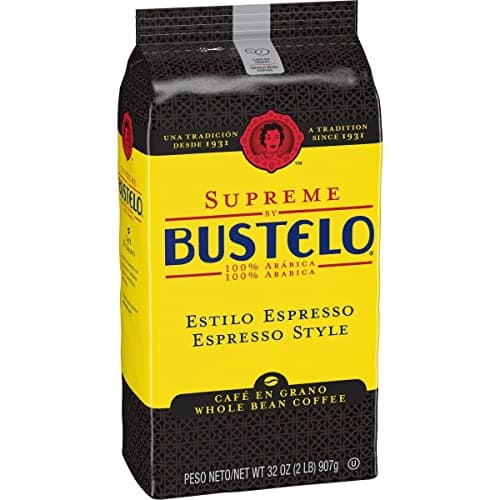
Supreme by Bustelo Espresso Style Whole BeanTop pickAn inexpensive dark espresso-style blend. On this site's anti-gatekeeping principle: it works, and nobody should feel bad about buying it.
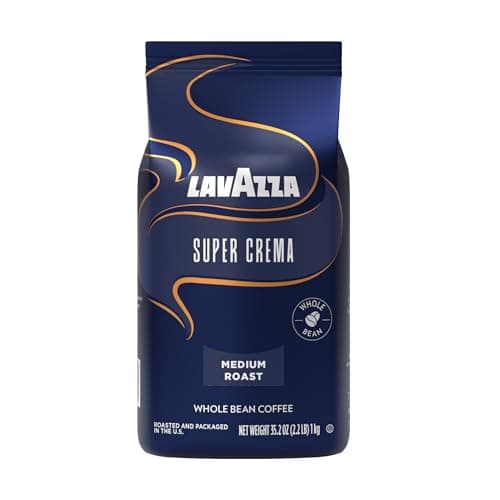
Lavazza Super CremaA medium-roast blend built for espresso and sold everywhere. Forgiving of an imperfect grind, which is what a first bag needs to be.
We have not handled these units. Everything above comes from published manufacturer documentation, cited inline, plus arithmetic you can redo yourself. Everyone in this category says they tested twenty machines; we have not tested any, and we say so. Here is what we do instead.
01
Supreme by Bustelo Espresso Style Whole Bean
The cheapest bag that is genuinely fine
An inexpensive dark espresso-style blend. On this site's anti-gatekeeping principle: it works, and nobody should feel bad about buying it.
We have not compiled a cited spec sheet for this pick yet, so there is no spec table here. What follows is about fit — who it is for and who it is not — not about numbers we cannot source. See how we pick.
Beans are the recurring cost of the hobby, and the gap between a cheap bag and an expensive one is smaller in a milk drink than in a straight shot.
Start here, get the machine dialed in, then spend more on beans once you can taste what changed.
What it does well
Costs a fraction of specialty beans
In every supermarket
What you give up
No roast date to work from
Dark and one-note next to a specialty roaster's blend
Skip it if what you enjoy about coffee is tasting the difference between origins. This is not the bag for that.
A medium-roast blend built for espresso and sold everywhere. Forgiving of an imperfect grind, which is what a first bag needs to be.
We have not compiled a cited spec sheet for this pick yet, so there is no spec table here. What follows is about fit — who it is for and who it is not — not about numbers we cannot source. See how we pick.
Blends built for espresso are easier to dial in than single-origin light roasts, which is why every café starts a new machine on one.
Availability is a real feature at this stage. A bean you can rebuy in any supermarket means you are changing one variable at a time.
What it does well
Very widely stocked
Tolerant of a grind that is not quite right yet
What you give up
Bags often sit on shelves — check the roast date if there is one
Skip it if you already know you like bright, fruity coffee. This is deliberately the opposite of that.
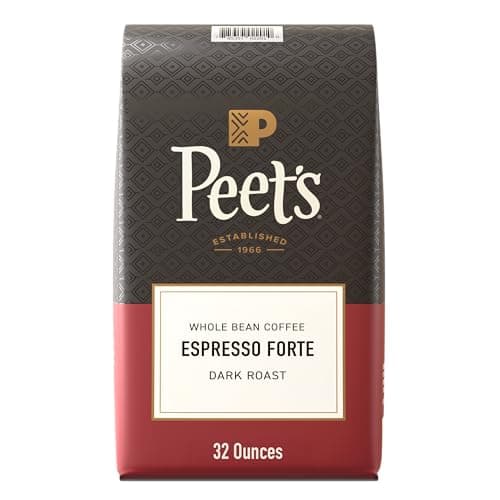
A dark-roast espresso blend. Dark roasts hold their own in a latte, which is what most first setups are making.
We have not compiled a cited spec sheet for this pick yet, so there is no spec table here. What follows is about fit — who it is for and who it is not — not about numbers we cannot source. See how we pick.
The National Coffee Association notes that the lighter the roast, the more acidic the brewed coffee — and that dark roasts give up acidity for that pronounced bitterness people read as “strong”.
In a milk drink, a lighter roast often disappears. A dark blend is the reliable answer for a morning latte.
What it does well
Stands up to milk
Widely available fresh in US supermarkets
What you give up
Oily beans can clog a grinder chute over time
Less interesting black
Skip it if you drink espresso straight and dislike bitterness — go a roast level lighter.
Most supermarket bags carry a best-before date, often a year or more out, and no roast date. That means you cannot tell whether the bag was roasted three weeks ago or five months ago — and the National Coffee Association's freshness window for whole beans is one to three weeks at room temperature.
The practical consequence is thinner crema and flatter flavor, not undrinkable coffee. And it is worth knowing because it stops you blaming your grinder for something the supply chain did.
What to check on the shelf
**Whole bean, always.** Ground coffee is ground for drip and has half the freshness window.
**Look for a roast date.** A growing number of supermarket bags now print one. If two options are otherwise equal, take the one that tells you.
**Take from the back**, which is usually the newer stock.
**Check the bag has a one-way valve** — the small round vent. It means the bag was sealed shortly after roasting and is designed to let carbon dioxide out without letting air in.
**Prefer a fast-moving line.** A brand with a whole shelf facing turns over faster than the single bag of something unusual.
**Buy the small bag.** A 12 oz bag is about 18 doubles at an 18 g dose — roughly nine days at two drinks a day, which fits the freshness window.
Supermarket versus specialty, honestly
Supermarket blend
Specialty roaster
Roast date
Usually absent
Almost always printed
Age when you buy it
Unknown, often months
Usually days to weeks
Consistency
Very high — that is the product
Varies by lot, deliberately
Forgiveness of grind
High
Lower on light roasts
Cost per shot
Around 36 cents on a $9 pound bag
Around 87 cents on a $22 pound bag
When it is right
While you are learning; in milk drinks
Once your process is stable
Those cost figures come from the cost-to-run arithmetic — a 454 g bag divided by an 18 g dose is about 25 doubles, whatever you paid for it.
When supermarket beans stop being enough
When your shots are consistent and the coffee has started to taste the same every day in a way you notice. That is the point at which a roast date and a real roaster buy you something you can actually perceive — and not before, because until then you would be paying for a difference you cannot yet taste.
Questions people actually ask
Are supermarket coffee beans good enough for espresso?+−
Yes. The main limitation is that most bags carry only a best-before date, so you cannot tell how old the coffee is. Buy whole bean, take from the back of the shelf, and buy small bags.
How do I pick coffee in a supermarket?+−
Whole bean, with a one-way valve on the bag, from a fast-moving line, in the smallest size that lasts you two to three weeks. If any option prints a roast date, take that one.
Is expensive coffee better for espresso?+−
It is usually fresher and more interesting, which you will taste once your grind is consistent. While you are still learning, a forgiving blend teaches you more than an expensive light roast will.
How much does a shot of coffee cost from a supermarket bag?+−
About 36 cents for a double from a $9 one-pound bag, at an 18 g dose — a pound is roughly 25 doubles. See the full cost arithmetic.