Heads up: we earn a commission if you buy through the links on this page, at no extra cost to you. It never changes the order of the list. Full disclosure · how we pick.
People search for this for two different reasons — taste and health — and both deserve a straight answer rather than a list of machines with steel bodies.
The straight answer: there is no mains-powered home espresso machine with zero plastic in the water path. Every one of them has a tank, tubing, seals and gaskets, and some of those parts are polymers on every machine at every price. What varies is how much, and where. The machine that comes closest here is assessed in full in our Gaggia Classic review, including what its brass boiler is and is not.
The parts that actually touch your coffee
**The water tank.** Almost always plastic, at every price. Some are removable and can be replaced when they age.
**Internal tubing.** Usually silicone or PTFE-lined. Not visible and not user-serviceable.
**The boiler or thermoblock.** Metal — aluminum, stainless or brass depending on the machine.
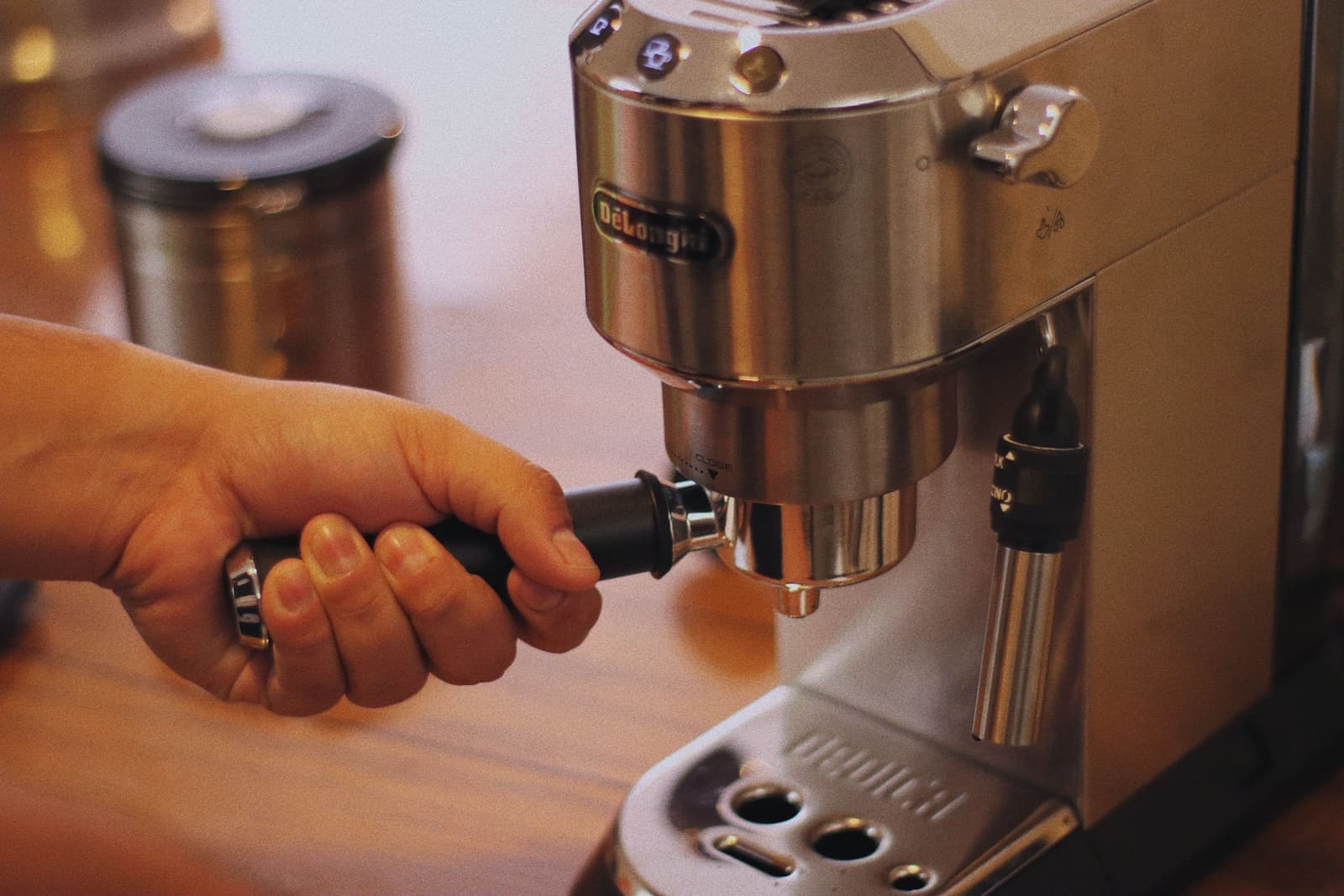
**The group head and portafilter.** Metal on any machine with a real portafilter. This is the part most people are actually asking about.
**The basket.** Stainless steel.
**Seals and gaskets.** Rubber or silicone. These are wear parts and get replaced periodically anyway.
So on a machine with a metal group head and a stainless basket — which includes every machine on our main list — the coffee's contact with plastic is the tank and the tubing, before it is heated.
Quick picks — Espresso machines with less plastic
#
Pick
Best for
Type
Price
1
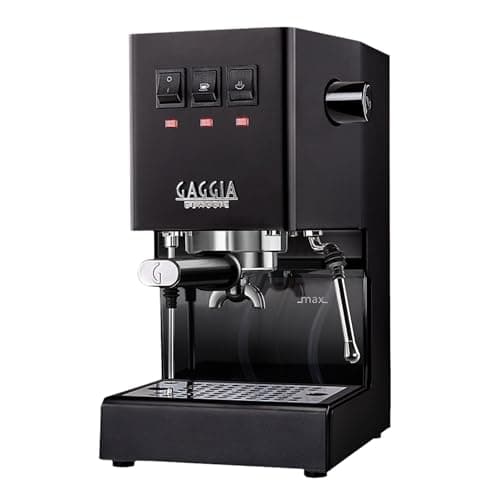
Gaggia Classic Evo ProTop pickThe long-running enthusiast entry point: a commercial-size 58 mm portafilter on a home machine, with a large aftermarket behind it.
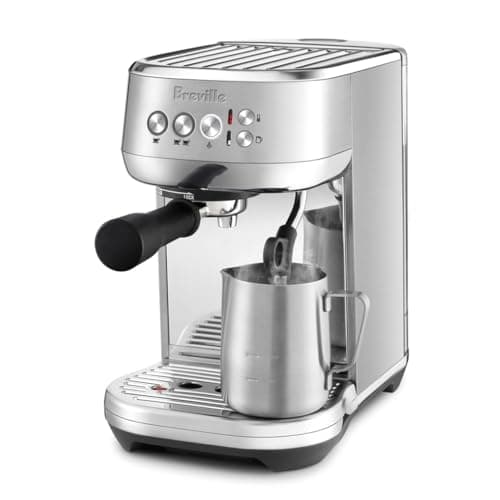
Breville Bambino Plus (BES500)The standard answer to “which first machine” — full 54 mm portafilter and an 18 g dose, with the milk step automated so a flat white is possible on day one.
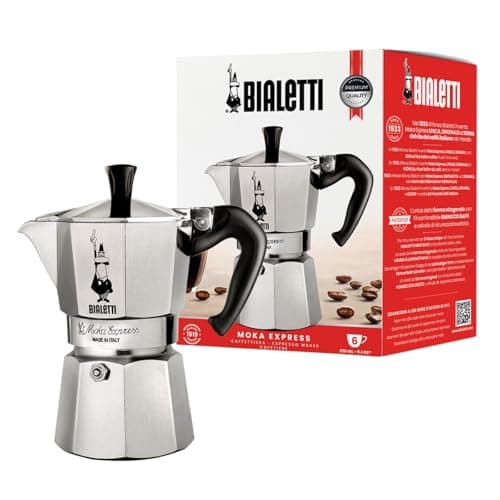
Bialetti Moka ExpressNot an espresso machine and not pretending to be one. It makes a strong, concentrated stovetop coffee, and it is the honest first step for a lot of people.
Strong coffee now, for the price of a takeaway lunch
We have not handled these units. Everything above comes from published manufacturer documentation, cited inline, plus arithmetic you can redo yourself. Everyone in this category says they tested twenty machines; we have not tested any, and we say so. Here is what we do instead.
01
Gaggia Classic Evo Pro
Buying once and modifying later
The long-running enthusiast entry point: a commercial-size 58 mm portafilter on a home machine, with a large aftermarket behind it.
We have not compiled a cited spec sheet for this pick yet, so there is no spec table here. What follows is about fit — who it is for and who it is not — not about numbers we cannot source. See how we pick.
The 58 mm portafilter is the argument. It is the size commercial machines use, so every basket, tamper, distribution tool and bottomless portafilter on the market fits.
It asks more of you than a Breville does — there is no automatic milk, no PID from the factory, and the learning curve is real.
What it does well
58 mm commercial-standard portafilter with a huge accessory market
Simple, well-understood internals with parts availability
What you give up
Steeper learning curve than a machine designed for beginners
No automatic milk of any kind
Skip it if you want the machine to help you. This one does exactly what you tell it, including when you are wrong.
The standard answer to “which first machine” — full 54 mm portafilter and an 18 g dose, with the milk step automated so a flat white is possible on day one.
Published specifications for the Breville Bambino Plus (BES500), with sources
54 mm tamper, Razor dosing tool, 16 fl oz milk jug, single- and dual-wall baskets, cleaning tool and disc [source]
The 54 mm portafilter and 18 g dose matter more than they sound: they put the machine on the same dose a cafe uses, so any recipe you read applies to it directly and every 54 mm accessory fits.
The three-second heat-up is the difference between espresso being a weekday habit and a weekend project. A machine that takes fifteen minutes to be ready is a machine you use on Sundays.
The automatic steam wand is the single biggest reason this suits a first setup. Milk texturing is the skill that takes longest to learn; handing it to the machine removes the part most likely to make you give up.
What it does well
Standard 54 mm basket, so recipes and accessories from anywhere fit
Ready in seconds, which is what makes it a habit rather than a project
Automatic milk means a drinkable cappuccino before you can texture by hand
The manual wand is still there when you want to learn
What you give up
No grinder — budget for one separately, and that is the right trade
Small water tank compared with a bean-to-cup machine; refills are frequent
Nothing here helps if your grinder cannot go fine enough
Skip it if you want one box that does everything with no learning curve — a bean-to-cup machine is the honest answer for that, and it is a different product.
Strong coffee now, for the price of a takeaway lunch
Not an espresso machine and not pretending to be one. It makes a strong, concentrated stovetop coffee, and it is the honest first step for a lot of people.
We have not compiled a cited spec sheet for this pick yet, so there is no spec table here. What follows is about fit — who it is for and who it is not — not about numbers we cannot source. See how we pick.
A moka pot brews at a fraction of espresso pressure, so it produces a concentrate rather than espresso with crema. That is a category difference, not a quality one.
It is the correct recommendation for anyone who wants a strong milk drink at home and does not want to own a grinder yet.
What it does well
Costs less than most espresso accessories
Nothing to descale, nothing to plug in, nothing to break
Works with supermarket pre-ground coffee
What you give up
It is not espresso and cannot be dialed in like espresso
No steam wand, so milk drinks need a separate frother
Skip it if you specifically want espresso with crema and the ability to control the shot. A moka pot cannot do that and never will.
**Empty and refill the tank daily** rather than leaving water standing in warm plastic for days. This also helps with scale.
**Choose a machine with a removable tank** so you can wash it and replace it if it ages or discolors.
**Choose a metal portafilter and basket**, which rules out the very cheapest machines with plastic filter holders.
**Consider a moka pot or a lever press.** A stovetop moka pot is aluminum or stainless with a silicone gasket and no tank at all — that is genuinely as close to plastic-free as home coffee gets.
On taste specifically
If your coffee has a plastic taste, the usual causes are a new machine that has not been flushed through, a tank that needs washing, or water sitting in the machine for days. Run several tank-fulls through a new machine before judging it, and see cleaning for the routine that prevents the rest.
Questions people actually ask
Are there espresso machines with no plastic?+−
Not among mains-powered home machines. Every one has a plastic or silicone element somewhere in the water path — usually the tank and tubing. A stovetop moka pot comes closest, being metal with a silicone gasket.
Does hot water touch the plastic tank?+−
On most machines the tank holds cold water and heating happens downstream in a metal boiler or thermoblock. That is worth knowing, because it is the opposite of what many listings imply.
Why does my espresso taste like plastic?+−
Most often a new machine that has not been flushed, a tank that needs washing, or water that has sat in the machine for days. Flush several tanks through a new machine and refill daily.
Is a stainless steel body worth paying for?+−
For durability and looks, sometimes. For plastic in the water path, no — the shell is not part of it.