Heads up: we earn a commission if you buy through the links on this page, at no extra cost to you. It never changes the order of the list. Full disclosure · how we pick.
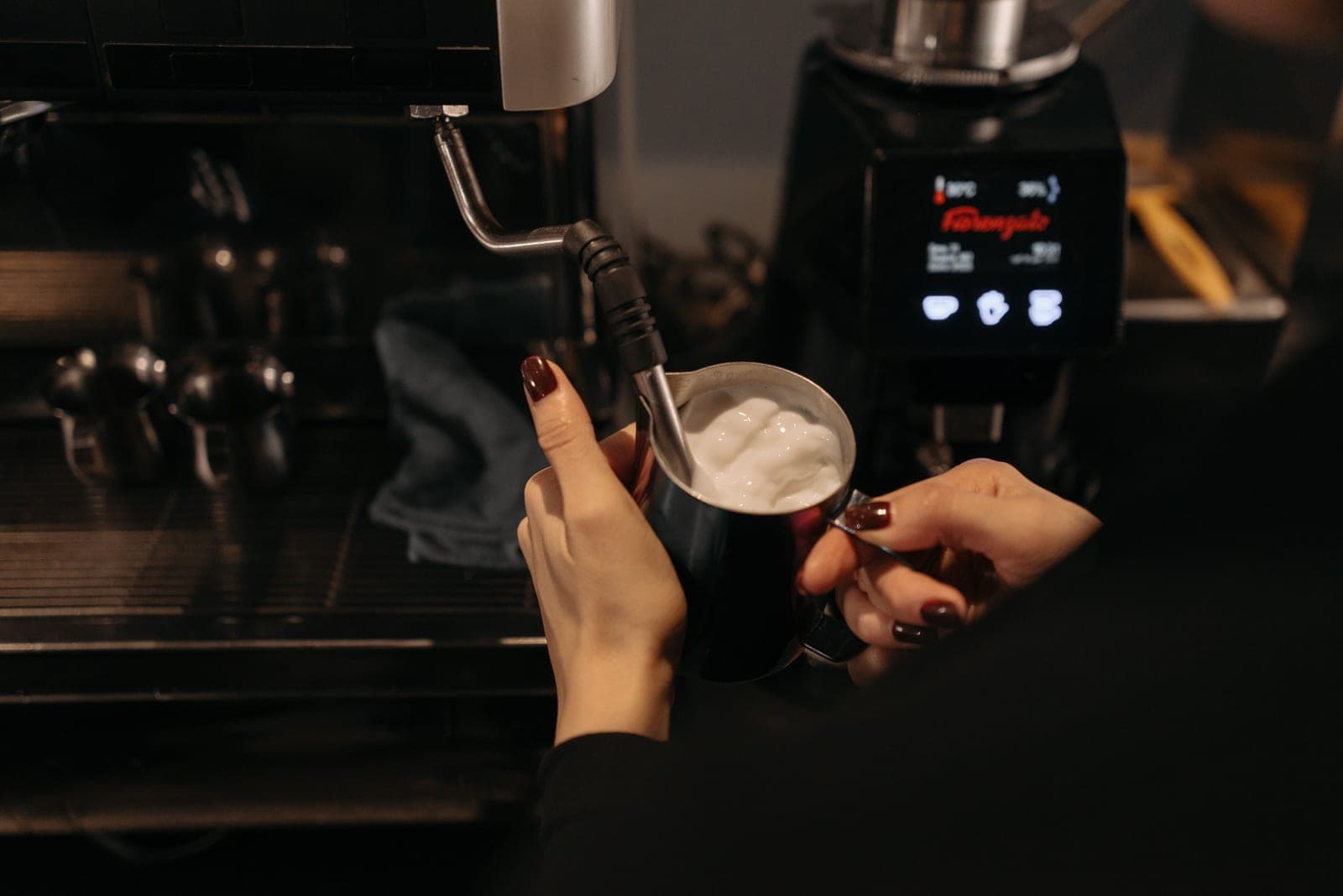
A steam wand does not just heat milk — it spins it. The wand tip introduces air near the surface and the resulting vortex folds that air through the whole volume, which is what turns bubbly foam into microfoam. That vortex needs the right vessel to form in.
A straight-sided kitchen jug does not produce it. Neither does a mug. That is why a pitcher is the one milk accessory you actually have to buy.
Size is the specification
Pitcher size against how many drinks
Size
Fills to
Good for
Problem if you go wrong
12 oz / 350 ml
About 150-180 ml of milk
One latte, or a cappuccino
The default. Start here.
16-20 oz / 500-600 ml
About 300 ml
Two drinks at once
Too much surface area for one drink — the milk will not spin
8 oz / 250 ml
About 100 ml
A single small cappuccino
Overflows on a latte
Fill it to just below the base of the spout. Milk expands as air goes in, and a pitcher filled to the brim will run over the moment texturing starts.
Quick picks — Milk pitchers
#
Pick
Best for
Type
Price
1
No photo
Normcore Stainless Milk PitcherTop pickA 12 oz stainless pitcher with a defined spout. Size matters more than brand: too big and the wand cannot reach, too small and it overflows.
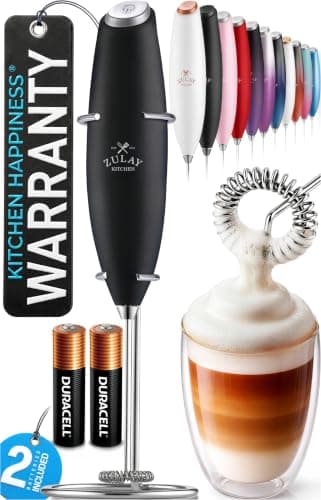
Zulay Handheld Milk FrotherA battery whisk. It makes airy foam rather than the dense microfoam a steam wand makes, and it costs less than a bag of beans.
We have not handled these units. Everything above comes from published manufacturer documentation, cited inline, plus arithmetic you can redo yourself. Everyone in this category says they tested twenty machines; we have not tested any, and we say so. Here is what we do instead.
01No photo
Normcore Stainless Milk Pitcher
The one milk item you cannot improvise
A 12 oz stainless pitcher with a defined spout. Size matters more than brand: too big and the wand cannot reach, too small and it overflows.
We have not compiled a cited spec sheet for this pick yet, so there is no spec table here. What follows is about fit — who it is for and who it is not — not about numbers we cannot source. See how we pick.
For one or two drinks, a 12 oz pitcher is the right size. Fill it to just below the spout base and the milk has room to expand.
A jug from the kitchen cupboard does not work: the wand tip needs the right depth and angle to spin the milk, and a straight-sided vessel will not do it.
What it does well
Correct geometry for the wand
Pointed spout is what makes a pour controllable
What you give up
Wrong size is a common mistake — 20 oz is too big for one latte
Skip it only if a pitcher came with your machine and it is around 12 oz — the Bambino Plus ships with a 16 fl oz one, which is fine.
A battery whisk. It makes airy foam rather than the dense microfoam a steam wand makes, and it costs less than a bag of beans.
We have not compiled a cited spec sheet for this pick yet, so there is no spec table here. What follows is about fit — who it is for and who it is not — not about numbers we cannot source. See how we pick.
A handheld frother whips air into milk. A steam wand heats and textures at the same time, which is what produces pourable microfoam. These are different results, not different quality levels of the same result.
For a cappuccino with a foam cap, a whisk is genuinely fine. For latte art, it is not going to happen.
What it does well
Cheapest possible route to a milk drink
Works with a moka pot, a lever press or an Aeropress
Nothing to plumb, nothing to descale
What you give up
Airy foam, not microfoam
You heat the milk separately
Skip it if your machine has a steam wand you intend to learn. It will sit in a drawer.
**A defined, pointed spout.** This is what makes the pour controllable and is the difference between pouring a pattern and pouring a splash.
**Stainless steel.** It conducts heat so you can feel the temperature with your hand on the side, which is how people judge milk without a thermometer.
**No non-stick coating.** It gets scratched, it interferes with feeling the temperature, and there is no benefit.
**A flat bottom** so it sits stable on a scale or a counter.
If your machine has no wand
A pitcher does nothing for you — you need a frother instead. A handheld whisk makes airy foam and costs very little; a standalone frother heats and froths unattended. Both are covered in milk frothers without a steam wand.
Questions people actually ask
What size milk pitcher do I need?+−
12 oz for one or two drinks. Larger pitchers have too much surface area to spin a single drink's worth of milk properly, and smaller ones overflow on a latte.
Can I use a regular jug to steam milk?+−
Not well. Steam texturing depends on a vortex forming in the milk, and a straight-sided jug or a mug will not produce one. The pitcher shape is functional, not decorative.
How full should I fill a milk pitcher?+−
To just below the base of the spout. Milk expands as air is introduced, and a full pitcher overflows as soon as you start.
Does the brand of pitcher matter?+−
Far less than the size and the spout shape. A stainless pitcher of the right size with a pointed spout does the job at any price.