Heads up: we earn a commission if you buy through the links on this page, at no extra cost to you. It never changes the order of the list. Full disclosure · how we pick.
Two components in milk decide what happens in the pitcher. **Protein** forms the walls around the air bubbles, which is what makes foam hold together. **Fat** coats those walls, softens the texture and carries flavor. Too little protein and the foam collapses; too little fat and it tastes thin and the texture goes stiff.
Everything below is a consequence of that.
Quick picks — Which milk froths best
#
Pick
Best for
Type
Price
1
No photo
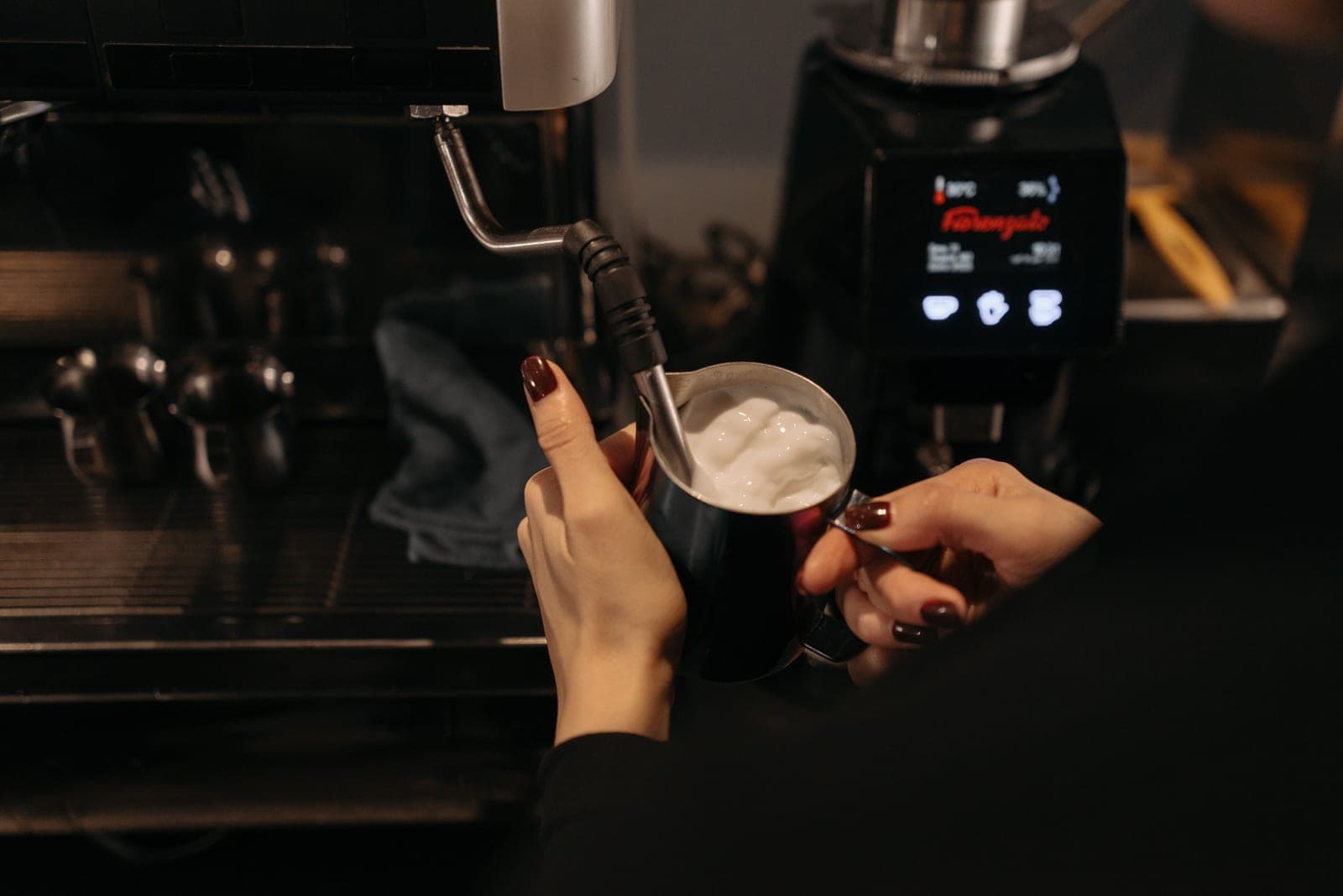
Normcore Stainless Milk PitcherTop pickA 12 oz stainless pitcher with a defined spout. Size matters more than brand: too big and the wand cannot reach, too small and it overflows.
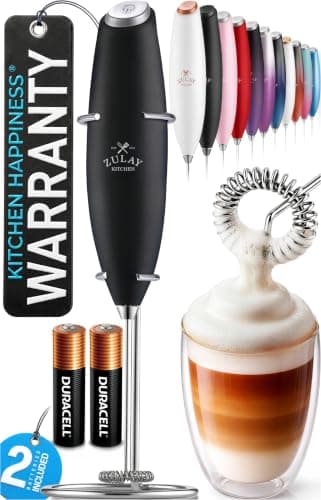
Zulay Handheld Milk FrotherA battery whisk. It makes airy foam rather than the dense microfoam a steam wand makes, and it costs less than a bag of beans.
We have not handled these units. Everything above comes from published manufacturer documentation, cited inline, plus arithmetic you can redo yourself. Everyone in this category says they tested twenty machines; we have not tested any, and we say so. Here is what we do instead.
01No photo
Normcore Stainless Milk Pitcher
The one milk item you cannot improvise
A 12 oz stainless pitcher with a defined spout. Size matters more than brand: too big and the wand cannot reach, too small and it overflows.
We have not compiled a cited spec sheet for this pick yet, so there is no spec table here. What follows is about fit — who it is for and who it is not — not about numbers we cannot source. See how we pick.
For one or two drinks, a 12 oz pitcher is the right size. Fill it to just below the spout base and the milk has room to expand.
A jug from the kitchen cupboard does not work: the wand tip needs the right depth and angle to spin the milk, and a straight-sided vessel will not do it.
What it does well
Correct geometry for the wand
Pointed spout is what makes a pour controllable
What you give up
Wrong size is a common mistake — 20 oz is too big for one latte
Skip it only if a pitcher came with your machine and it is around 12 oz — the Bambino Plus ships with a 16 fl oz one, which is fine.
A battery whisk. It makes airy foam rather than the dense microfoam a steam wand makes, and it costs less than a bag of beans.
We have not compiled a cited spec sheet for this pick yet, so there is no spec table here. What follows is about fit — who it is for and who it is not — not about numbers we cannot source. See how we pick.
A handheld frother whips air into milk. A steam wand heats and textures at the same time, which is what produces pourable microfoam. These are different results, not different quality levels of the same result.
For a cappuccino with a foam cap, a whisk is genuinely fine. For latte art, it is not going to happen.
What it does well
Cheapest possible route to a milk drink
Works with a moka pot, a lever press or an Aeropress
Nothing to plumb, nothing to descale
What you give up
Airy foam, not microfoam
You heat the milk separately
Skip it if your machine has a steam wand you intend to learn. It will sit in a drawer.
More protein relative to fat, so more structure and less flavor
Half and half
Hard to foam, very rich
Thick, more topping than foam
Fat gets in the way of the protein doing its job
Lactose-free dairy
Good — behaves like the milk it came from
Good
Tastes slightly sweeter; lactose has been split into simpler sugars
The skim-milk result is the counterintuitive one. For hot microfoam whole milk wins on texture and taste; for cold foam, skim's higher protein-to-fat ratio makes a stiffer, longer-lasting foam. See cold foam.
Plant milks, and why barista editions exist
Plant milks are low in the kind of protein that builds foam walls, and several of them curdle when they hit hot, acidic espresso. Barista editions add fat, adjust protein and include stabilizers specifically to fix both problems. They are not a marketing tier — they behave differently in a pitcher.
Plant milks, standard versus barista edition
Milk
Standard
Barista edition
Oat
Foams, collapses quickly, can split
The best plant option — stable, sweet, close to dairy
Soy
Foams reasonably, splits against acidic coffee
Holds well, good structure
Almond
Poor — thin, watery foam, splits readily
Usable, still the weakest of the three
Coconut
Poor for foam
Rarely made; the flavor dominates anyway
Pea protein
Surprisingly good — high protein
Very good, holds structure well
Splitting, and how to prevent it
Splitting is when milk curdles into the coffee — small flecks and a grainy surface. It happens when a low-protein plant milk meets hot, acidic espresso. Three things reduce it:
**Use a barista edition.** This is most of the fix.
**Do not overheat.** Hotter milk splits more readily. Stop at the point the pitcher is uncomfortable to hold.
**Pour the milk into the coffee**, not the coffee into the milk, and pour steadily rather than in a rush.
**Consider the beans.** A lighter, more acidic roast splits plant milk more often than a darker one — see light versus dark roast.
Questions people actually ask
What milk is best for frothing?+−
Whole dairy milk is the most forgiving and gives the richest microfoam. Among plant milks, barista-edition oat is the closest substitute because it is formulated with the fat and stabilizers that plant milks otherwise lack.
Why does my oat milk split in coffee?+−
Low-protein plant milk meeting hot acidic espresso. Use a barista edition, avoid overheating, and pour the milk into the coffee rather than the reverse.
Is skim milk good for foam?+−
For cold foam it is excellent — more protein relative to fat means stiffer, longer-lasting foam. For hot microfoam it foams easily but tastes thin and dries out faster than whole milk.
What is barista-edition milk?+−
Plant milk reformulated with extra fat, adjusted protein and stabilizers so it foams and resists splitting. It behaves genuinely differently in a pitcher, not just on the label.